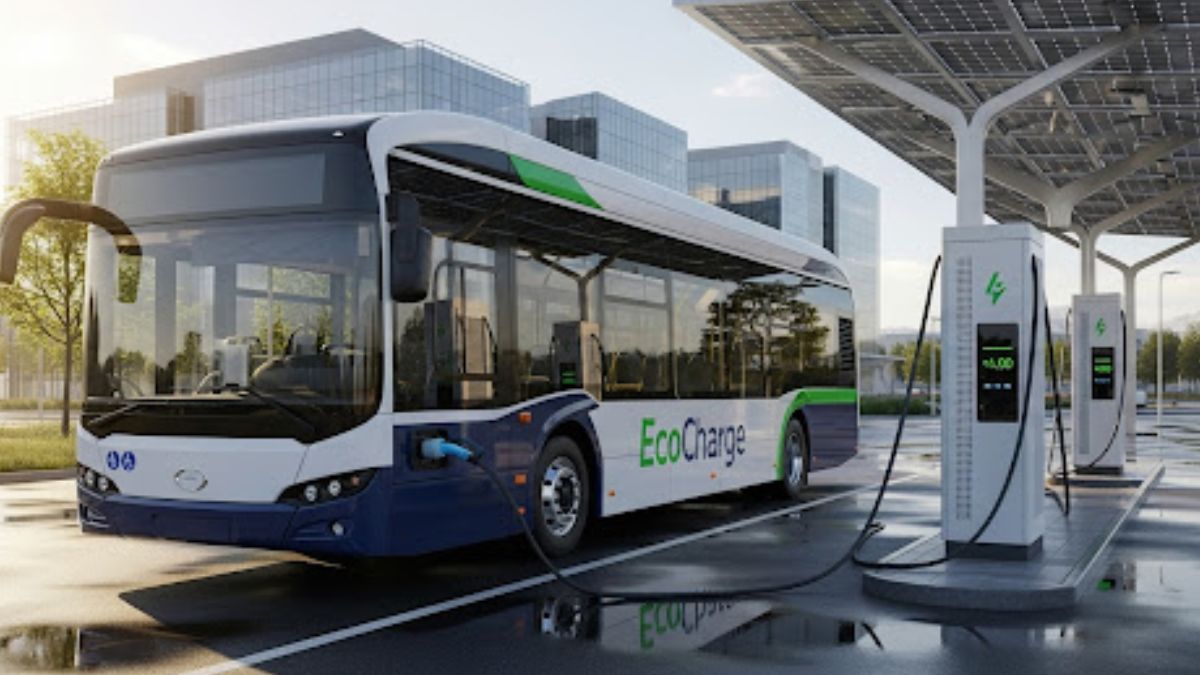
The Government of India has extended its flagship electric vehicle (EV) incentive programme, the Prime Minister Electric Drive Revolution in Innovative Vehicle Enhancement (PM E-DRIVE) scheme, until March 2028. However, financial support for electric two-wheelers and three-wheelers will end on March 31, 2026, marking a strategic policy shift towards market maturity in these segments.
Scheme Overview
Launched on October 1, 2024, with a budget of ₹10,900 crore, the PM E-DRIVE scheme aims to accelerate India’s transition to electric mobility through,
- Purchase incentives for various EV categories
- Charging infrastructure expansion
- Testing facility upgrades
Financial Allocation
- ₹3,679 crore for demand incentives for electric two-wheelers, three-wheelers, ambulances, and trucks.
- ₹7,171 crore for electric bus adoption, public charging stations, and testing facilities.
Targets by 2028
- 24.79 lakh electric two-wheelers
- 3.16 lakh electric three-wheelers
- 14,028 electric buses and trucks
- 88,500 EV charging points nationwide
Subsidy Structure and Adjustments
- Initially, subsidies for electric two-wheelers were ₹5,000 per kWh with a cap of ₹10,000 per vehicle, but these were reduced by half to ₹2,500 per kWh from April 2025.
- Electric truck subsidies (introduced in July 2025): ₹5,000 per kWh or up to 10% of the ex-factory price, whichever is lower.
- Electric ambulance and charging infrastructure guidelines are still under development.
- The government will cease two- and three-wheeler subsidies after March 2026, citing that these segments have reached 10% EV market penetration and can grow without fiscal incentives.
Infrastructure Focus
To address one of the biggest EV adoption barriers—charging availability—the scheme allocates ₹2,000 crore for,
- 22,100 fast chargers for four-wheelers
- 1,800 chargers for buses
- 48,400 chargers for two- and three-wheelers
- Charging station subsidy guidelines are expected soon.
Fund-Limited Operation
The Ministry of Heavy Industries clarified that the PM E-DRIVE is a fund-limited programme, with total disbursements capped at the ₹10,900 crore allocation. If funds run out before March 2028, the scheme will end early.
Policy Shift: From Support to Self-Sustaining Growth
Ending subsidies for mature EV segments signals a transition from fiscal support to market-led growth. While early-stage adoption benefits from subsidies to reduce upfront costs, the government believes established categories—such as electric scooters and three-wheelers—are now self-sustaining.
Subsidies will continue for buses, trucks, and charging infrastructure, where adoption is still in its early phase.


 Ministry of Textiles Extends RoSCTL Sche...
 Delhi Government Launches the Lakhpati B...
 What Is Amrit Bharat Station Scheme? Gov...