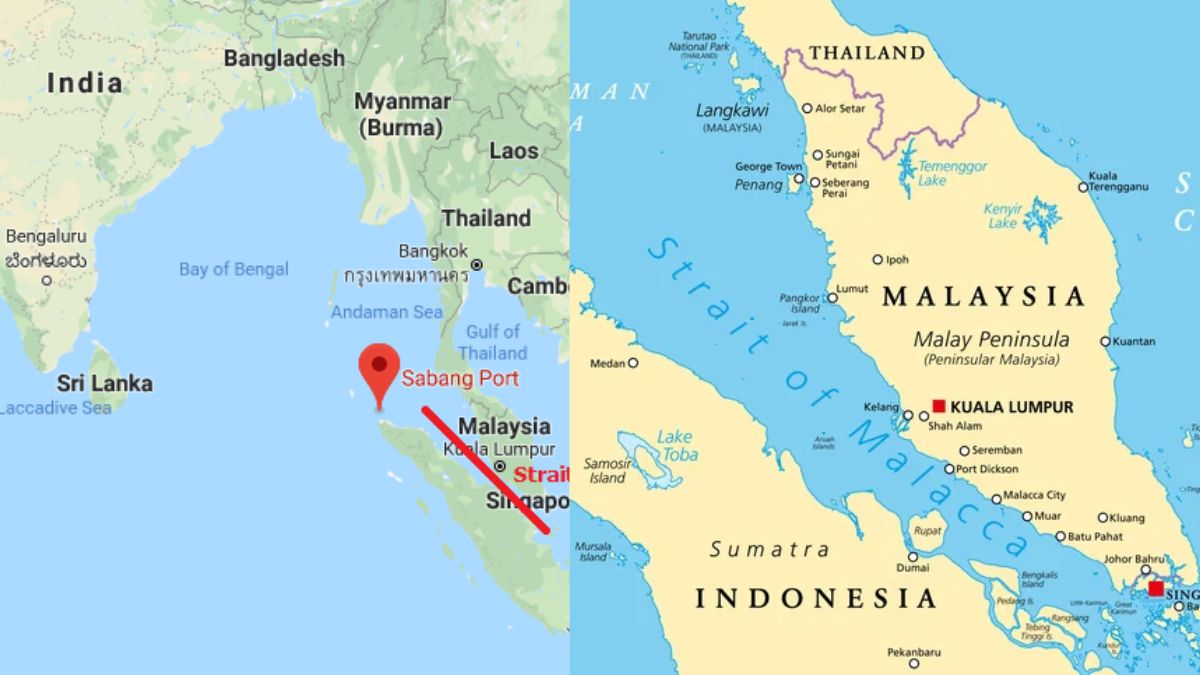
In a move signalling deeper strategic alignment in the Indo-Pacific, Singapore has formally supported India’s plan to patrol the Malacca Strait, one of the world’s busiest and most critical maritime chokepoints. The announcement was made during Singaporean Prime Minister Lawrence Wong’s visit to India, where he met with Prime Minister Narendra Modi on September 4, 2025, in New Delhi.
This development is part of a broader roadmap charted by the two countries to expand cooperation in defence, emerging technologies, and sustainable infrastructure.
Strategic Importance of the Malacca Strait
The Malacca Strait, linking the Indian Ocean to the South China Sea, is a vital sea lane through which over 60% of global maritime trade passes. Ensuring freedom of navigation and maritime security in this region is crucial for both India’s energy and trade interests and the larger Indo-Pacific architecture.
Singapore’s endorsement of India’s patrol plan,
- Enhances regional maritime surveillance
- Counters growing concerns over Chinese naval activity
- Strengthens India’s Act East and Indo-Pacific strategies
Defence and Technology Cooperation Deepens
,A joint statement following the meeting outlined plans to strengthen defence technology cooperation in cutting-edge fields, including
- Quantum computing
- Artificial Intelligence (AI)
- Automation systems
- Unmanned vessels (likely UAVs and autonomous naval assets)
This marks a shift from conventional military collaboration to future-facing technologies that will define the next phase of global strategic capabilities.
Important Facts
Strait of Malacca
- Connects the Andaman Sea (Indian Ocean) to the South China Sea (Pacific Ocean).
- Lies between the Indonesian island of Sumatra (west) and peninsular Malaysia + southern Thailand (east).
Strategic Importance
- Shortest sea route linking the Middle East and East Asia.
- Reduces time and cost for transportation between Asia, Middle East, and Europe.
- Handles approximately 60% of the world’s maritime trade.
- Main oil supply route for major Asian consumers: China and Japan.


 France Hosts One Health Summit Under G7 ...
 Newcastle Disease Spread in Europe 2026:...
 Mongolia Gets New Prime Minister Amid Po...