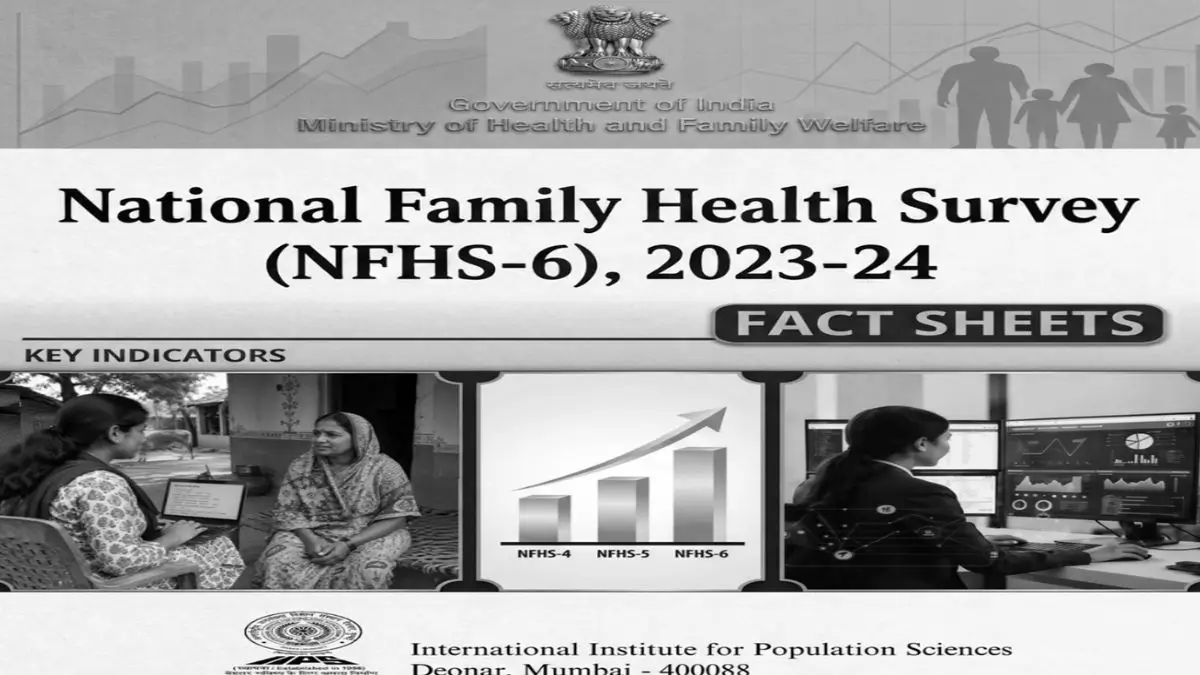
The Ministry of Health and Family Welfare has released the National Family Health Survey-6 (NFHS-6) and it presented the India’s progress in healthcare, nutrition, financial protection and women’s empowerment. This survey was conducted during the 2023-24 across nearly 6.79 lakh households in 715 districts and this survey serve as the country’s one of the most important source for the health and demographic data.
What is NFHS-6 and Why Is It Important?
The National Family Health Survey is the India’s largest health and demographic survey and it is conducted periodically. This survey assess the country’s progress in the social and health indicators.
NFHS-6 was conducted during the year 2023-24 by the Ministry of Health and Family Welfare with the International Institute for Population Sciences (IIPS), Mumbai serving as the nodal agency.
The survey has covered the approximately 6.79 lakh households across 715 districts and provided the crucial data that supports evidence based policymaking and program implementation at the both national and district levels.
Major Improvement in Maternal Healthcare
The NFHS-6 report highlights the significant progress in to the maternal healthcare services across India.
There are more pregnant women are receiving timely antenatal care and the healthcare support during pregnancy has improved considerably.
Key Maternal Health Indicators
- Antenatal Care (ANC) Coverage increased from 92.6% to 95.9%
- First Trimester ANC Registration increased from 70.0% to 76.2%
- Four or More ANC Visits increased from 58.5% to 65.2%
- Institutional Deliveries has increased from 88.6% to 90.6%
- Skilled Birth Attendance also increased from 89.4% to 91.3%
- Postnatal Care within Two Days improved from 79.1% to 85.3%
These achievements showcases the success of maternal healthcare program across the country.
Institutional Deliveries Reach Record High
One of the most major achievements highlighted in the report is the increase in to the institutional deliveries. Institutional deliveries means that where childbirth takes place in the healthcare facility under medical supervision which is rose to 90.6%.
This improvement is important because the institutional deliveries reduce maternal and infant mortality risks by ensuring access to skilled healthcare professionals and emergency medical services. The increase also demonstrates the growing trust into public healthcare systems and better access to healthcare facilities across urban and rural areas.
Child Immunization Coverage Improved
India has also made the remarkable progress towards the universal immunization. This survey shows that full vaccination coverage among the children aged 12–23 months increased significantly.
Key Immunization Findings
- Full Immunization Coverage increased from 83.8% to 87.1%
- Any Vaccine Coverage has been remained above 96%
- 95.6% of vaccinations were also received through public health facilities
- Rotavirus Vaccine Coverage has increased from 36.4% to 85.4%
- Second Dose of Measles Vaccine increased from 58.6% to 71.8%
These figures have highlighted the effectiveness of India’s Universal Immunization Program and digital platforms such as U-WIN.
Significant Progress in Child Nutrition
The NFHS-6 report also records the encouraging improvements in child nutrition indicators.
India has made the notable progress in to reducing chronic malnutrition among children under five years of age.
Key Nutrition Improvements
| Indicator | NFHS-5 | NFHS-6 |
| Child Stunting | 35.5% | 29.3% |
| Child Severe Wasting | 7.7% | 5.2% |
| Underweight Children | 32.1% | 31.8% |
Additional Positive Trends
- Breastfeeding within one hour of birth has been increased from 41.8% to 50.1%
- Children receiving the complementary feeding also increased from 45.9% to 59.5%
- Breastfeeding among infants under six months remained very high at 95.6%
These improvements support India’s progress toward achieving Sustainable Development Goals (SDGs).
Health Insurance Coverage Expands Rapidly
Financial protection in the healthcare has improved substantially according to the survey. The household coverage under health insurance and financing schemes has been increased significantly.
Health Protection Coverage also increased from 41.0% to 60.2%.
Schemes like Ayushman Bharat – PM-JAY, State health insurance program and expanded public healthcare initiatives has largely contributed to this numbers and this growth also shows the strong financial security and improved access to healthcare services.
Women’s Empowerment and Digital Inclusion Improve
NFHS-6 report has also highlighted the important rise in the women’s financial and digital empowerment. As women are increasingly participating in to the digital economy and managing their own financial resources.
Key Indicators
- Women who have used the internet increased from rise 33.3% to 64.3%
- Women with their own bank account also increased from 78.6% to 89.0%
- Women owning and using a mobile phone has increased from 53.9% to 63.6%
- Use of the hygienic menstrual protection increased from 77.6% to 79.2%
These improvements reflect the greater financial inclusion and digital literacy among women.
Government Schemes Which Supports Growth
There are multiple schemes have contributed heavily for the positive outcomes of the NFHS-6.
List of Major Schemes Which Supporting Health and Nutrition
For The Maternal and Child Health
- Janani Suraksha Yojana (JSY)
- Janani Shishu Suraksha Karyakram (JSSK)
- Pradhan Mantri Surakshit Matritva Abhiyan (PMSMA)
- SUMAN Scheme
- PM Matru Vandana Yojana (PMMVY)
For Nutrition Initiatives
- POSHAN Abhiyaan
- POSHAN 2.0
- Saksham Anganwadi
- Integrated Child Development Services (ICDS)
For The Immunization Program
- Universal Immunization Program (UIP)
- U-WIN Digital Platform





 Friendliest Cities in the World 2026: MÃ...
 World Development Report 2026: The Promi...
 World Bank Ranks India Among Top 10 Emer...