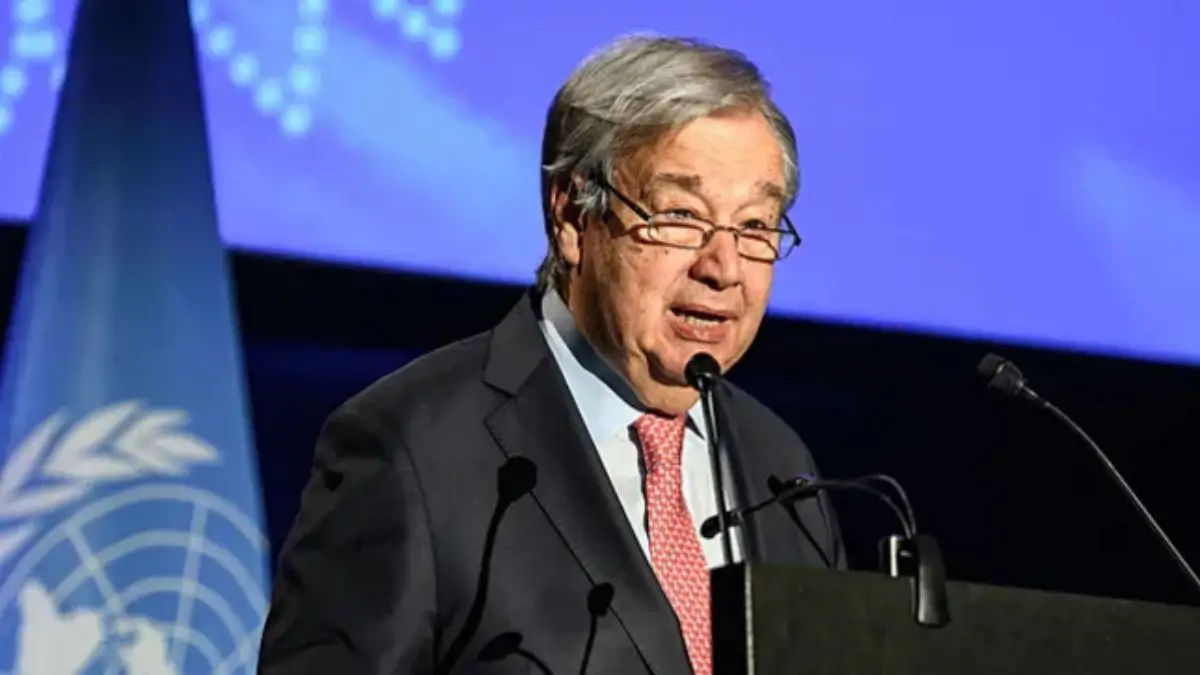
As artificial intelligence (AI) is growing faster than before, but the ability to monitor and regulate it hasn’t been able to keep up. This revelation is contained in the first-ever preliminary report prepared by the Independent International Scientific Panel on the AI under the guidance of the United Nations Secretary-General, Mr. António Guterres. In this report, the United Nations calls on countries to set up the stronger governance structures for AI before technology gets ahead of oversight systems. This report also mentions several issues related to AI development, which will have significant implications for various countries including India.
What Is the UN’s First Scientific AI Report?
The report, which has been created by the Independent International Scientific Panel on AI that consists of 40 members, represents the first report from the United Nations that has been commissioned to provide a thorough scientific evaluation of the prospects and risks of the use of artificial intelligence.
The panel is co-chaired by the,
- Yoshua Bengio, AI researcher who has received the Turing Award.
- Maria Ressa, Journalist and Nobel Prize winner.
Instead of introducing the new laws and regulations, the report gives scientific proof so that the states could create sound AI policies. This report is the first of several subsequent reports that will come out, including one that is intended to be published next year.
Why Is the UN Urging for Fast Action?
One of the main messages of the report is that while AI technology is advancing rapidly, governments are finding it hard to keep up with regulation.
According to the Panel’s report.
- Advanced AI technologies are getting more sophisticated by the day.
- Independent AI systems can solve complicated problems with very little human guidance.
- Knowledge of the dangers of AI advancement feels inadequate compared to current technological achievements.
- Existing regulations are not sufficient enough.
The report also adds that waiting for scientific clarity in regulating AI could lead to real dangers before the relevant regulations are introduced.
Antonio Guterres, Secretary-General for the UN, claimed that governments are in strong need of assistance, as there is not enough reliable information to limit the impact of AI the technologies.
Seven Key Themes in the Report
The report evaluates the AI across the seven major areas,
- Advances in AI Science
- Applications Across Sectors
- Economic Impact
- Security and Environmental Concerns
- Human Rights and Democracy
- Cultural and Individual Well-being
- Governance and Reliability
Understanding the Global “Compute Divide”
It is important to understand the issue of the computing on a worldwide scale based on the report presented above.
The current developments in AI can be impossible without the following,
- High-performance computer resources
- Advanced silicon-based chips
- Huge data centers worldwide
There is an opinion that,
While in the USA up to 75% of the total amount of computing resources is used, in China only 15% of computing is effective. Other countries around the world have only a small part of computing, which is only 10%.
Moreover, it is reported that the USA produced about 59 remarkable models of AI systems, while in China only 35 systems were produced. Other countries produced only 13 systems together.
There are suggestions that countries that do not have enough infrastructure will remain consumers of AI systems produced in other countries.
Why the Report is Crucial for India
The report has crucial implications for India. India is in the process of launching its IndiaAI Mission and constructing the necessary AI computing infrastructure within the country.
These moves, according to the UN panel, are crucial in strategic terms because nations that lack indigenous AI will have trouble,
- Creating models of AI that meet local language challenges.
- Working on development goals at the national level.
- Maintaining technological independence.
- Having a say about future AI standards.
Thus expansion of the domestic computing power will be vital for India if it wants to fight for its place as a global AI innovation hub instead of being a country that relies on foreign technologies.








 WWF Living Planet Report 2026: Monitored...
 India Joins US and 13 Economies in Joint...
 Russia Suspected Plague Case: Nearly 200...