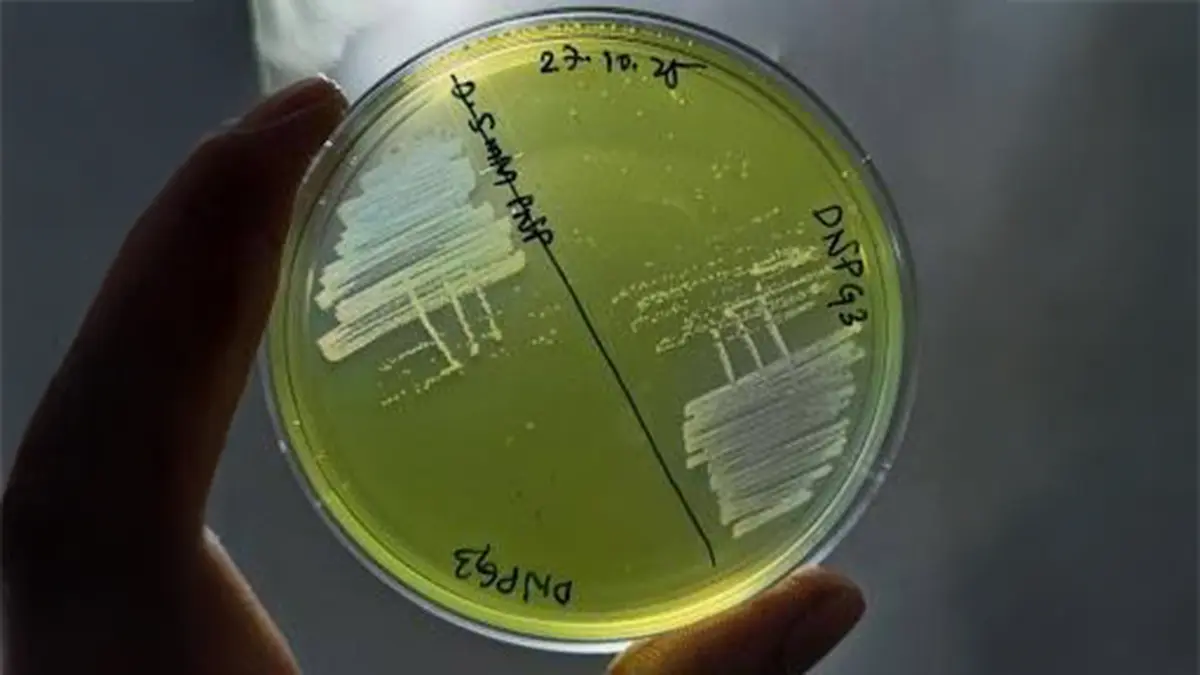
Brachybacterium netajii is a newly discovered bacterial species isolated from the Hooghly River in West Bengal, India. Scientists identified the bacterium from river water contaminated by industrial discharge and officially proposed it as Brachybacterium netajii sp. nov. after detailed taxonomic analysis of strain DNPG3T.
The discovery is significant because the bacterium has the ability to degrade toxic industrial pollutants and tolerate high concentrations of heavy metals, making it a promising candidate for bioremediation and environmental restoration.
Overview of Brachybacterium netajii
| Particular | Details |
|---|---|
| Name | Brachybacterium netajii |
| Type | Newly identified bacterial species |
| Discovered In | Hooghly River, West Bengal |
| Source | Industrial runoff-contaminated water |
| Bacterial Phylum | Actinobacteria |
| Proposed Strain | DNPG3T |
| Major Significance | Bioremediation and pollution control |
| Named After | Netaji Subhas Chandra Bose |
What is Brachybacterium netajii?
Brachybacterium netajii is a newly identified bacterial species belonging to the genus Brachybacterium under the phylum Actinobacteria. It was isolated from the polluted waters of the Hooghly River, where industrial effluents have introduced hazardous chemicals and heavy metals into the ecosystem.
Scientists found that this bacterium possesses remarkable abilities to survive in harsh environments while breaking down toxic pollutants, making it valuable for environmental clean-up projects.
Why is Brachybacterium netajii Important?
The bacterium has attracted scientific attention because of its dual capabilities:
- It can degrade toxic industrial chemicals.
- It can survive in environments contaminated with heavy metals.
These characteristics make it an important microorganism for sustainable wastewater treatment and pollution management.
Bioremediation Potential
One of the most important characteristics of Brachybacterium netajii is its role in bioremediation.
What is Bioremediation?
Bioremediation is the process of using microorganisms, plants, or enzymes to remove or neutralize environmental pollutants by converting harmful substances into safer compounds.
Role of Brachybacterium netajii
The bacterium can degrade p-Nitrophenol (PNP), a toxic industrial compound widely used in:
- Dye manufacturing
- Pesticide production
- Pharmaceutical industries
- Chemical synthesis
By breaking down p-Nitrophenol into less harmful substances, the bacterium helps reduce environmental pollution.
Heavy Metal Tolerance
Another remarkable feature of Brachybacterium netajii is its ability to withstand high concentrations of toxic heavy metals.
The bacterium is resistant to:
- Arsenic
- Cadmium
- Lead
- Mercury
This makes it particularly useful for cleaning industrial wastewater contaminated with hazardous metals.
Halotolerant Nature
Brachybacterium netajii is also halotolerant, meaning it can survive in environments with high salt concentrations.
Key Feature
- Survives in salt concentrations up to 9%.
- Suitable for polluted coastal and estuarine ecosystems.
- Can function effectively even in saline wastewater.
Taxonomy and Cellular Characteristics
The bacterium belongs to the phylum Actinobacteria, a diverse group of Gram-positive bacteria commonly found in soil and aquatic environments.
Its important cellular characteristics include:
- Presence of fatty acids such as C11:0 and C10:0 2-OH.
- Genome contains stress-response genes.
- Possesses genomic islands associated with environmental adaptation.
- Contains enzymes that improve survival under polluted conditions.
Research Institutions Involved
The bacterium was discovered through collaborative research conducted by scientists from:
- Netaji Mahavidyalaya
- University of Burdwan
- IIT (BHU)
- Hiroshima University (Japan)
The species was named Brachybacterium netajii in honour of Netaji Subhas Chandra Bose.
Environmental Significance
Industrial wastewater often contains harmful substances such as:
- Dyes
- Pesticides
- Heavy metals
- Toxic organic compounds
Microorganisms like Brachybacterium netajii offer environmentally friendly solutions for treating contaminated water by naturally degrading pollutants without causing additional environmental damage.
Applications of Brachybacterium netajii
Potential applications include:
- Industrial wastewater treatment
- River pollution control
- Heavy metal remediation
- Biodegradation of toxic chemicals
- Environmental restoration projects
- Sustainable pollution management
Important Facts for Competitive Exams
- Brachybacterium netajii is a newly discovered bacterial species from the Hooghly River, West Bengal.
- It belongs to the Actinobacteria phylum.
- The bacterium can degrade p-Nitrophenol (PNP), a toxic chemical used in dyes and pesticides.
- It tolerates toxic metals like arsenic, cadmium, lead, and mercury.
- It is halotolerant and survives in salt concentrations up to 9%.
- The bacterium was named after Netaji Subhas Chandra Bose.
- It has significant potential in bioremediation and wastewater treatment.








 India’s Classical Languages: 5 More La...
 Agasthyamalai Biosphere Reserve Records ...
 Vastra Utsav 2026 Celebrates India's Tex...