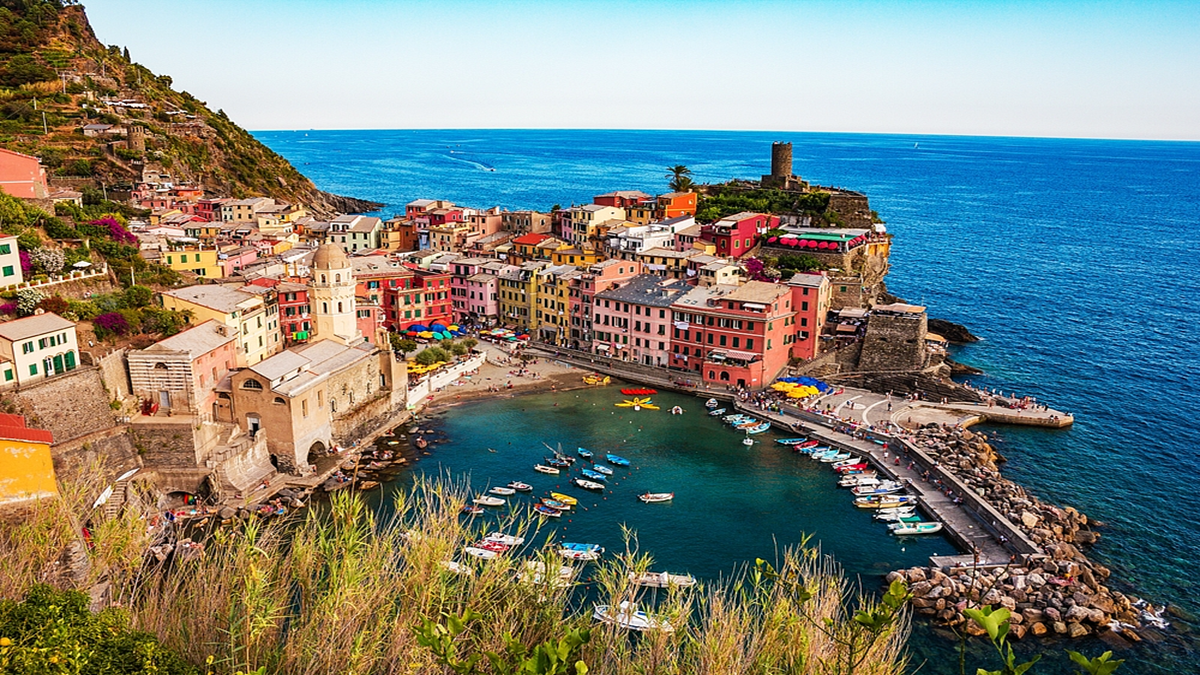
Italy has officially become the UNESCO World Heritage Capital after reaching 61 UNESCO World Heritage Sites, the highest number recorded by any country in the world. This remarkable achievement highlights Italy’s extraordinary cultural heritage, ancient history, architectural marvels, and breathtaking natural landscapes.
Out of the 61 UNESCO World Heritage Sites, 55 are Cultural Heritage Sites and 6 are Natural Heritage Sites, reflecting the country’s unparalleled contribution to world civilization. The recognition further strengthens Italy’s position as one of the world’s most visited cultural tourism destinations.
Italy Becomes the UNESCO World Heritage Capital
Italy now holds the distinction of having the largest number of UNESCO World Heritage Sites globally, surpassing every other nation. The latest addition to the prestigious list has taken the country’s total to 61 protected sites, showcasing more than two millennia of history, art, architecture, archaeology, and natural beauty.
The UNESCO World Heritage designation is awarded to places of Outstanding Universal Value (OUV) that deserve protection and preservation for future generations.
Italy UNESCO World Heritage Sites: Quick Overview
| Particulars | Details |
|---|---|
| Country | Italy |
| Total UNESCO World Heritage Sites | 61 |
| Cultural Heritage Sites | 55 |
| Natural Heritage Sites | 6 |
| Latest UNESCO Site | Funerary Tradition in the Prehistory of Sardinia – Domus de Janas (2025) |
| UNESCO Recognition | Highest number of World Heritage Sites globally |
Why Italy Has the Highest Number of UNESCO World Heritage Sites
Italy’s unmatched cultural richness is the result of thousands of years of civilization. The country has been home to several influential empires and artistic movements that have shaped world history.
Some major reasons behind Italy’s dominance include:
- Birthplace of the Roman Empire.
- Cradle of the Renaissance.
- Rich collection of ancient archaeological sites.
- Hundreds of medieval towns and historic city centres.
- Exceptional churches, cathedrals, palaces, and castles.
- World-famous museums and artistic masterpieces.
- Diverse mountain ranges, coastlines, volcanoes, and natural reserves.
- Continuous conservation and restoration of historic monuments.
Complete List of UNESCO World Heritage Sites in Italy
Italy’s UNESCO sites are spread across every region of the country and include historic cities, archaeological remains, mountains, vineyards, churches, natural parks, and cultural landscapes.
| S. No. | UNESCO World Heritage Site | Year | Type |
| 1 | Rock Drawings in Valcamonica | 1979 | Cultural |
| 2 | Historic Centre of Rome, the Properties of the Holy See and San Paolo Fuori le Mura | 1980 | Cultural |
| 3 | Church and Dominican Convent of Santa Maria delle Grazie with “The Last Supper” | 1980 | Cultural |
| 4 | Historic Centre of Florence | 1982 | Cultural |
| 5 | Venice and its Lagoon | 1987 | Cultural |
| 6 | Piazza del Duomo, Pisa | 1987 | Cultural |
| 7 | Historic Centre of San Gimignano | 1990 | Cultural |
| 8 | The Sassi and the Park of the Rupestrian Churches of Matera | 1993 | Cultural |
| 9 | City of Vicenza and the Palladian Villas of the Veneto | 1994/1996 | Cultural |
| 10 | Historic Centre of Siena | 1995 | Cultural |
| 11 | Historic Centre of Naples | 1995 | Cultural |
| 12 | Crespi d’Adda | 1995 | Cultural |
| 13 | Ferrara, City of the Renaissance, and its Po Delta | 1995/1999 | Cultural |
| 14 | Castel del Monte | 1996 | Cultural |
| 15 | Early Christian Monuments of Ravenna | 1996 | Cultural |
| 16 | Historic Centre of the City of Pienza | 1996 | Cultural |
| 17 | Trulli of Alberobello | 1996 | Cultural |
| 18 | Royal Palace at Caserta with Park, Aqueduct of Vanvitelli and San Leucio Complex | 1997 | Cultural |
| 19 | Archaeological Area of Agrigento | 1997 | Cultural |
| 20 | Archaeological Areas of Pompeii, Herculaneum and Torre Annunziata | 1997 | Cultural |
| 21 | Botanical Garden (Orto Botanico), Padua | 1997 | Cultural |
| 22 | Portovenere, Cinque Terre and the Islands | 1997 | Cultural |
| 23 | Cathedral, Torre Civica and Piazza Grande, Modena | 1997 | Cultural |
| 24 | Amalfi Coast | 1997 | Cultural |
| 25 | Archaeological Area and Patriarchal Basilica of Aquileia | 1998 | Cultural |
| 26 | Cilento and Vallo di Diano National Park | 1998 | Cultural |
| 27 | Historic Centre of Urbino | 1998 | Cultural |
| 28 | Villa Romana del Casale | 1997 | Cultural |
| 29 | Su Nuraxi di Barumini | 1997 | Cultural |
| 30 | Villa Adriana (Tivoli) | 1999 | Cultural |
| 31 | Assisi, Basilica of San Francesco and Franciscan Sites | 2000 | Cultural |
| 32 | Verona | 2000 | Cultural |
| 33 | Aeolian Islands | 2000 | Natural |
| 34 | Villa d’Este, Tivoli | 2001 | Cultural |
| 35 | Late Baroque Towns of the Val di Noto | 2002 | Cultural |
| 36 | Sacri Monti of Piedmont and Lombardy | 2003 | Cultural |
| 37 | Etruscan Necropolises of Cerveteri and Tarquinia | 2004 | Cultural |
| 38 | Val d’Orcia | 2004 | Cultural |
| 39 | Syracuse and the Rocky Necropolis of Pantalica | 2005 | Cultural |
| 40 | Genoa: Le Strade Nuove and the Palazzi dei Rolli | 2006 | Cultural |
| 41 | Mantua and Sabbioneta | 2008 | Cultural |
| 42 | Rhaetian Railway in the Albula/Bernina Landscapes | 2008 | Cultural |
| 43 | The Dolomites | 2009 | Natural |
| 44 | Longobards in Italy: Places of the Power | 2011 | Cultural |
| 45 | Prehistoric Pile Dwellings around the Alps | 2011 | Cultural |
| 46 | Medici Villas and Gardens in Tuscany | 2013 | Cultural |
| 47 | Mount Etna | 2013 | Natural |
| 48 | Vineyard Landscape of Piedmont | 2014 | Cultural |
| 49 | Arab-Norman Palermo and Cathedral Churches | 2015 | Cultural |
| 50 | Defence Works of Venice | 2017 | Cultural |
| 51 | Ancient and Primeval Beech Forests of Europe | 2017 | Natural |
| 52 | Ivrea, Industrial City of the 20th Century | 2018 | Cultural |
| 53 | The Prosecco Hills of Conegliano and Valdobbiadene | 2019 | Cultural |
| 54 | Padua’s Fourteenth-Century Fresco Cycles | 2021 | Cultural |
| 55 | Porticoes of Bologna | 2021 | Cultural |
| 56 | Montecatini Terme (Great Spa Towns of Europe) | 2021 | Cultural |
| 57 | Evaporitic Karst and Caves of Northern Apennines | 2023 | Natural |
| 58 | Via Appia: Regina Viarum | 2024 | Cultural |
| 59 | Historic Centre of Rome (Extension) | Included | Cultural |
| 60 | Additional Transboundary UNESCO Property Involving Italy | Various | Mixed |
| 61 | Funerary Tradition in the Prehistory of Sardinia – Domus de Janas | 2025 | Cultural |
What Are UNESCO World Heritage Sites?
UNESCO World Heritage Sites are places recognized by the United Nations Educational, Scientific and Cultural Organization (UNESCO) for their exceptional cultural or natural significance.
These sites are considered to have Outstanding Universal Value and are protected under international agreements to preserve them for future generations.
World Heritage Sites include:
- Ancient monuments
- Historic cities
- Archaeological sites
- National parks
- Forests
- Mountains
- Cultural landscapes
- Religious monuments
Why UNESCO World Heritage Sites Are Important
UNESCO World Heritage Sites are valuable because they:
- Preserve humanity’s shared cultural and natural heritage.
- Promote international cooperation in conservation.
- Encourage sustainable tourism.
- Generate employment and local economic growth.
- Protect biodiversity and natural ecosystems.
- Promote education, research, and cultural awareness.
- Increase global recognition of historic landmarks.
Italy’s UNESCO Heritage and Tourism
Italy’s UNESCO sites attract millions of visitors every year, making tourism one of the country’s strongest economic sectors. Famous destinations such as Rome, Venice, Florence, Pisa, Pompeii, the Amalfi Coast, the Dolomites, and Mount Etna continue to draw travelers from across the globe.
The country’s commitment to preserving these historic treasures has played a vital role in maintaining their authenticity and global importance.








 India Hosts First BIMSTEC Home Ministers...
 World Bank Mobilises $112 Billion in Pri...
 Who Is Katie Zacharia? Trump Names New W...