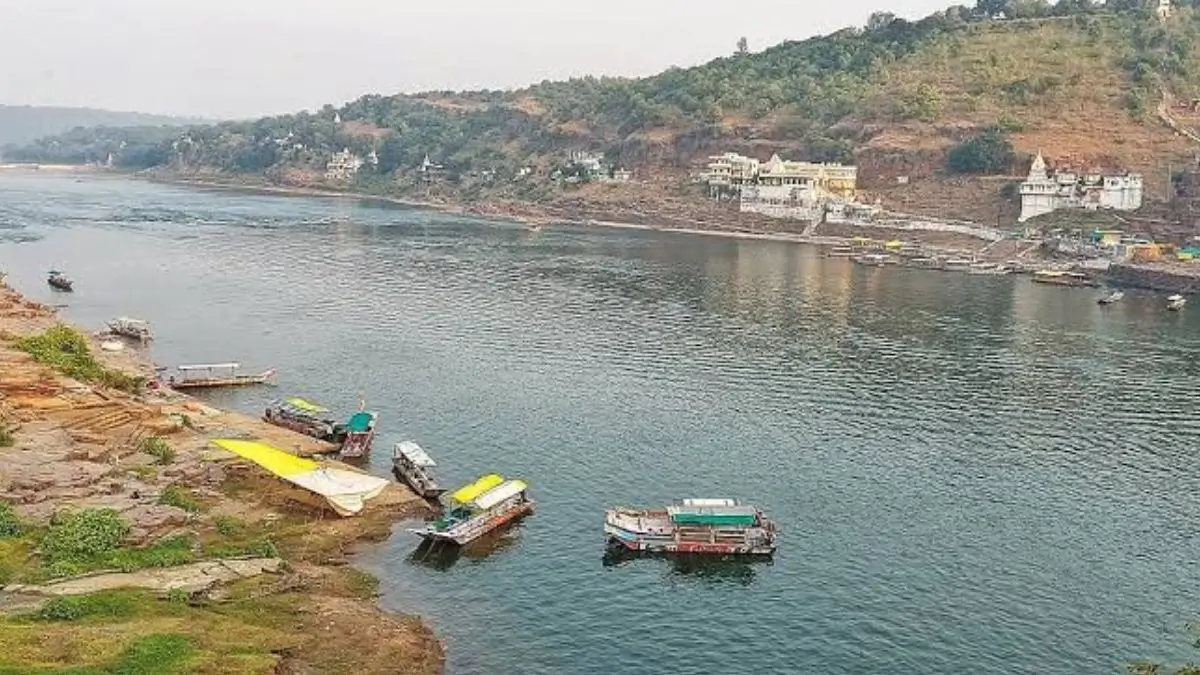
Madhya Pradesh which is often called the “Heart of India,” and it is home to more than around 150 rivers and streams which nourishes the state’s forests, farmlands, and cities. Among of thee different rivers one of the rivers which stands out for its length, historical importance and cultural significance it is the Narmada River. It is flowing through the heart of the central India before reaching the Arabian Sea and it is widely known as the “Lifeline of Madhya Pradesh and Gujarat.”
Which Is the Largest River in Madhya Pradesh?
The Narmada River is the largest river flowing through the state of Madhya Pradesh. It is originating from the Amarkantak Plateau in the Anuppur district. This rivers travels around 1,312 kilometres (815 miles) before it completely draining into the Arabian Sea through the Gulf of Khambhat in the state of Gujarat.
Compare to most major rivers of northern India that flows eastward into the Bay of Bengal, the river Narmada is one of the India’s most vital west flowing rivers which makes it geographically unique.
Why Is the Narmada Called the Lifeline of Madhya Pradesh?
The Narmada River plays the vital role in the state’s economy, agriculture, ecology, and culture. It provides the irrigation to vast agricultural lands, supplies drinking water to millions of people and also supports the hydroelectric power generation via several major dam projects.
The river also flows through the several scenic valleys, forests, and wildlife habitats, which making it as one of the most ecologically significant river systems in the central part of India.
Because of its immense contribution to both the Madhya Pradesh and Gujarat, it has earned the title “Lifeline of Madhya Pradesh and Gujarat.”
Origin and Course of the Narmada River
The Narmada starts its journey at Amarkantak plateau, it is a sacred pilgrimage town located in the Maikal Hills of Madhya Pradesh.
From that point, it flows westward through a narrow rift valley which is situated between the Vindhya Range in the north and the Satpura Range in the south.
It passing through several districts of the state of Madhya Pradesh and later entering Maharashtra and Gujarat, this river finally drains into the Arabian Sea.
Its unique westward flowing course distinguishes it from many of other India’s major rivers.
Why Is Madhya Pradesh Called the “Cradle of Rivers”?
Madhya Pradesh is also often referred to as “Nadiyon Ka Maika” or the “Cradle of Rivers” because of the numerous important rivers originate within the state.
Apart from the Narmada, rivers such as the Chambal, Betwa, Ken, Son, Tapti, and Mahanadi tributaries also have their origins or major courses in the state.
This rich river network supports the agriculture, biodiversity, industries, and drinking water needs across central India.
Major Tributaries of the Narmada River
The Narmada River has total 41 tributaries, which join it from both the Vindhya and Satpura ranges.
Major Left-Bank Tributaries
The left-bank tributaries generally originate in the Satpura Range and these rivers flow northward to meet the Narmada. Important tributaries includes,
- Tawa River (the longest and largest tributary)
- Sher River
- Shakkar River
- Dudhi River
- Ganjal River
- Chhota Tawa
- Kundi River
Major Right-Bank Tributaries
The right-bank tributaries are also originate from the Vindhya Range and flow southward into the Narmada. Prominent tributaries include,
- Hiran River
- Barna River
- Kolar River
- Tendoni River
- Orsang River
- Uri River
- Hatni River
Interesting Facts About the Narmada River
The Narmada is among the few major rivers in the India which flow westward into the Arabian Sea.
It is regarded as one of the seven sacred rivers in the Hindu tradition and it is associated with the famous Narmada Parikrama, which is a spiritual pilgrimage undertaken along both banks of the river.
The river is also known for the spectacular natural attractions such as the Marble Rocks at Bhedaghat, the Dhuandhar Waterfall, and the fertile Narmada Valley, making it an important destination for both the pilgrims and tourists.








 Ramsar Sites in India 2026: State-Wise L...
 Who Is Navi Pillay? Nobel Peace Prize 20...
 Vande Bharat vs Amrit Bharat Express: Ke...