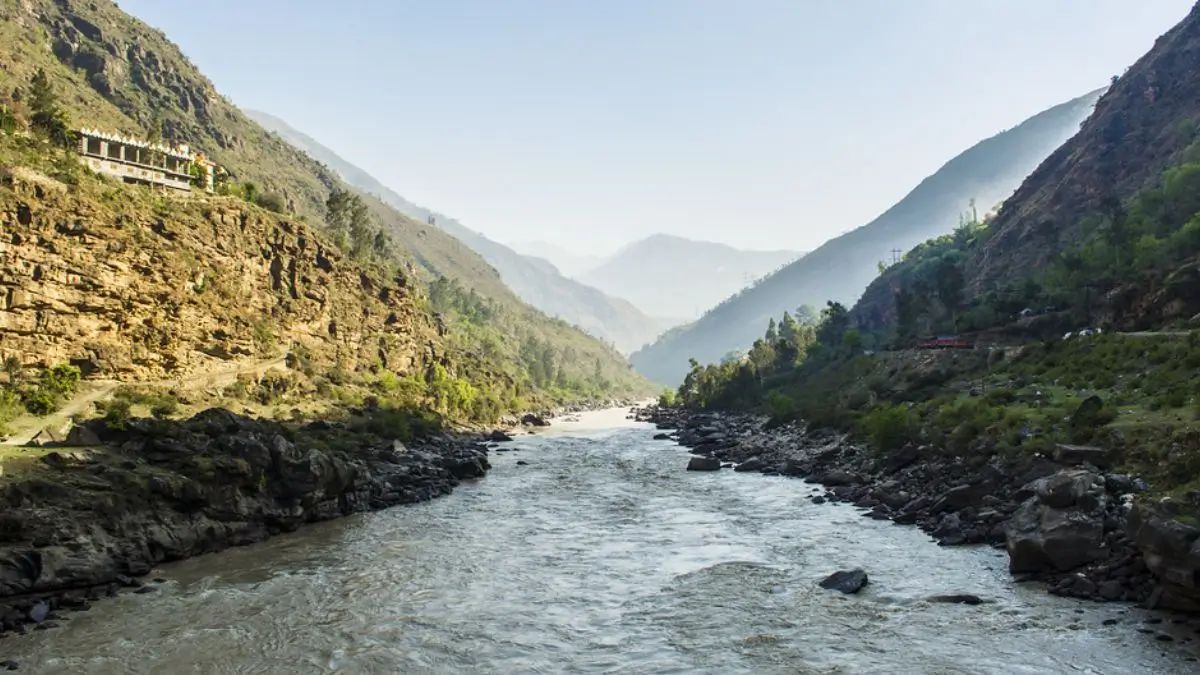
The state of Punjab is famously known as the “Land of Five Rivers,” and the name itself reflects the its rich geographical and agricultural heritage. Thee rivers have shaped the Punjab’s history, culture, economy, and farming practices for the many centuries. Among all of them, one river stands out as the largest and most significant for the state is the Sutlej River. It flowing through the mountains, plains, and international borders and Sutlej is a lifeline for the Punjab’s agriculture, irrigation, and hydropower generation. Here is everything you need to know about the largest river in Punjab.
Which Is the Largest River in Punjab?
The Sutlej River is the largest and longest river which flowing through the Punjab.
It is the easternmost and longest tributary of the Indus River and it is one of the five rivers that gave the Punjab its name.
The word “Punjab” comes from the Persian words “Panj” (five) and “Aab” (water), and it means that “Land of Five Rivers.” These five rivers are the.
- Sutlej
- Beas
- Ravi
- Jhelum
- Chenab
Among all of them, the Sutlej is the longest and the most important for the irrigation and water resources in Indian Punjab.
Origin and Course of the Sutlej River
The Sutlej River originates near to the Lake Rakshastal in the Tibet Autonomous Region of China, it is close to the sacred Lake Manasarovar.
From Tibet region, the river enters India through the Himachal Pradesh, it flows across the plains of Punjab, and it eventually enters Pakistan where it joins the Chenab River before it becoming the part of the Indus River system.
Key Facts
- Total Length: Approximately 1,500 kilometres
- Length in Punjab: About 284.44 kilometres
- Source: Near Lake Rakshastal, Tibet
- Mouth: It joins the Chenab River in the Pakistan before merging with the Indus
Sutlej long journey across the three countries makes it one of the South Asia’s most important transboundary rivers.
Why Is the Sutlej River Important?
The Sutlej River plays the vital role in Punjab’s economy and development.
Backbone of Agriculture
Punjab is one of the India’s leading agricultural states, and the Sutlej provides water to an extensive canal irrigation network that supports the cultivation of the crop varieties like wheat, rice, sugarcane, cotton, and other crops.
Major irrigation canals linked to the river includes the,
- Sirhind Canal
- Bhakra Main Line Canal
These canal systems have transformed the Punjab into one of the India’s most productive farming regions.
Hydroelectric Power Generation
The Sutlej River is also an important source for the hydroelectric power.
The famous Bhakra Nangal Dam, which is India’s one of the largest multipurpose river valley project and it is built on the Sutlej.
The dam generates electricity for the several northern Indian states while also supporting irrigation and flood control.
Historical and Cultural Importance
The fertile plains of the Sutlej have also supported the large human settlements for thousands of years.
Historians believe that regions along the river were closely associated with the ancient Indus Valley Civilization contributing to the growth of the early agriculture and trade in the northwestern India.
Even today, this river continues to hold cultural and religious significance for the many communities living along its banks.
Sutlej River and the Indus Waters Treaty
The Sutlej River is one of the important rivers covered under the Indus Waters Treaty which is signed between India and Pakistan in the year 1960 with the assistance of the World Bank.
Under the treaty,
- India received the rights over the waters of the Sutlej, Beas, and Ravi rivers.
- Pakistan received rights over the Indus, Jhelum, and Chenab rivers nd with the certain provisions for the India’s limited use.
The treaty remains as one of the world’s longest-running international water-sharing agreements.
Interesting Facts About the Sutlej River
The Sutlej River has the several fascinating geographical and historical features.
- It is the longest tributary of the Indus River.
- Scientists believes the river may have existed even before the complete formation of the Himalayan mountain range.
- The Bhakra Dam on the Sutlej is among the India’s tallest and most important dams.
- This river flows through the countries like China (Tibet), India, and Pakistan.
- It supports the millions of people through agriculture, drinking water, irrigation, and electricity generation.
Why Rivers Are Important for Punjab
Punjab’s agricultural prosperity is closely linked to its river system.
The rivers of the state,
- Irrigate millions of hectares of farmland.
- Recharge groundwater resources.
- Support fisheries and biodiversity.
- Generate hydroelectric power.
- Supply drinking water to urban and rural populations.
- Sustain industries and economic development.
The Sutlej remains the most significant contributor among them.








 Who Is Navi Pillay? Nobel Peace Prize 20...
 Vande Bharat vs Amrit Bharat Express: Ke...
 Asian Games to LA28: Which Sports Earned...