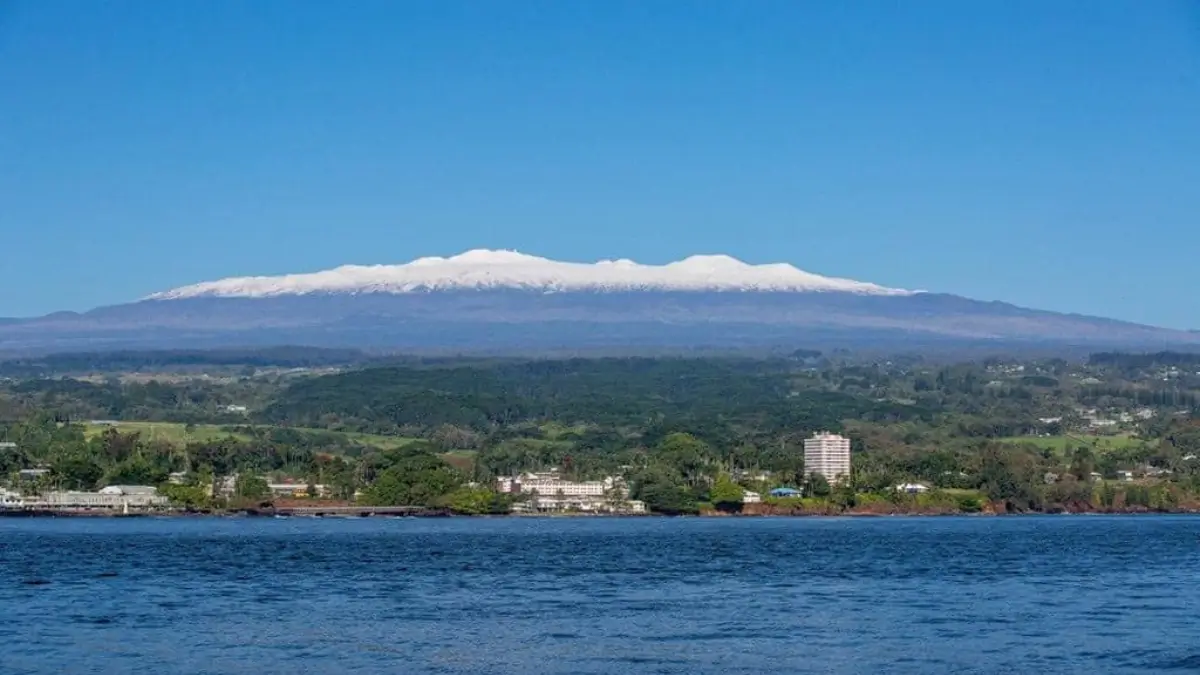
The Earth’s surface is not just made up of mountains and plains on land — beneath the oceans lie some of the world’s most stunning natural wonders. Hidden deep under the sea, there are enormous mountains formed by volcanic activity and shifting tectonic plates. These underwater peaks rise thousands of meters from the ocean floor, making them as fascinating as any mountain found on land.
Tallest Underwater Mountain
The tallest underwater mountain in the world is Mauna Kea, located on the island of Hawaii, USA. Most of this massive volcano lies beneath the Pacific Ocean, while only a part of it rises above sea level. When measured from its underwater base to its summit, Mauna Kea stands about 10,210 meters tall—making it even taller than Mount Everest in total height.
How Tall is Mauna Kea?
Above the ocean’s surface, Mauna Kea stands about 4,205 meters (13,796 feet) high.
However, nearly 6,000 meters of the mountain lies underwater, forming a massive volcanic base. When you add both parts together, Mauna Kea’s total height surpasses Mount Everest, which measures 8,848 meters (29,029 feet) from sea level.
That means Mauna Kea is around 1,360 meters taller than Mount Everest when measured from its base on the ocean floor.
Why Mauna Kea is So Special?
- A Giant Under the Sea: Mauna Kea begins deep under the Pacific Ocean and was formed by lava eruptions over millions of years. Layer upon layer of cooled lava built up this massive mountain, turning it into one of Earth’s largest volcanoes.
- A Dormant Volcano: Mauna Kea is a dormant shield volcano, meaning it last erupted thousands of years ago. Its smooth, broad shape was created by the gentle flow of lava spreading across large areas.
- A Hub for Space Research: The summit of Mauna Kea is above much of the Earth’s atmosphere, making it one of the best places for astronomical observatories. Scientists from around the world study the stars and planets from telescopes located here.
Geological Significance of Mount Kea
Mauna Kea is part of the Hawaiian–Emperor seamount chain, a long line of volcanic mountains that stretch across the Pacific Ocean. These mountains were created as the Pacific tectonic plate slowly moved over a stationary volcanic hotspot deep in Earth’s mantle. This process not only formed Mauna Kea but also created the Hawaiian Islands themselves.
Mauna Kea and Mount Everest
- Mount Everest remains the highest mountain above sea level, symbolizing human endurance and exploration.
- Mauna Kea, on the other hand, is the tallest mountain overall, though much of its greatness lies hidden under the sea.
Together, they show how different ways of measuring — above sea level or from base to summit — can change our understanding of Earth’s geography.


 Weekly Current Affairs One Liners (06th ...
 Who is known as the Father of Scientific...
 Which River is known as the River of Lif...