
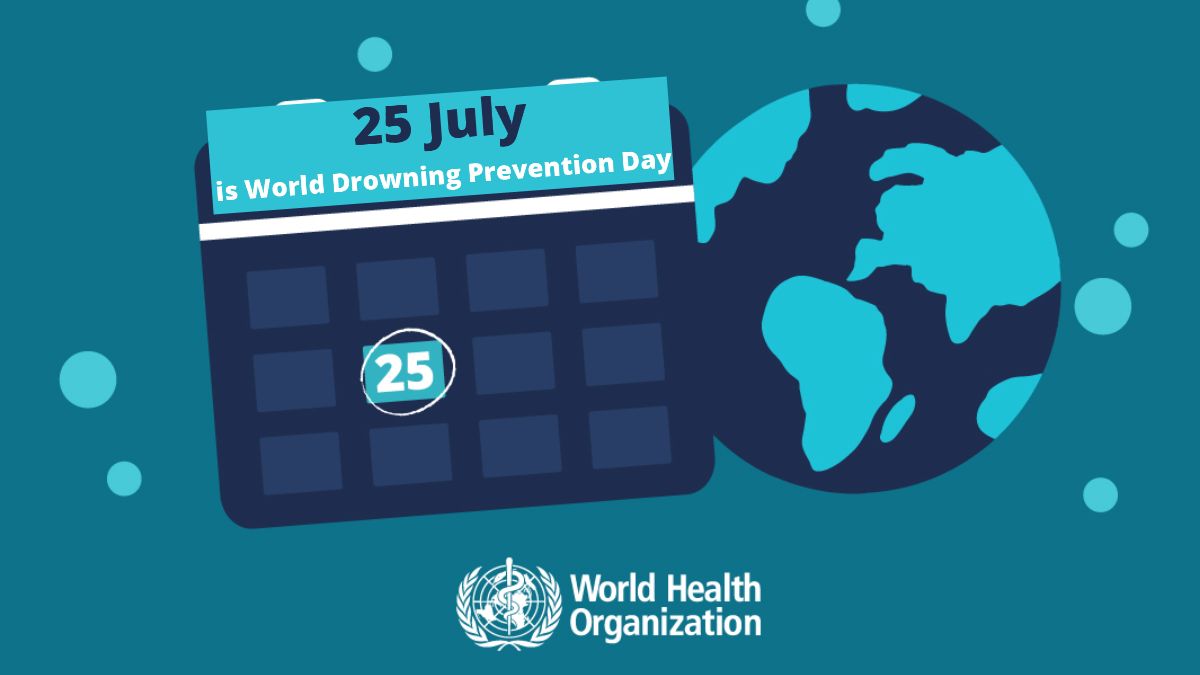
Every year on 25 July, the world observes World Drowning Prevention Day, a United Nations-recognized day aimed at raising awareness about one of the most neglected public health issues—drowning. Despite being highly preventable, drowning claims the lives of an estimated 236,000 people annually, disproportionately affecting children, adolescents, and people in low- and middle-income countries. This observance serves as a global platform to promote life-saving measures and urge governments, organizations, and communities to act decisively.
Background
The United Nations General Assembly, through Resolution A/RES/75/273, declared 25 July as World Drowning Prevention Day in April 2021. The resolution followed the release of the World Health Organization’s Global Report on Drowning, which identified drowning as one of the top 10 causes of death for children aged 5–14 years, with a devastating toll on families and communities. The observance is part of a larger effort to bring attention to a largely under-reported yet critical public health issue.
Significance
Drowning is the third leading cause of unintentional injury-related deaths globally, accounting for 7% of all such deaths. It is especially lethal for children and young people aged 1–24 years, with more than 90% of these deaths occurring in rural areas of low- and middle-income countries. According to WHO data:
Over half of global drownings occur in the WHO Western Pacific and South-East Asia Regions.
Drowning rates in these areas are 27–32 times higher than in high-income nations like the UK or Germany.
Despite the staggering statistics, drowning has not received sufficient global attention—making this day a vital opportunity for advocacy and awareness.
Objectives of the Day
World Drowning Prevention Day aims to,
- Highlight the devastating impact of drowning on communities worldwide.
- Promote proven, cost-effective prevention strategies that can save lives.
- Encourage multi-sectoral collaboration—including governments, civil society, academia, and individuals.
- Empower communities with knowledge and tools to reduce drowning risks.
Key Preventive Measures
The UN and WHO recommend the following life-saving interventions,
- Install barriers to restrict access to open water sources.
- Provide safe spaces (e.g., crèches) for pre-school children away from water.
- Teach swimming, water safety, and rescue skills to children and adults.
- Train bystanders in safe rescue and resuscitation techniques.
- Implement boating and ferry safety regulations.
- Improve flood-risk management through infrastructure and community planning.
These actions, though simple, can have a transformative impact in reducing drowning fatalities, especially when implemented at scale and tailored to local contexts.


 International Day of Sport for Developme...
 List of Important Days in April 2026, Na...
 National Maritime Day 2026: Remembering ...











