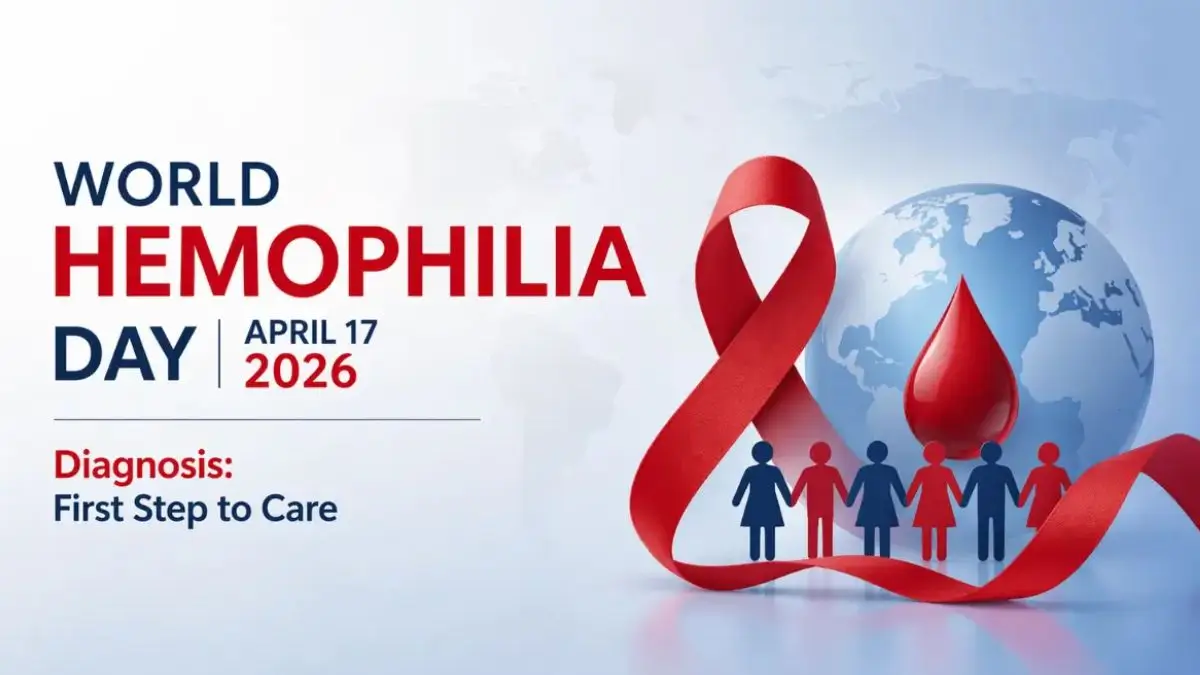
World Hemophilia Day 2026 is observed on April 17 to raise awareness about the hemophilia and other inherited bleeding disorders. This year theme is the “Diagnosis: First Step to Care” which highlights that early detection is essential for to the effective treatment. Globally more than 75% of people with the hemophilia remain undiagnosed and left many without proper care. The day also encourages governments, healthcare professional and the various communities to improve the diagnostic systems and ensure better access to treatment for all.
What Is World Hemophilia Day and Why It Matters
World Federation of Hemophilia established the day to spread awareness about bleeding the disorders like hemophilia and von Willebrand disease. It also serves as the global platform to brings together the patients, doctors, researchers and policymakers to improve the diagnosis, treatment and healthcare access. The popular campaign which named “Light It Up Red” symbolizes the solidarity where the landmarks worldwide glow red to support the cause.
Theme 2026:’Diagnosis – First Step to Care’ Explained
The 2026 theme focuses on the fact that without diagnosis there is no treatment. Many patients specially who are from the developing countries remain undiagnosed due to lack of awareness, poor healthcare infrastructure and the limited laboratory facilities. Also by improving the diagnostic capacity can help detect disorders early, reduce complications and improve the quality of life.
History of World Haemophilia Day
World Haemophilia Day was first celebrated on the 17th of April 1989 by the World Federation of Haemophilia (WFH) to honor the Frank Schnabel’s birthday, the WFH’s founder. This disease wasn’t discovered until the 10th century but when people started paying attention to the disproportionate number of male deaths from seemingly small accidents. In 1803, Dr John Conrad Otto of Philadelphia began researching “bleeders” who eventually concluded that the disease was passed down from mothers to sons. In 1937 haemophilia was classified as a type A or B genetic disorder. However, effective treatment had yet to be developed up to that point.
The Global Challenge: Undiagnosed Cases
One of the major concerns is the huge diagnosis gap. In the world millions of people with bleeding disorders are unaware about this condition. This problem is even more serious for women and girls whose symptoms are often overlooked. Without the proper diagnosis patients face delayed treatment and have to face severe complications and it also reduced life expectancy.
Understanding Hemophilia and Its Symptoms
Hemophilia is the genetic disorder where blood does not clot properly due to the lack of clotting factors.
Common symptoms include,
- Prolonged bleeding after the injury
- Frequent bruising
- Joint pain and swelling
- Also the heavy menstrual bleeding in women
Early medical attention can significantly improve the outcomes.
Diagnosis and Treatment Options
Diagnosis involves the blood tests like CBC, aPTT, PT and clotting factor assessment. Once it has diagnosed hemophilia can be managed through the,
- Factor replacement therapy which is the main treatment.
- Also the Non-factor therapies also the modern alternatives
- Gene therapy which is the emerging solution.
- Physiotherapy and lifestyle management
Although there is no complete cure yet but the proper treatment allows the patients to live healthy and active lives.
How the World Observes This Day
World Hemophilia Day is marked by the health camps, awareness drives, seminars and the global campaigns.
Social media initiatives and several educational programs help spread awareness while the policymakers are urged to improve healthcare policies and funding.
Question
Q. World Hemophilia Day is observed every year on which date?
A. April 15
B. April 16
C. April 17
D. April 18








 International Day of the Snow Leopard 20...
 Ashfaqullah Khan Birth Anniversary 2026:...
 World Iodine Deficiency Day 2026: Causes...