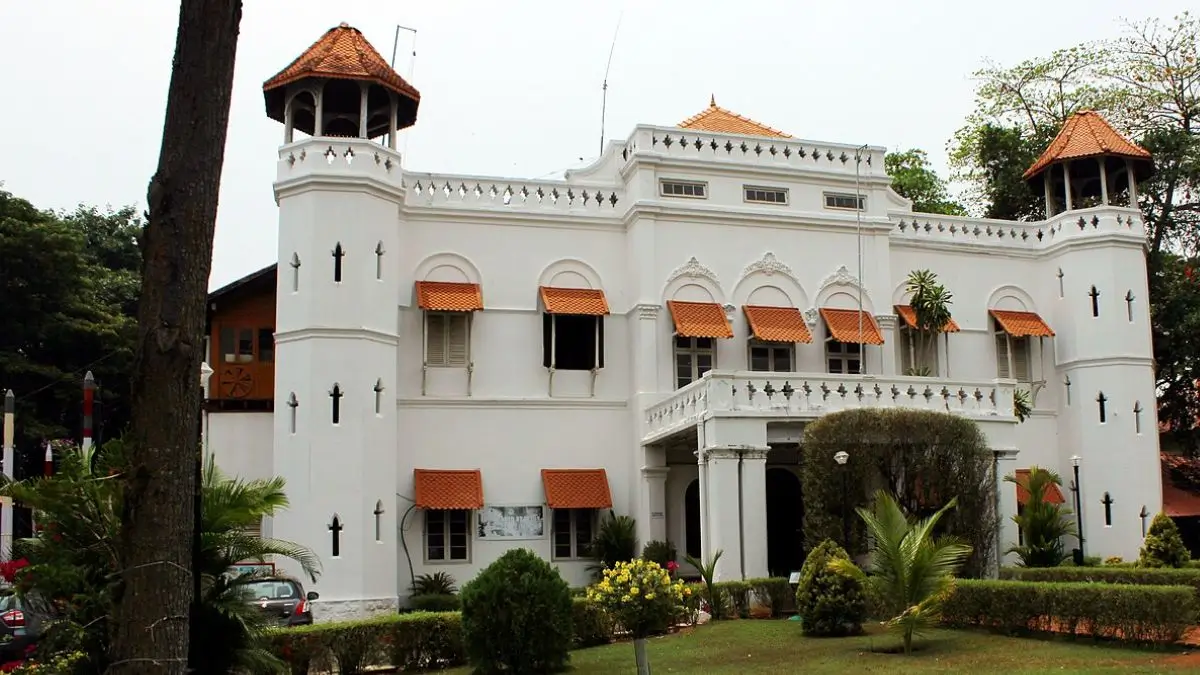
The state of Kerala got the first private medical museum, which is established in Ulloor, Thiruvananthapuram. This museum will offers visitors a fascinating journey through the human body by using the handcrafted anatomical models, paintings and medical archives. This museum is founded by a former artist-modeler at Government Medical College, A Sivaraman.
What is Kerala’s First Private Medical Museum?
The Museum of Medical Archives is the privately established science museum which focused on to the human anatomy, medical history and biological education.
It is located in Ulloor, Thiruvananthapuram (Kerala), the museum houses the decades of educational material created specifically for medical teaching.
Unlike the conventional museums, this space is dedicated entirely to the medical science and biological understanding.
The key objective is to make complex medical concepts easier for the ordinary people to understand through visual and physical learning tools.
Who Founded the Museum?
The museum was founded by the A Sivaraman, a former artist modeler at Government Medical College, Thiruvananthapuram.
Over the period of years, Sivaraman has created the numerous anatomical teaching aids and scientific models used in medical education.
His expertise also lies in to transforming the complex scientific concepts into detailed visual learning tools.
For him this museum fulfills the long cherished dream of making human body science accessible beyond academic institutions.
His vision is simple as the science should be interesting, understandable, and open to everyone.
What Can Visitors See in the Museum?
The museum features the impressive collection of handcrafted educational exhibits.
Major displays includes the,
- Anatomical models
- Embryological development models
- Microbiology archives
- Medical paintings
- Historical photographs
- Scientific teaching materials
The exhibits explains the advanced medical topics that are usually restricted to the classrooms and textbooks.
Human Anatomy Brought to Life
One of the museum’s biggest attractions is its three dimensional anatomical teaching models.
These displays simplify the complex biological processes such as the,
- Fetal circulation
- Embryonic development
- Stages of mitosis
- Tooth formation
- Reproductive anatomy
- Heart development
- Blood vessel structures
These handcrafted exhibits transform the textbook science into a immersive visual learning.
Importance for Students and Science Education
The museum can play a major role in to the science education.
Potential benefits includes the,
- By encouraging the interest in biology and medicine
- Also supporting the school-level science learning
- Inspiring the future doctors and researchers
- Improve the conceptual understanding
- And making science accessible to non-specialists
Such initiatives can help to bridge the gap between academic science and public understanding.








 Asiatic Lions Return to Barda Wildlife S...
 Himachal Pradesh Inaugurates Its First S...
 Lakshadweep Becomes India’s First 100%...