
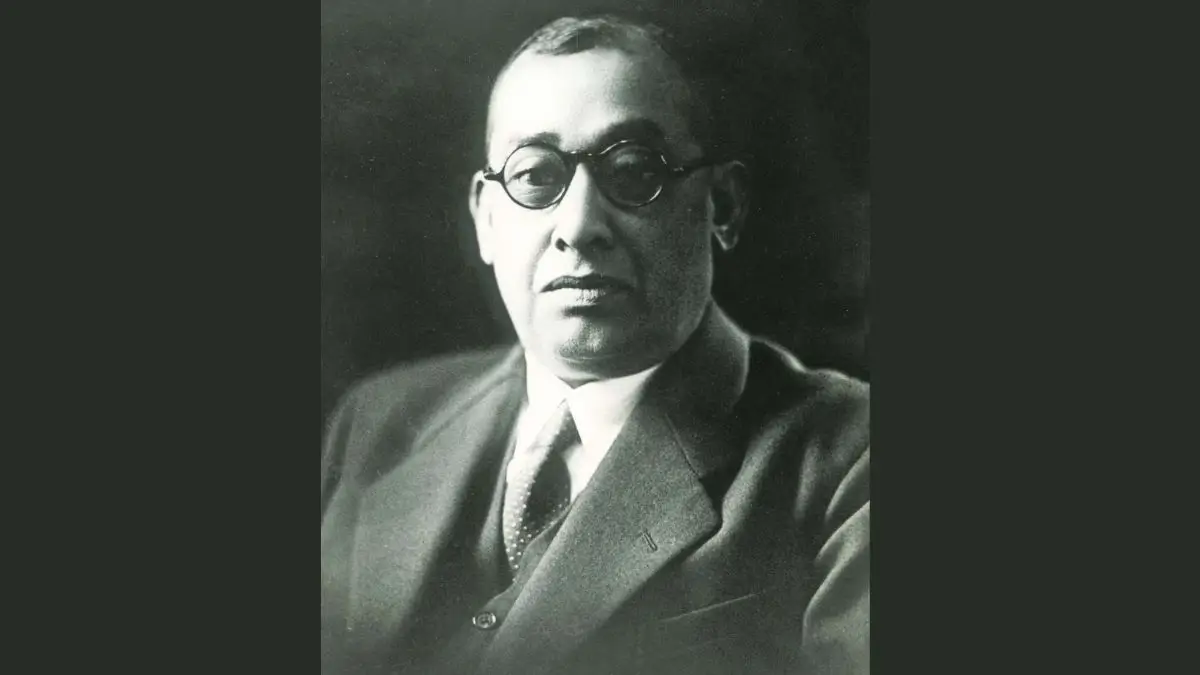
On 25th May, India remembers courageous revolutionary freedom fighter Rash Behari Bose on his birth anniversary. He was key architect of India’s revolutionary struggle against British colonial rule and played the historic role in transforming the freedom movement the domestic resistance into international campaign.
Birth Anniversary of Rash Behari
Rash Behari Bose is being remembered on the occasion of his birth anniversary, and it is celebrated annually on 25 May.
His legacy remains specially relevant because of his critical role in the India’s armed revolutionary movement, the Ghadar Movement, the creation of the Indian Independence League and the groundwork for the Azad Hind Fauj (INA).
His contribution is often overshadowed by the later developments, but he was one of the earliest revolutionaries to internationalize the India’s freedom struggle.
Early Life of Rash Behari Bose
Rash Behari Bose was born on the 25th May 1886 in Subaldaha village, Bardhaman district (present day Purba Bardhaman) in state of West Bengal.
He grew up during a period which was marked by famines, epidemics and harsh British colonial rule, which deeply influenced his nationalist thinking.
His education in the Chandernagore, then a French territory and exposed him to revolutionary political ideas, this includes those concepts inspired by the French Revolution, which had shaped his anti-colonial outlook.
Entry into Revolutionary Politics
Rash Behari Bose became involved in the India’s revolutionary nationalist movement at an early stage.
His association with the legendary revolutionary Bagha Jatin proved transformative.
Under Bagha Jatin’s influence, Bose became deeply committed to the armed resistance against British rule.
He was linked to major revolutionary organizations including,
- Jugantar
- Anushilan Samiti
- Revolutionary underground networks
His methods had reflected the militant nationalist movement active during the early 20th century.
Delhi Conspiracy Case and Attempt on Viceroy Hardinge
One of the most dramatic revolutionary actions of Rash Behari Bose was the attempt to assassinate the Lord Hardinge, the Viceroy of India.
In December year 1912, during the ceremonial transfer of the India’s capital from Calcutta to Delhi, a bomb was thrown at the Viceroy’s procession in Chandni Chowk.
Although Hardinge survived with the injuries, the event became famous as the Delhi Conspiracy Case and marked Bose as one of the most wanted revolutionaries in British India.
Role in the Ghadar Movement
Rash Behari Bose also became a major figure in the Ghadar Movement, which is an international revolutionary effort led largely by Indian expatriates to overthrow British rule.
Key features of the movement.
- Began among the Indian expatriates and specially in North America
- Sought the armed rebellion against British rule
- Attempted the military mutiny during World War I
- Focused on to the coordinated anti-British resistance
The planned 1915 uprising failed due to British intelligence action, but the Bose escaped the arrest.
Escape to Japan and International Freedom Struggle
After British authorities intensified their crackdown, Rash Behari Bose escaped to the Japan in 1915.
In Japan, he lived under secrecy for the several years while avoiding extradition. He later became a Japanese citizen in the 1923 after marrying to Toshiko Bose.
This phase had transformed him from a domestic revolutionary into an international freedom organizer.
From Japan, he built networks to supporting the India’s independence struggle.
Formation of Indian Independence League and INA
During the period of Second World War, Rash Behari Bose played a decisive role in organizing the overseas Indian resistance against British rule.
Major achievements were,
- Founded the Indian Independence League (IIL) in the year 1942
- Helped to mobilize the Indians in Southeast Asia
- Supported formation of the Indian National Army (INA)
- Organized anti-British political resistance abroad
He later invited Subhas Chandra Bose to assume the leadership, recognizing his capacity to unify the movement.
Connection with Azad Hind Fauj
Rash Behari Bose laid the organizational foundation for what later became the famous Azad Hind Fauj (Indian National Army).
Although the INA became widely associated with the Subhas Chandra Bose, its early political and strategic framework owed much to the Rash Behari Bose’s efforts.
His vision also helped to transform expatriate Indian resistance into a structured military movement.
Legacy and Historical Importance
Rash Behari Bose occupies a unique place in the India’s freedom movement because he had connected early armed revolutionary nationalism with international anti-colonial mobilization.
His legacy includes the,
- Militant resistance against British rule
- Leadership in the Ghadar Movement
- International diplomacy for India’s independence
- Founding of Indian Independence League
- Foundational role in INA
Japan also honored him with the Order of the Rising Sun, recognizing his contributions.
He died in the Tokyo on 21 January 1945.








 International Day for Disaster Risk Redu...
 National Human Rights Commission to Mark...
 World Arthritis Day 2026: Date, Theme, H...










