Protest Rights is one of the important parts of Indian democratic arrangement. It gives people the right to voice their opinions, dissent against government and be accountable for their actions. It can be seen as an expression for participatory democracy.
However, this does not come without restrictions. The Constitution of India provides the state with the power to impose certain restrictions with the aim of maintaining public order, national security, etc. With the incident involving the Cockroach Janta Party, the debate around the legality of protests and the interplay between civil liberties and maintaining public order has started again.
What Is the Right to Protest in India?
The Right to Protest is the constitutional provision that enables citizens to come together, say what is on their minds, and oppose government decisions or policies.
The tradition of democracy in India has established peaceful protest as one critical means of public expression ever since Mahatma Gandhi’s freedom struggle.
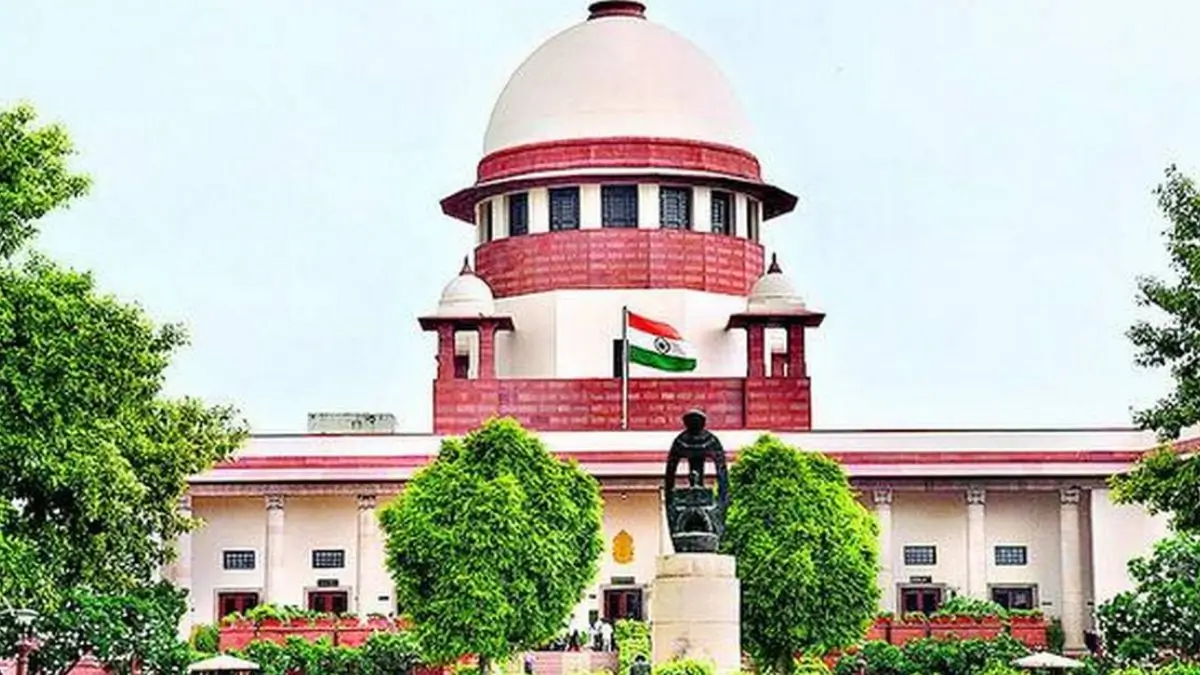
The Supreme Court of India has consistently maintained that peaceful protest is a matter of constitutional importance so long as it is carried out in compliance with the law.
Fundamentals of the Right to Protests
In India, the right to protest has its origin in the Fundamental Rights mentioned in Article 19 of the Constitution.
Article 19(1)(a): Right to Freedom of Speech and Expression
- The article provides the right to all citizens to express their thoughts, feelings, opinions, and thoughts.
- Moreover, peaceful protests, slogans, speeches, and campaigns fall into the ambit of the right provided by Article 19(1)(a).
Article 19(1)(b): Right to Assemble Peacefully
- Citizens have the right to assemble peacefully and unarmed.
- This constitutional provision forms the basis for the conduct of protests.
Are There Any Restrictions on the Right to Protest?
Yes.
According to Article 19(2) and 19(3) of the Constitution, the government has the power to enforce limitations on the right to protest for reasons such as,
- Sovereignty and integrity of India
- Security of the State
- Friendliness to foreign States
- Public order
- Orderliness and decency
- Contempt of court
- Defamation
- Prevention of incitement to crime.
The purpose of these limitations is to seek a balance between individual freedom and public security and functioning of the Constitution.
How Protests Are Governed in India?
Despite being a constitutional privilege, public protests are controlled by the administration.
Typical regulations include,
- Enforcing some specific locations for protests
- Securing prior law enforcement clearance
- Planning transportation and routes
- Giving directions on use of weapons
- Applying the prohibitory order from Section 163 of the Bharatiya Nagarik Suraksha Sanhita Act
These measures are introduced to encourage peaceful demonstrations, without violating any safety standards.
Stand of India on Peaceful Protest at UN
India has recognised peaceful assembly as a vital aspect of democratic tradition.
During the 47th Session of the Human Rights Council of the UN in Geneva in 2021, India stated that peaceful protests and demonstrations are common in India as part of its democratic process.
The Indian representative pointed out that,
- Article 19 provides for free assembly.
- The apex court has granted constitutional recognition to peaceful protest.
- Governments must find a balance between the freedom of citizens and the responsibility of protecting the right to life and the orderliness of society.
Key Supreme Court Rulings Regarding the Right to Protest
The Supreme Court has significantly impacted the definition of the right to protest in India.
Himat Lal K. Shah v. Commissioner of Police (1973)
In this notable case, the Supreme Court ruled that,
- The right to assemble peacefully is a crucial element of democracy.
- People should have the opportunity to discuss various issues including political, social, religious, and economic concerns.
- The government can regulate public areas but it cannot impose unreasonable or blanket bans.
The court differentiated between reasonable restrictions and arbitrary exclusion, indicating that restrictions must be fair and proportional.
Mazdoor Kisan Shakti Sangathan v. Union of India (2018)
The case questioned the imposition of restrictions on protests near the Parliament House and Central Vista in Delhi.
The Supreme Court stated that the authorities may impose restrictions on protests by,
- Regulating the number of participants.
- Maintaining distance from Parliament, Supreme Court and other sensitive government buildings.
- Prohibiting the protestors from carrying arms or dangerous materials.
The judgment recognized Jantar Mantar as a recognized place for protests and emphasized that regulation can never become a complete prohibition over peaceful demonstrations.
Amit Sahni v. Commissioner of Police (2020) – The Shaheen Bagh Case
Court explained the boundaries of the right to protest in case of the Shaheen Bag
It was stated by the Court that,
- Public demonstrations should be held in specified places.
- Protests cannot block public roads forever.
- Right to protest of the citizens should be balanced with the rights of the public, including commuters.
The Court noted that constitutional rights must not lead to major inconvenience to the other parties.
Why Is Protesting So Important?
Peaceful protests solidify democracy and give people the chance to,
- Share their thoughts.
- Put pressure on the authorities.
- Ask for changes in the law.
- Bring attention to economic and social problems.
- Preserve constitutional principles.
Many important democratic reforms originated from peaceful public movements.
Balancing Rights with Safety
Although the Constitution guarantees the right to peaceful protests, the authorities must also guarantee the following,
- Safety of the people.
- Traffic control.
- Access to essential services.
- National security.
- Rights of people who do not protest.
Multiple court rulings confirm the idea that neither free protesters, nor those who restrict certain protests do the right thing.








 PM-VBRY Scheme: EPFO Offers Up to ₹15,...
 Global Hunger Index 2026: India Ranks 10...
 Sudhakar Dalela Appointed as India’s N...