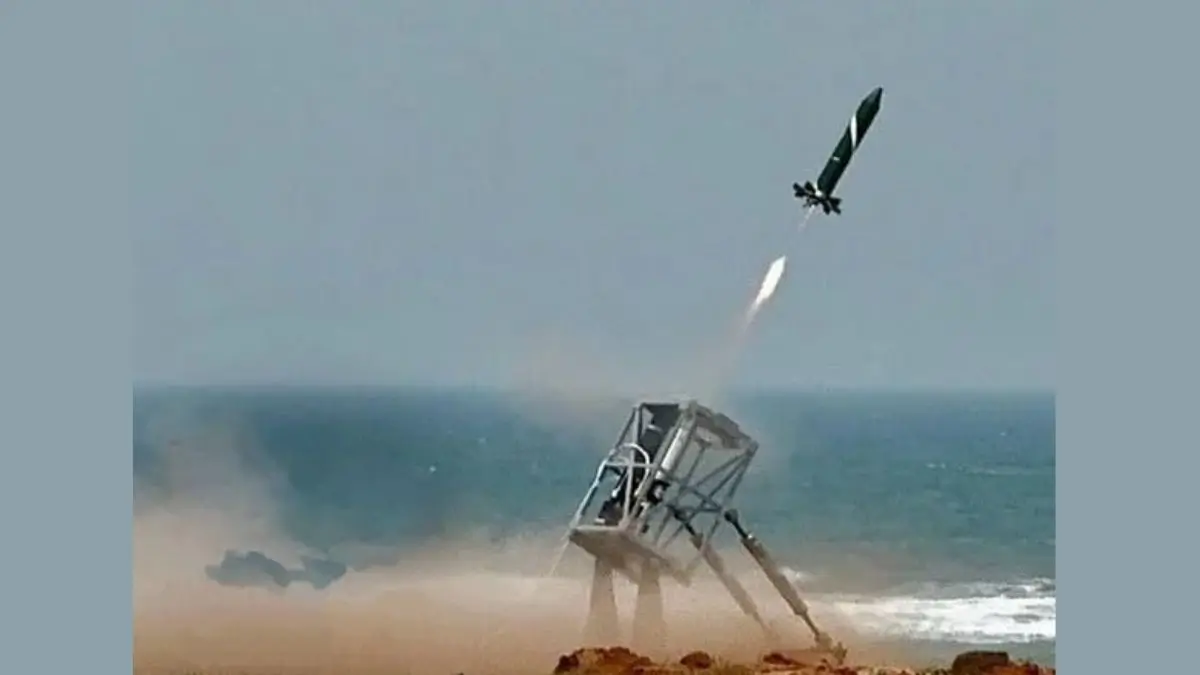
Bhargavastra is a homegrown anti-swarm drone system that has been engineered to neutralize enemy drones and loitering munitions. The Indian Army was shown Bhargavastra on July 24th in Nagpur during the Make-II project launch, thus demonstrating a crucial development in India’s layered air defence system.
With conflicts increasingly making use of drone warfare, Bhargavastra presents a low-cost, mobile, home-grown technology for detecting, tracking, and destroying both single and swarming drones.
What is Bhargavastra?
Bhargavastra, in other words, is a ‘weapon system’ using the vehicle as a base aimed at getting information on drone threats and affording protection from them.
The Bhargavastra counter-drone weapons system comprises advanced sensors for obtaining specific information on the UAVs, drones, loitering munitions, as well as the advanced electronic technology for carrying out the successful attacks on them.
The Bhargavastra counter-drone weapon system has been developed to meet the demands of Indian armed forces of having a multipurpose defence system assisting in ensuring proper protection.
How Bhargavastra Operates
Bhargavastra functions through an integrated system of detection, tracking, command, and interception systems.
Advanced Detection System
This system has a command and control vehicle fitted with,
- Radar systems
- EO/IR sensors
- Passive RF detectors
- Advanced C4I technology
These sensors can keep track of the airspace and create a real-time operational image.
Launcher Vehicle
- There is also a launch vehicle that has many launch tubes to fire rockets and small missiles.
- Once a hostile drone is detected, the command center will give orders to hit the target.
Two-Layer Defense Method
Bhargavastra’s dual-layer defense method is its primary benefit, as the weapon can attack aerial targets over a wide range.
First Layer: Mini-Rockets
- The system uses unguided mini-rockets that have 20 meters of killing zone, and thus, they can effectively deal with complicated swarms of drones.
Second Layer: Smart Mini-Missiles
- For precision attacks, Bhargavastra also uses smart mini-missiles, which can destroy drones as far as 2.5 kilometers away.
- This multi-layer concept increases the chances of elimination of multiple approaching threats.
Detection Range
The Bhargavastra system is capable of to detecting a variety of different types of drones from great distances.
The system is capable of detecting,
- Large UAVs from 10 kilometers
- Small drones from 6 kilometers
This means that it gives the operators enough time to take action against the enemy aircrafts before the latter reach protected targets.
Soft-Kill and Hard-Kill Capabilities
Unlike the ordinary air-defense systems, Bhargavastra utilizes both the soft-kill and hard-kill techniques.
Hard-Kill
- Guided small missiles
- Unguided small rockets
Soft-Kill
- Interfering electronics
- Radio-frequency interruptions
- EW techniques
This multitiered defense system can incapacitate, confuse or even destroy drone, depending on the goal of operation.
Designed for Diverse Geographical Features of India
The Bhargavastra system has been designed and constructed to suit operational environment of India.
This technology can work effectively in,
- Deserts
- Plains
- Mountains
- Areas with altitude over 5,000m
- Snow-covered border areas








 What Is the JWALA Missile? IG Defence De...
 Assam Regiment Wins Gold Medal at Exerci...
 DRDO Successfully Tests Quantum Key Dist...