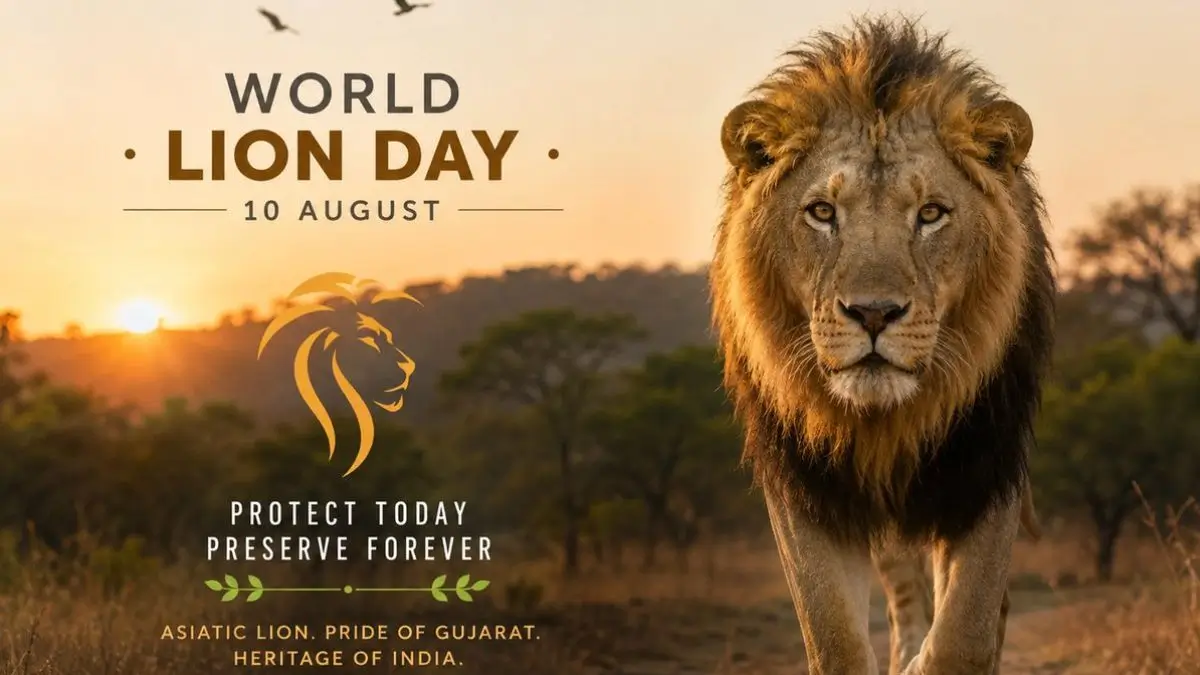
The World Lion Day 2026 observed on August 10th and the day highlights the conservation efforts of lions and the threats that are faced by these creatures in their natural habitats. Lions are one of the most famous felines in the world and they have an important role to play as the apex predators in the ecosystem. However, habitat loss, lack of prey, human wildlife conflict, diseases, poaching, and climate change pressures continue to threaten survival of these lions.
World Lion Day 2026: Date and Significance
World Lion Day is celebrated annually on August 10.
The event draws attention to the conservation efforts of lions and highlights the importance of these apex predators in the ecosystem.
This day is significant for India as India hosts the remaining wild Asiatic lions in the world, which are mainly found in the Gir landscape in Gujarat.
The celebration of Lion conservation day also highlights the efforts made towards Africa.
Why Are Lions Important to the Ecosystem?
The role that lions play in food chains makes them apex predators.
Their presence can make an impact on prey populations and ecosystem dynamics. Predation helps control herbivores and thereby impacts vegetation and habitats.
Ecological importance of lions includes,
- Controlling prey populations: Lions are known to prey upon animals like antelopes, zebras, and buffaloes.
- Conservation of biodiversity: Predator-prey interactions help ensure balanced ecosystems.
- Ensuring continuity of food chains: Lions’ kills may serve as meals for scavengers such as hyenas, jackals and vultures.
- Impact on herbivore grazing: Presence of predators influences the location and way herbivores graze.
- Sustaining ecosystem well-being: Conservation of apex predators implies conservation of extensive habitats.
- Promotion of conservation-based tourism: Wildlife tourism can help promote conservation programs.
Thus, lions cannot be conserved alone. Their conservation demands conservation of the whole ecosystems they belong to.
Threats to Lions
Despite their formidable nature, lions also face several challenges.
Loss of Habitat
- Changes in land use like agriculture and infrastructure development can lead to a loss of habitat.
- The fragmentation of large areas of habitat can limit the movement, hunting, and breeding capabilities of lions.
Conflicts between Humans and Wildlife
- Overlap between human and livestock territories and wildlife territories is likely to lead to conflict situations.
- The killing of livestock will incur economic losses and retaliatory killings of wildlife in response.
Depletion of Prey Base
- Lions need a sufficient prey base.
- Several factors like poaching, habitat destruction, and other stresses can lead to a decrease in prey and possibly lead to an increase in livestock killing.
Poaching and Illegal Wildlife Trade
- Illegal killing and trade of lion body parts are another conservation challenge for lions.
- Some body parts like bones, claws, teeth, and skins can be used in illegal trades.
Climate Change
- Changes in temperature and rainfall patterns are expected to affect availability of water, vegetation, and prey.
- This may further add to the challenges faced by lions.
Disease
- Lions can suffer from diseases such as Canine Distemper Virus (CDV) and Bovine Tuberculosis (bTB).
- Diseases become even more relevant if lions are found in smaller and more isolated habitats.
Efforts to Conserve Lions in India
India has made various efforts to conserve its unique Asiatic lion population.
Project Lion
- The Indian Government started Project Lion in 2020 to improve the long-term conservation of Asiatic lions.
- Some of the components of the project include habitat management, population monitoring, research, surveillance technology and conflict mitigation with humans.
Greater Gir Landscape
- Lion conservation efforts have recently been expanding to the larger Greater Gir landscape and not only a protected area.
- The greater landscape includes places such as Girnar, Pania, Mitiyala and other areas used by dispersing lions.
- The creation of the connected habitat will help with the long-term conservation of the species.
Barda Wildlife Sanctuary
- Barda Wildlife Sanctuary in Gujarat is being set up as another habitat for Asiatic lions.
- The setting up of another wild population is believed to be crucial for reducing threats of the species being concentrated in one main landscape.
Conservation Efforts for Lions Elsewhere
- For conservation efforts outside India, they include the use of sanctuaries, habitat restoration, anti-poaching patrols and community-based conservation.
- Corridors for wildlife could be used in order to ensure connectivity within populations, while restocking of prey populations could provide sufficient food.
- There is regulation of the wildlife trade through international agreements. The CITES organization ensures regulations on international wildlife trade, while the IUCN evaluates conservation status of species and gives scientific recommendations.
- Other institutions and conservation organizations use satellite monitoring, cameras, genetics and surveys in order to enhance conservation planning.
Interesting Facts about Lions
Here are some important facts about lions,
- Lions fall under the cat family, Felidae.
- A group of lions is generally referred to as a pride.
- The pride may consist of female lions, cubs, and male lions.
- Male lions are normally known for their manes, though the color and size may vary.
- Lions use vocalization, marking with scents, and body language to communicate.
- Lions are carnivorous predators in the ecosystem.
- The cubs learn the behavior through development.
- Lion behavior varies depending on the surroundings and prey available.








 Indian Air Force Day 2026: 94th Annivers...
 World Space Week 2026 Celebrated with Th...
 World Cerebral Palsy Day 2026: Theme, Si...