
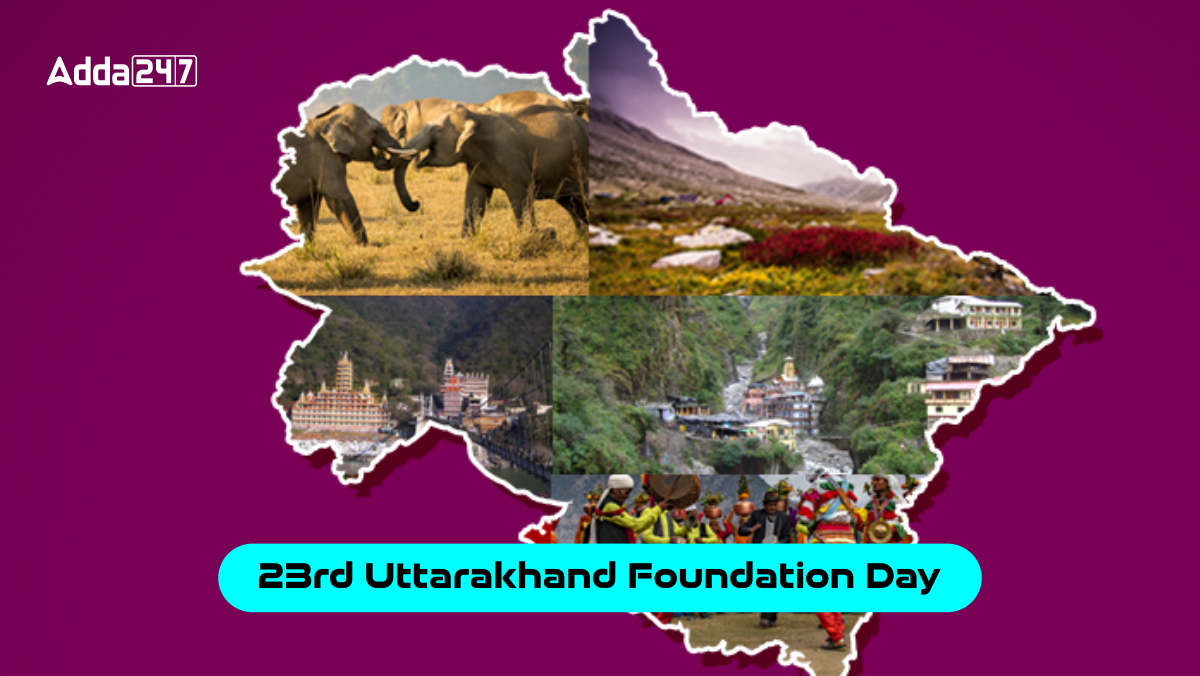
On November 9, Uttarakhand observes its 23rd Foundation Day, and President Draupadi Murmu will participate, marking the first instance in 23 years that a President has been part of Uttarakhand’s Foundation Day program.
President Droupadi Murmu’s Significant Visit to Uttarakhand
- India’s President, Smt Droupadi Murmu, is on a visit to Uttarakhand from November 7 to 9, 2023.
- This three-day visit carries immense importance for both the state and the President, aligning with the celebration of Uttarakhand Foundation Day.
- This day commemorates the state’s establishment and honors its distinct cultural identity.
First Day: Convocation and Interaction – November 7, 2023
I.Emphasizing Education and Agricultural Technology in Pantnagar
- President Droupadi Murmu participated at the 35th convocation of Govind Ballabh Pant University of Agriculture & Technology in Pantnagar.
- This event highlighted the significance of education and agricultural technology in the region, emphasizing the crucial role of agriculture in Uttarakhand’s economy.
II.A Commitment to Welfare and Development
- Later on that day, the President interacted with members of Particularly Vulnerable Tribal Groups (PVTGs) in Uttarakhand.
- This engagement aimed to underscore the government’s dedication to the welfare and development of tribal communities, recognizing their distinct cultural heritage and requirements.
Second Day: Recognizing Academic Excellence – November 8, 2023
- On the second day of her visit, President Murmu served as the guest of honor at the 11th convocation of Hemvati Nandan Bahuguna Garhwal University in Srinagar (Garhwal).
- This occasion commemorated the academic accomplishments of the university’s graduates and highlighted the significance of higher education in Uttarakhand.
Third Day: Celebrating Uttarakhand Foundation Day – November 9, 2023
- The highlight of President Murmu’s visit to Uttarakhand is her involvement in the central program organized at the Police Lines in Dehradun to mark the occasion of Uttarakhand State Foundation Day.
Commemorating Uttarakhand Foundation Day
- Uttarakhand Foundation Day, also known as Uttarakhand Divas, is celebrated on November 9 every year.
- It commemorates the day when Uttarakhand, formerly known as Uttaranchal, was officially formed as the 27th state of the Republic of India on November 9, 2000.
- Uttarakhand’s hilly terrain had specific developmental needs overlooked by the larger state administration. The creation of Uttarakhand aimed to address these issues and promote regional development.
Celebrating Culture and Identity
- Uttarakhand is characterized by its hill culture, diverse traditions, languages like Kumaoni and Garhwali, and its unique folk music and dances.
- The day reflects the triumph of the tireless spirit of its people and their rich history, highlighting the essence of Uttarakhand’s distinct cultural heritage.
Progress and Ongoing Goals
- This day is also a reminder of the state’s development goals and the progress it has made since its formation.
- Uttarakhand has overcome several challenges in areas like ecological conservation, sustainable tourism, and creating economic opportunities for the hill communities.
- The celebration of Uttarakhand Foundation Day serves as a platform to discuss these achievements and challenges, fostering a sense of unity and responsibility among the people.









 Asiatic Lions Return to Barda Wildlife S...
 Himachal Pradesh Inaugurates Its First S...
 Lakshadweep Becomes India’s First 100%...










