Kerala Piravi 2026: History, Significance and 70 Years of Kerala Formation

Kerala Piravi or Kerala Day is observed each year on 1 November to mark the formation of the state of Kerala in 1956. It celebrates the merger of Malayalam-speaking regions that were earlier under the administration of Travancore, Cochin, and Malabar. Kerala will be 70 years old in 2026. The day is dedicated to the Malayalam language, culture, and the history of the movement for the linguistic reorganization of Kerala.

What Is Kerala Piravi?

Kerala Piravi (കേരളപ്പിറവി) refers to the birth of Kerala. The Malayalam word Piravi is used for “birth”.

Kerala Piravi marks the establishment of Kerala as a state of the Indian Union on 1 November 1956 through linguistic reorganization of the boundaries of the states.

The day is also called Kerala Day or Kerala Formation Day and is celebrated with various cultural events, educational programs, and promotion of the Malayalam language.

Why is Kerala Piravi Celebrated?

Before the creation of Kerala, there were Malayalam-speaking communities in various administrative zones.

The major areas that contributed to the creation of the state of Kerala were,

  • Travancore: This was a princely state comprising the greater part of southern Kerala.
  • Cochin: This was a princely state situated in Central Kerala.
  • Malabar: This area was a part of Madras State and comprised Northern Kerala.

The merger of these areas, having a common linguistic and cultural background into one state on 1st November 1956 was a significant achievement in the process of linguistic consolidation in India.

Kerala Piravi marks the celebration of this unity.

Kerala’s Historical Formation

Kerala Before Independence

  • Prior to the year 1947, when India gained independence, the areas that constitute Kerala today had different forms of administration.
  • Travancore and Cochin were princely states, while Malabar was administered under the Madras Presidency during British colonial rule.
  • With common language being Malayalam, despite having different politics and administration, the ground for the formation of a state with a common language was laid.

Formation of Travancore-Cochin

  • Travancore and Cochin were merged into Travancore-Cochin state on 1 July 1949 after Independence.
  • The merging of Travancore and Cochin states was one of the important steps towards the formation of the state of Kerala, except that Malabar continued to be a part of Madras State.

Formation of Kerala in 1956

  • States Reorganization Act 1956, changed the boundaries of Indian states mainly based on language.
  • Malabar and Kasaragod, two Malayalam-speaking regions were merged into Travancore-Cochin and formed the state of Kerala on 1 November 1956.
  • Kerala’s formation day is celebrated as Kerala Piravi annually.

Kerala Piravi 2026: 70th Anniversary

Kerala Piravi will be celebrated on Sunday, 1 November 2026.

It will be 70 years since the formation of the state of Kerala in 1956.

Year Historical event
1947 India became independent
1949 Merging of Travancore and Cochin into Travancore-Cochin
1956 Formation of Kerala on 1 November
2026 70 years after the formation of Kerala

Celebration of Kerala Piravi

Kerala Piravi is celebrated in the state through various cultural events and programs for education about the Malayalam language and Kerala heritage.

Wearing Traditional Costume

Participants of the celebration dress in traditional Kerala costumes.

Typical examples are,

  • Mundu: Traditional costume for men.
  • Settu Mundu: Two-piece traditional costume for women.
  • Kasavu Saree: Traditional Kerala saree distinguished by a golden border.

Promotion of the Malayalam Language Program

Various schools, colleges, and other cultural organizations organize programs related to the promotion of the Malayalam language and literature.

Programs can consist of,

  • Reciting of the Malayalam poetry.
  • Debating and speech contests.
  • Quizzes on the Malayalam language.
  • Writing of essays and literary programs.
  • Cultural activities and traditional music.

Celebrations of Culture

  • There are also cultural celebrations that show the rich culture of Kerala.
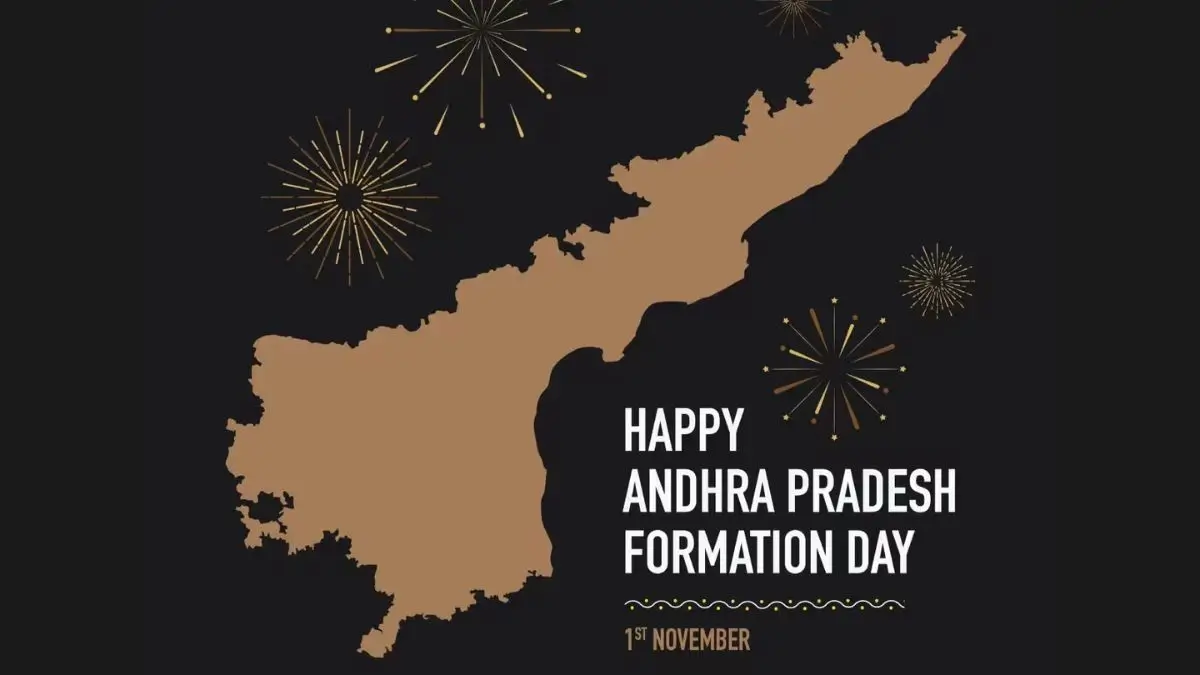
Andhra Pradesh Formation Day 2026: History, Formation, Telangana Bifurcation and Significance

Andhra Pradesh celebrate Formation Day every year on the 1st of November. This commemorates the creation of Andhra Pradesh when the Andhra State was merged with the Telugu-speaking Telangana region from the former Hyderabad State. This was a key milestone when Andhra Pradesh was created due to sustained campaigning from groups wanting a separate administrative region for Telugu-speaking people. However, Andhra Pradesh was split into two in 2014, creating Telangana.

Historical Background: Andhra State Movement

Prior to Independence, there were several areas with Telugu speakers. A large portion of Telugu speakers were part of the Madras Presidency. Other parts of Telugu speakers were part of the princely state of Hyderabad.

There arose increasing demands for a separate state to acknowledge their language, literature and culture. This led to the Andhra State movement.

Potti Sriramulu Contribution

  • Potti Sriramulu was key to the Andhra movement.
  • He was an Indian freedom fighter and social reformer who campaigned for the creation of a separate Andhra State.
  • On the 19th of October 1952 he went on a hunger strike.
  • After 58 days he died on the 15th of December 1952.
  • This led to large protests throughout Telugu-speaking regions.
  • The public reaction to this put a lot of pressure on the Indian Government to recognise the demand.

Andhra State created

  • The Indian Government recognised the demands and created Andhra State by passing the ‘Andhra State Act 1953’.
  • Andhra State was formed by separating the Telugu-speaking regions from the former Madras State on the 1st of October 1953. This was the first post-independence state in India based on language.
  • Kurnool was chosen as the capital, and Tanguturi Prakasam Pantulu became the first Chief Minister. This increased demands for linguistic reorganisation throughout the rest of India.

State Reorganisation Commission and Creation of Andhra Pradesh

  • The creation of Andhra State led to increasing demands for other areas of India to be reorganised into states based on language. To address this, the Indian Government created the State Reorganisation Commission in December 1953.
  • The commission consisted of Fazl Ali as chairman, K.M. Panikkar and H.N. Kunzru as members. They looked at several factors, including linguistic, administrative, geographical, economic, and national.
  • The recommendations made by the commission were vital for the reorganisation of states in India in 1956.

Andhra Pradesh created

  • The Indian Government passed the ‘States Reorganisation Act 1956’.
  • Andhra State was merged with the Telugu-speaking Telangana region from the former Hyderabad State to create Andhra Pradesh. Hyderabad became the capital.
  • Neelam Sanjiva Reddy became the first Chief Minister.
  • The creation of Andhra Pradesh was a key step in the linguistic reorganisation within India as it brought together some of the largest regions of Telugu speakers.

Telangana movement and Splitting of Andhra Pradesh

  • Despite the creation of Andhra Pradesh in 1956 there were still demands from regions. Over the next few decades, there were increasing demands for Telangana to be a separate state.
  • The movement was driven by demands for fair development in the region, jobs, political representation, irrigation, water resources and public spending. It was also driven by the sense of regionalism and wanting their own culture.

Creation of State of Telangana

  • After many years of political campaigning, the Indian Parliament passed the ‘Andhra Pradesh Reorganisation Act 2014’.
  • This allowed Andhra Pradesh to be split into two states. On the 2 nd of June 2014 Telangana was officially created as a separate state and became the 29 th state in India.

As a result of the split,

  • Telangana became a separate state with Hyderabad as its capital.
  • Andhra Pradesh remained as a separate state.
  • Hyderabad was identified as a shared capital between Andhra Pradesh and Telangana for up to 10 years under the Reorganisation Act.
  • This was an important change to the political landscape of south India.

Constitution and Legislation

The creation and reorganisation of Andhra Pradesh relates to the constitutional aspects of creating states.

Article 3

  • This article allows parliament to create new states and change the boundaries, area and names of states. This allowed Andhra Pradesh to be created in 1956 and Telangana in 2014.
  • However before a bill can be introduced under this article, the President must recommend it.
  • If the bill affects the area, boundary or name of a state it will be referred to that state’s legislature for their opinion. Parliament are not obliged to take their opinions into account.

Article 4

  • This allows parliament to pass legislation to make consequential amendments to the First and Fourth Schedules using articles 2 and 3 without going through the constitutional amendment process in article 368.

Important Legislation

Legislation & Year Significance
Andhra State Act – 1953 Created the Andhra State.
States Reorganisation Act – 1956 Created Andhra Pradesh by merging Andhra with Telangana region.
Andhra Pradesh Reorganisation Act – 2014 Split Andhra Pradesh to create Telangana.

Geographical Significance

Andhra Pradesh is situated in the south east of India and borders the Bay of Bengal. It has a long coastline and some of the most fertile river deltas, farmland and parts of the Eastern Ghats.

Its location makes it strategically important for shipping, fishing, farming and industry.

  • Location: South East of India.
  • Capital Region: Amaravati.
  • Coastline: Borders the Bay of Bengal.
  • Major Rivers: Godavari, Krishna and Penna.
  • Mountain Range: Eastern Ghats.
  • Key Natural Region: Araku Valley.
  • Major Farming Region: Krishna-Godavari Delta.
  • Godavari and Krishna Rivers
  • The Godavari and Krishna rivers are key to the farming and water resources of Andhra Pradesh.

The large river deltas allow for rice farming and other farming activities. Also help with irrigation, clean water and hydroelectricity.

Karnataka Rajyotsava 2026: History, Significance and 70 Years of State Unification

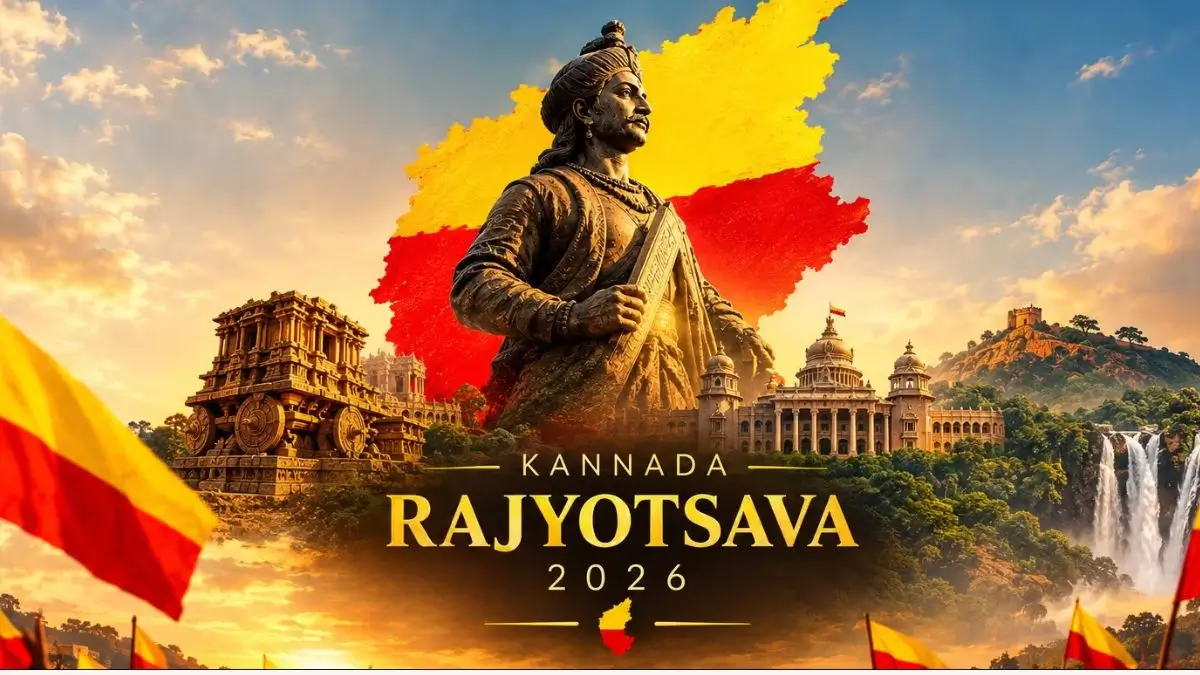
Karnataka Rajyotsava, which is sometimes referred to as Kannada Rajyotsava, is celebrated on 1 November every year to remember the integration of Kannada-speaking areas into the enlarged Mysore State in 1956. In 2026, Karnataka Rajyotsava will celebrate 70 years of Karnataka state unification. This day celebrates the language, literature, culture, and historic struggle of unifying Kannada-speaking areas into one administrative unit. Karnataka Rajyotsava also represents an important case of state formation in India after independence through linguistic reorganization of the states.

What Is Karnataka Rajyotsava?

Karnataka Rajyotsava (ಕನ್ನಡ ರಾಜ್ಯೋತ್ಸವ) is the state formation day of Karnataka, which is celebrated every year on 1 November.

The word Rajyotsava means a celebration of the state or statehood. This day marks the integration of Kannada-speaking areas into the enlarged Mysore State on 1 November 1956 under the States Reorganization Act, 1956.

This day recognizes the historical, linguistic and cultural heritage of Karnataka while celebrating those people who have supported the unification movement.

What Makes Karnataka Rajyotsava Significant?

Before 1956, Kannada-speaking areas existed in different administrative regions such as Mysore, parts of Bombay, Madras and Hyderabad states and also Coorg.

The Karnataka Ekikarana Movement was an initiative which aimed to unify the Kannada-speaking regions into one state.

The creation of the expanded Mysore State on 1st November 1956 was a significant step towards this goal. Karnataka Rajyotsava is celebrated to honor this achievement and also to recognize the evolution of the Kannada language and culture.

This is not an Independence Day or a religious event; it is a state formation day.

Why Is Karnataka Rajyotsava Important?

Prior to 1956, the Kannada-speaking areas were spread across various regions such as Mysore, Bombay, Madras and Hyderabad states and even Coorg.

Karnataka Ekikarana Movement was an effort made towards creating one state by unifying the Kannada-speaking regions.

Creation of Mysore State on 1st November 1956 was a great step towards this goal. Karnataka Rajyotsava is a festival that celebrates this success as well as evolution of the Kannada language and culture.

This is not independence day nor any religious occasion. It is the day of formation of a new state.

Historical Background of the Creation of Karnataka

Karnataka Ekikarana Movement

  • The Karnataka Ekikarana Movement was formed to bring about unity amongst the Kannada-speaking regions, which were under different administrative divisions.
  • Various writers, intellectuals and political leaders have taken part in the formation of this movement. Aluru Venkata Rao, who was widely recognized as Karnataka Kulapurohita, was one such leader who worked towards the cause of Kannada identity and unification.

Merging to form Mysore State in 1956

  • The Indian states were reorganized through the States Reorganization Act of 1956 based on linguistic criteria.
  • On 1st November 1956, the Kannada-speaking regions from adjoining administrative regions were merged with the Mysore State and this led to the formation of an expanded Mysore State.
  • This day is celebrated as Karnataka Rajyotsava.

Name Change of Mysore State to Karnataka in 1973

This newly formed state continued to be called Mysore State up to 1973.

It was then renamed to Karnataka on 1 November 1973 under the Mysore State (Alteration of Name) Act, 1973.

The name Karnataka was chosen as it had a broader connotation than the previous name.

Year Historical Event
1956 Kannada-speaking regions combined together to form enlarged Mysore State
1973 Name change of Mysore State to Karnataka
2026 70 years since 1956 Unification

Karnataka Rajyotsava 2026: 70th Anniversary

Rajyotsava will be observed on 1 November 2026 (Sunday).

Year 2026 shall witness the 70th anniversary of the formation of the expanded Mysore State in 1956.

It is essential to distinguish between the anniversary of unification and the annual observation,

  • 70 Years – Number of years passed after 1 November 1956.
  • 71st Annual Observation – Celebration count starting from 1956 as the first time of celebration.

The 70th anniversary pertains to the year of unification but not the renaming in 1973.

How Is Karnataka Rajyotsava Celebrated?

Rajyotsava in Karnataka is marked by celebrations of cultural events and the Kannada language.

Hoisting of Flag and Cultural Programs

  • Cultural programs are organized by government organizations and educational institutes, along with Kannada songs, speeches, plays and poetry recitals.
  • The official state song of Karnataka, “Jaya Bharata Jananiya Tanujate,” composed by the famous Kannada poet Kuvempu, is often heard at the time of cultural events.

Karnataka Rajyotsava Awards

  • The Rajyotsava Awards are awarded by the government of Karnataka for significant contributions in areas like literature, arts, education, science, social service and others.
  • These awards are given to people who have made remarkable contributions to Karnataka society and culture.

Haryana Day 2026: History, Formation and Significance of Haryana

Haryana Day is a celebration held every year on 1st November to celebrate the creation of the state of Haryana in 1966. The 60th anniversary will be celebrated in 2026. It was created from the previous state of Punjab after linguistic, cultural and regional demands were made. The celebration marks how Haryana has a rich history, has developed it’s agriculture and has strong cultural values and has contributed to India’s economy.

Haryana Day History

Haryana Day is a day that celebrates the creation of Haryana as a new state on the 1st November 1966. Before this date the region was part of Punjab. During the 1950’s and 1960’s people began to demand Haryana be a new state.

The celebrations take place throughout the state. There are many cultural events, sports days, cycling parades, food festivals, blood donation drives and music performances. The government buildings will often have lights on and there will be special events in the tourism centres.

Historical Background – Creation of Haryana

Haryana pre-independence

  • Haryana has a rich history with many ancient kingdoms, religious beliefs and important political changes throughout northern India. During the British period, most of the area was run as part of Punjab province.
  • After Independence in 1947 the region was still part of Punjab. However, there were increasing demands to create a new state due to the differences in languages, cultures and regional desires.

Demand for a new state

There were increasing demands for Haryana to be a new state due to,

  • Linguistic – Areas that spoke Hindi wanted to be recognised separately from the majority Punjabi-speaking areas.
  • Cultural – The culture of the region was very different.
  • Administrative – People believed they would have better governance if they were their own state.
  • Regional – They wanted more political representation.

Shah Commission and creation in 1966

  • In April 1966 the Government of India set up a commission led by Justice J.C. Shah to investigate how Punjab should be reorganised and make recommendations on where the borders of Haryana should be.
  • The Shah Commission presented their findings in May 1966. The Punjab Reorganisation Act 1966 was then passed in Parliament. This came into effect on the 1st November 1966.

This meant that,,

  • Haryana became a new state.
  • Chandigarh became a Union Territory.
  • Chandigarh became the joint capital of Punjab and Haryana.
  • Some hill areas were moved to Himachal Pradesh.
  • Bhagwat Dayal Sharma became the First Chief Minister of Haryana.
  • This was an important event in the reorganisation of states after independence.

Constitutional and Legal Background

  • Article 3 of the Indian Constitution
  • Article 3 gives Parliament the power to reorganise the territory of India. This can be done by:
  • Creating a new state from an existing state.
  • Joining together two or more states or parts of states.
  • Increasing/decreasing the size of a state.
  • Changing the boundaries of a state.
  • Renaming a state.
  • Creating Haryana was an example of this happening.

Key facts about Haryana

Feature Details
Creation Date 1st November 1966
60th Anniversary 1st November 2026
Creation Legislation Punjab Reorganisation Act 1966
Original State Punjab
Capital Chandigarh
First Chief Minister Bhagwat Dayal Sharma
First Governor Dharma Vira
Official Language Hindi
Other Language Punjabi
High Court Punjab and Haryana High Court
Important Harappan Site Rakhigarhi
Main Historical Site Kurukshetra

Punjab Formation Day 2026: History, Reorganization and Significance of Punjab Day

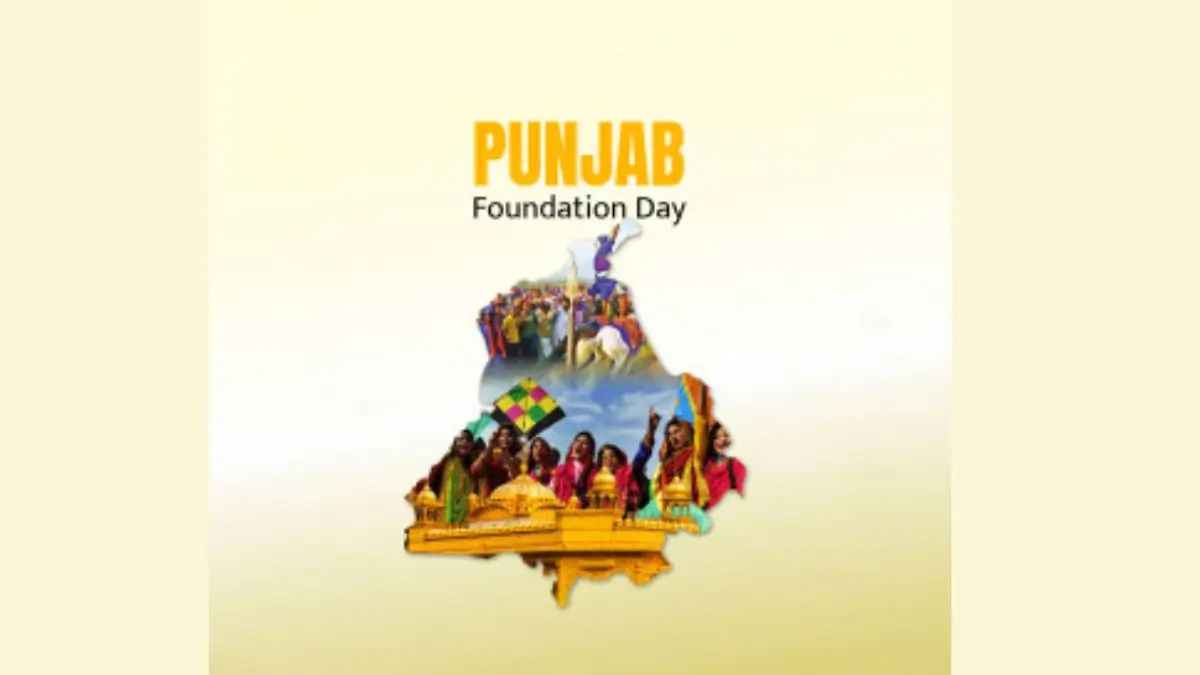
Punjab Formation Day, or simply called Punjab Day and Punjab Reorganization Day, is celebrated every year on the 1st November. It marks the reorganization of Punjab in 1966. This event formed the present day state of Punjab, with the Punjabi speaking region, created the state of Haryana from the Punjabi-speaking region, and transferred certain areas of the hills to Himachal Pradesh. The 60th anniversary of the reorganization takes place in 2026. This day celebrates the linguistic background, heritage, culture, and contribution to Indian agriculture, the freedom struggle, and national development.

Punjab Formation Day 2026 Date & Significance

Punjab Formation Day 2026 will take place on Sunday, 1st November 2026. This marks the start of the Punjab Reorganization Act, 1966.

This day commemorates the formation of the modern-day state of Punjab. It recognizes the political and social movement for recognition of the Punjabi language.

History of Punjab Formation Day

Punjab Before & After Independence

  • Punjab was a major province of the British before independence. In 1947, the partition of the country caused a massive movement of people.
  • After independence the Indian portion became a state. In 1948, the union of a number of princely states in the area formed the Patiala and East Punjab States Union (PEPSU). In 1956 PEPSU was merged with Punjab.
  • Punjab now included areas from different linguistic and cultural backgrounds. This resulted in a call for reorganization.

Punjabi Suba Movement

  • The Punjabi Suba Movement began in the 1950’s and 1960’s. The movement aimed to create a separate state for the Punjabi language.
  • The movement was aimed at recognition of the Punjabi language and culture. This became a key point in the political debate.

Punjab Reorganization Act 1966

The Punjab Reorganization Act was passed by the Government of India. It took effect on the 1st November 1966. This caused massive changes to the areas:

Punjab

  • The Punjabi-speaking region became the reorganised state of Punjab.

Haryana

  • The Hindi-speaking region became a separate state called Haryana.

Himachal Pradesh

  • Certain areas of the hills were transferred to Himachal Pradesh.

Chandigarh

  • Chandigarh became a Union Territory and joint capital of Punjab and Haryana.

This created the state of modern day Punjab.

Historical Events Leading to the Formation of Modern Punjab

Modern Punjab was formed due to a number of major events.

Date Event
1947 Partition caused the split of the former British Punjab Province.
1950 PEPSU was created by merging a number of princely states, including Patiala.
1956 PEPSU was merged with Punjab.
1966 Punjab was reorganized following the Punjab Reorganization Act. This created modern Punjab, Haryana and transferred certain areas to Himachal Pradesh.

This created a separate state for the Punjabi-speaking region.

Constitution & Legislation

Punjab Reorganization Act 1966

The Punjab Reorganisation Act 1966 was passed by Parliament. It was enacted on 18th September 1966. The appointed day was 1st November 1966.

It created,

  • A new state of Haryana.
  • New Union Territory of Chandigarh.
  • Transferred specified areas to Himachal Pradesh.
  • Reorganised the remaining areas into modern Punjab.

This also outlined how the administration would run, who would have representation, and how the assets and liabilities would be split between the new governments.

Article 3 of the Constitution of India

Article 3 allows Parliament to,

  • Create a new state by separating territory from an existing state.
  • Merge two or more states or parts of states.
  • Change the area of a state.
  • Change the boundaries of a state.
  • Change the name of a state.
  • The reorganization of Punjab in 1966 is an example of how the internal borders of India can be changed.

Why is Punjab Called the Land of Five Rivers?

Punjab stems from two Persian words, ‘Panj’ meaning five, and ‘Ab’ meaning water. This translates to ‘Land of Five Rivers’.

The five rivers traditionally associated with Punjab are,

  • Sutlej.
  • Beas.
  • Ravi.
  • Chenab.
  • Jhelum.

Following partition in 1947 the Chenab and Jhelum became part of Pakistan’s Punjab. Whereas the Sutlej, Beas and Ravi run through modern-day Punjab in India.

Chhattisgarh Formation Day 2026: History, Theme, Constitutional Provisions and Rajyotsav Celebrations

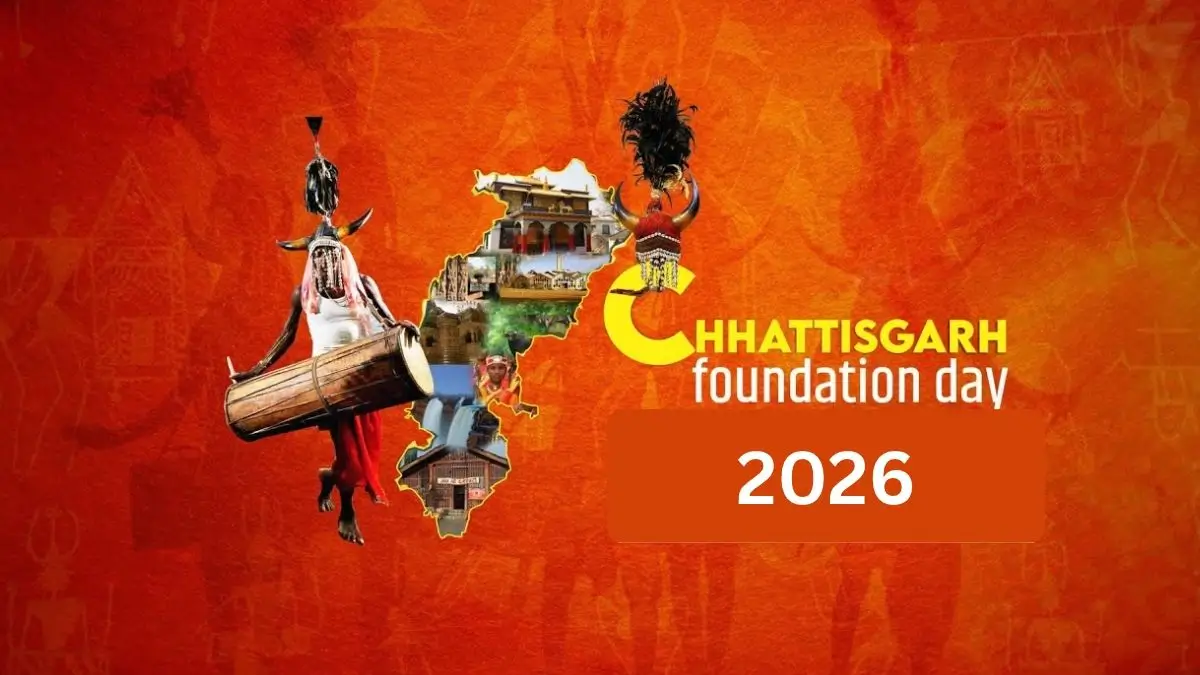
Chhattisgarh Formation Day (also known as Chhattisgarh Foundation Day or Chhattisgarh Rajyotsava) is commemorated every year on the 1 st of November to mark the creation of Chhattisgarh as an independent state from Madhya Pradesh in 2000. The state will celebrate its 26 th anniversary of becoming a state in 2026. The day is to celebrate the unique regional identity, tribal culture, and traditions of Chhattisgarh. The annual festival highlights the development goals of the state with the theme being women’s empowerment and youth engagement for 2026.

Chhattisgarh Formation Day 2026

The Chhattisgarh Formation Day 2026 will be held on the 1 st of November 2026 (Sunday).

Chhattisgarh was formed from Madhya Pradesh and became the 26 th state within the Indian Union. The day celebrates the unique regional identity, history, culture, and administration.

  • Event Name: Chhattisgarh Formation Day
  • Known As: Chhattisgarh Diwas / Chhattisgarh Rajyotsava
  • Date: 1st November 2026.
  • Year of Formation: 2000.
  • Anniversary 2 th Anniversary.
  • Parent State: Madhya Pradesh.
  • Formation Act: Madhya Pradesh Reorganisation Act, 2000.
  • Capital: Raipur.
  • Rajyotsav Location 2026: Rajya Utsav Sthal, Sector 15, Nava Raipur.

Chhattisgarh Rajyotsav Theme 2026

Theme for the year 2026 is “Sashakt Nari, Yuva Udaan”

The theme celebrates women’s empowerment and youth engagement.

  • Sashakt Nari – Women Engagement & Empowerment;
  • Yuva Udaan – Youth Development & Engagement;

This highlights how important it is to develop inclusively with women and youth at the forefront.

Chhattisgarh Formation Day History

Chhattisgarh’s History

  • Chhattisgarh is very unique with its own history and culture. Traditionally, it was known as Dakshin Kosala meaning South Kosala. Throughout history, there have been many regional kingdoms, religions and tribal communities.
  • Due to Chhattisgarh’s culture, regional aspirations, and administrative requirements, there was a call for the state to become independent.

Call for Chhattisgarh State

  • There has been a call over the last few decades for Chhattisgarh to become an independent state. Advocates for independence have highlighted its unique culture, tribal population, natural resources and the need for more focused administration.
  • It aimed to create an independent administration to focus on its development goals.

Madhya Pradesh Reorganization Act, 2000

The formation of Chhattisgarh was made possible through the Madhya Pradesh Reorganization Act, 2000.

Key points,

  • Parliament passed the Madhya Pradesh Reorganization Act, 2000.
  • The President of India gave assent to the Act on 25th August 2000.
  • The Central Government announced the 1 st of November 2000 would be the date of formation.
  • Chhattisgarh became an independent state.
  • The capital became Raipur.
  • Ajit Jogi became the first Chief Minister.

Chhattisgarh Rajyotsav 2026

The Chhattisgarh Rajyotsav 2026 will be held from the 1 st – 3 rd of November 2026. The main events will be held at Rajya Utsav Sthal, Sector 15, Nava Raipur (Atal Nagar).

The main events will be,

Date Event

  • 1st November 2026 Rajyotsav Inauguration by Union Minister Mansukh Mandaviya.
  • 2nd November 2026 Indian Air Force Sarang Helicopter Display Team & Akashganga Parachute Display Team.
  • 3rd November 2026 Closing Ceremony & Rajya Alankaran Samaroh.

Key Events,

  • Inauguration – The celebration will be opened by Union Minister Mansukh Mandaviya on the 1 st.
  • Air Display – The Sarang Helicopter & Akashganga Parachute Display Teams will display their skills above Sendh Lake on the 2 nd at 11AM.
  • State Honors – On the 3 rd there will be a Rajya Alankaran Samaroh.
  • Chief Guest – Union Home Minister Amit Shah will attend the closing ceremony.
  • Local Events – The districts will hold their own events in the district headquarters. These will include cultural events and official events.
  • The celebrations will highlight the culture, successes, and developments of the state.

Madhya Pradesh Foundation Day 2026: History, Formation and Significance of Madhya Pradesh Diwas

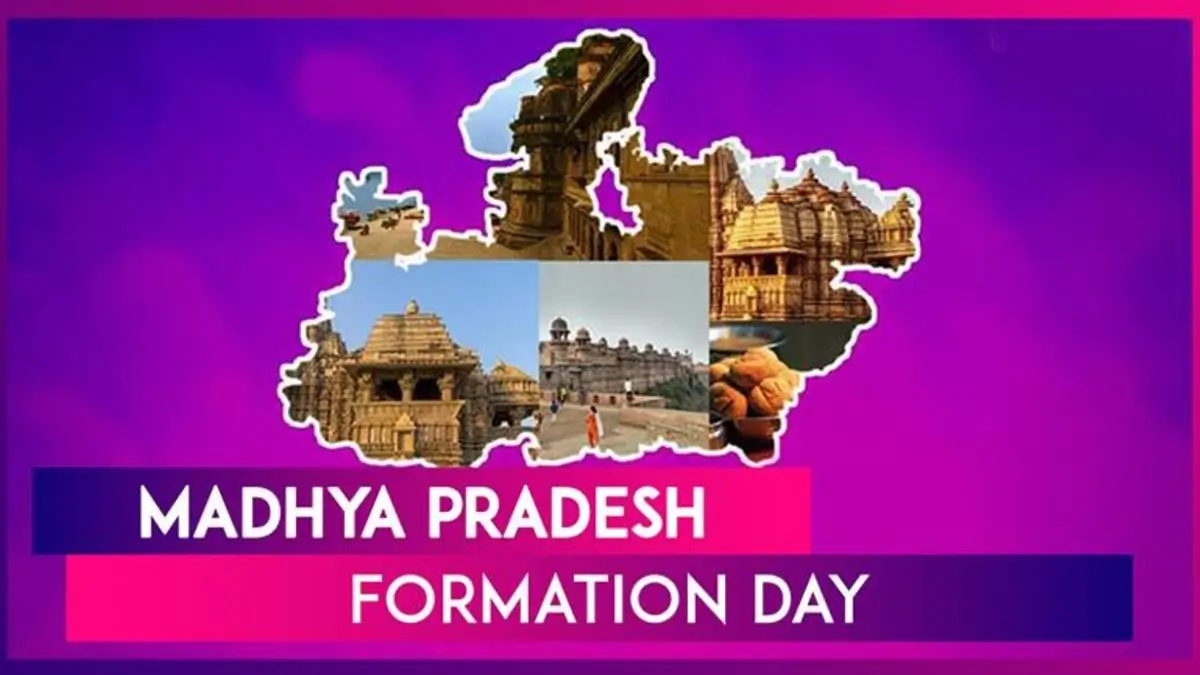
Madhya Pradesh Foundation Day (or Madhya Pradesh Diwas) is celebrated on 1st November every year to commemorate the formation of the state in 1956. In 2026, Madhya Pradesh will be celebrating 70 years since its formation. It was formed from the merging of several areas and states through the States Reorganization Act 1956. Madhya Pradesh is well known for its rich history, tribal culture, wildlife, places of worship, and agriculture. As it is centrally located within India, it is often referred to as ‘The Heart of India’.

Madhya Pradesh Foundation Day History

Madhya Pradesh Diwas celebrates the formation of the new state of Madhya Pradesh on 1st November 1956. It marks the unification of the state and celebrates its diversity, culture, history, and progress.

There are official celebrations in Madhya Pradesh, with lots going on in the state capital of Bhopal. This includes cultural events, public celebrations, exhibitions, and award ceremonies.

Madhya Pradesh Formation History

Madhya Pradesh Formation Before 1956

The area that now makes up the state of Madhya Pradesh was made up of many different areas and groups of princely states. These included,

  • Madhya Bharat – A union of several former princely states.
  • Vindhya Pradesh – A state formed from princely states in the Vindhya area.
  • Bhopal State – A former princely state that became a Part C state after independence.
  • Central Provinces and Berar – A British-administered area that contained large areas of the region.

The States Reorganization Act 1956

  • The States Reorganization Commission, led by Fazl Ali, recommended that internal boundaries should change. They considered the efficiency and language of each area.
  • The States Reorganization Act 1956 was enacted on 1st November 1956. This caused several areas and states to merge to form the new Madhya Pradesh.
  • Madhya Bharat was included, Vindhya Pradesh merged, Bhopal State was included, the Central Provinces and Berar were reorganized, and Bhopal became the capital. Nagpur, the former capital of Madhya Pradesh, became part of Bombay State.

Formation Of Chhattisgarh (2000)

  • Another large change to the state came when Chhattisgarh was formed from the south-east of the state.
  • The Madhya Pradesh Reorganization Act 2000 stated that Chhattisgarh would be formed. This happened on 1st November 2000.
  • This meant that Madhya Pradesh became a smaller state but still remained one of the largest in India.

Legislation Background

States Reorganization Act 1956

  • This was a significant piece of legislation that reformed the state boundaries in India. It was enacted on 1st November 1956 and created several new reorganized states, including Madhya Pradesh.

Madhya Pradesh Reorganization Act 2000

  • This provided the legal framework to create Chhattisgarh from areas of Madhya Pradesh. Chhattisgarh became an official state on 1st November 2000.

Interesting facts about Madhya Pradesh

  • Formation Day: 1st November
  • Formation Year: 1956
  • 70th Anniversary: 1st November 2026
  • Formation: Legislation States Reorganization Act – 1956
  • Capital: Bhopal
  • Largest City: Indore
  • High Court: Madhya Pradesh High Court
  • Main Bench: Jabalpur
  • Regional Name: Heart of India
  • Reorganisation: Chhattisgarh formed in 2000.
  • Official Language: Hindi.

Geographical Importance Of Madhya Pradesh

Madhya Pradesh is centrally located and borders several states. The state has varied geography with plateaus, river valleys, hills and woodland.

Geography

  • Location: Central India
  • Area: 2nd Largest State In India.
  • Main River: Narmada River
  • Other Key Rivers: Chambal, Betwa, Son, and Tapti
  • Mountain Ranges: Vindhya and Satpura.
  • Main Plateau: Malwa Plateau.
  • Borders: Rajasthan, Gujarat, Maharashtra, Chhattisgarh and Uttar Pradesh.

The Narmada River flows west and is one of the major west-flowing rivers in peninsular India. It flows through a rift valley between the Vindhya and Satpura mountain ranges.

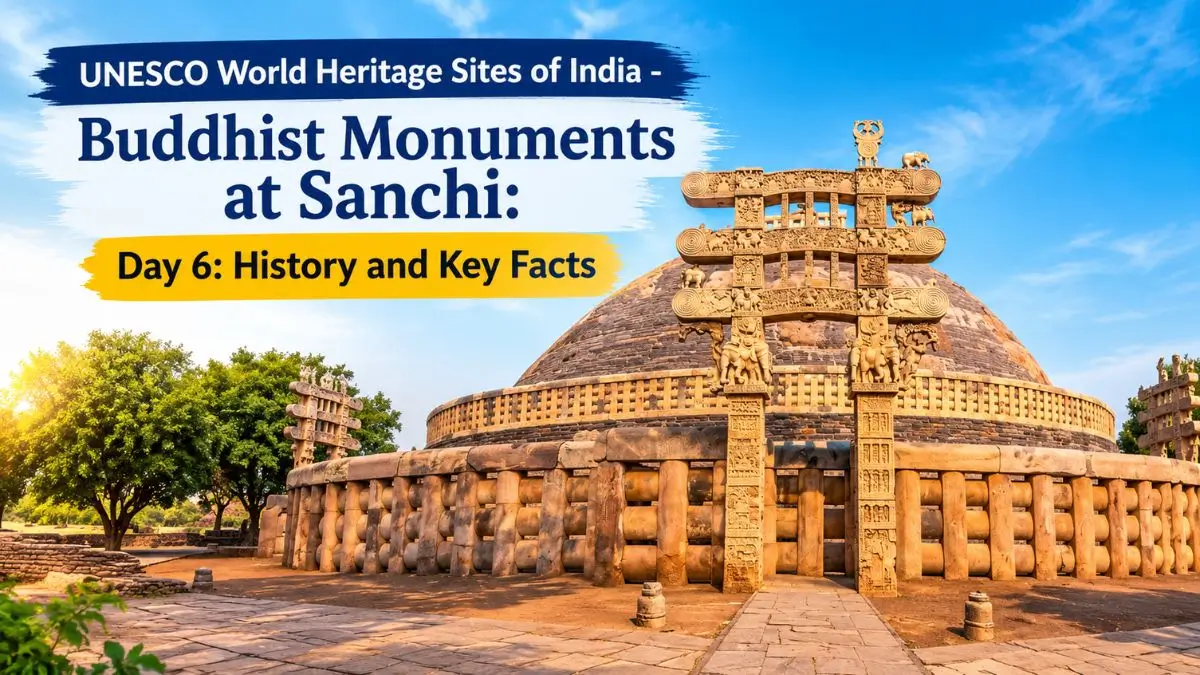
UNESCO World Heritage Sites of India – Buddhist Monuments at Sanchi: Day 6: History and Key Facts

Buddhist Monuments at Sanchi, found in Madhya Pradesh, are one of the earliest examples of Buddhist architecture in India. This monument comprises stupas, monasteries, temples, pillars, and elaborately carved gateways. It depicts the evolution of Buddhist art and architecture from 3rd century BC to 12th century AD. The earliest monuments were built by Emperor Ashoka during the Maurya period. Understanding its historical and cultural importance, the Buddhist Monuments at Sanchi have been designated as a UNESCO World Heritage Site since 1989.

Key Information about Buddhist Monuments at Sanchi

  • Name of Monument: Buddhist Monuments at Sanchi
  • Location: Sanchi, Madhya Pradesh, India
  • UNESCO listed: 1989
  • UNESCO Criteria: Criteria (i), (ii), (iii), (iv) and (vi)
  • Historical Period: 3rd Century BCE – 12th Century CE
  • Ruler Empero:r Ashoka
  • Key Monument: Great Stupa (Stupa 1)
  • Religion: Buddhism
  • Key Structures: Stupas, Viharas, Temples and Pillars
  • Conservators of Venue: Archaeological Survey of India (ASI)

Where Are the Buddhist Monuments at Sanchi Located?

The monuments are located on a hillside within the town of Sanchi in the Raisen district of Madhya Pradesh. The site is around 40km from the state capital city of Bhopal and around 10km from the historic town of Vidisha.

The monuments are located on a forested plateau offering great views over the surrounding area. Sanchi is an incredibly important Buddhist destination in India due to its historical buildings, location and connection to Emperor Ashoka.

History of Buddhist Monuments at Sanchi

As far back as the 3rd Century BCE, Sanchi became an important religious site for Buddhists under the rule of Mauryan Emperor Ashoka. He converted to Buddhism and therefore promoted the spread of the religion. He created many Buddhist monuments throughout the Indian subcontinent.

Ashoka built the initial Stupa made out of bricks as well as a single stone pillar called the Ashoka Pillar. Sanchi developed further under various ruling dynasties.

Dynasty Contributions
Mauryan Built initial Stupa and the Ashoka Pillar.
Shunga Expanded Great Stupa and added stone structures.
Satavahana Added intricate carvings onto 4 gateways.
Kushana Developed further Buddhist religious structures.
Gupta Built Shrines and Temples. Built 4 shrines around the Great Stupa.

Sanchi became an extremely important Buddhist destination over the course of many centuries. The monuments give insight into how the art and religion evolved in Indian Buddhism.

The Great Stupa (Stupa 1)

The Great Stupa which is also known as Stupa 1, is the most famous monument at Sanchi. It was initially built by Emperor Ashoka during the 3rd Century BCE. It was expanded during the Shunga period and embellished with intricate gateways during the Satavahana period.

It is a classic example of early Indian Buddhist architecture. The main features of the architecture are,

  • Anda – The dome-shaped structure representing the mound containing the sacred relics.
  • Harmika – Square structure placed on top of the dome.
  • Yashti – Pillar running through the centre of the harmika.
  • Chhatra – Disc-shaped items on top of the pillar representing honour and spiritual power.
  • Medhi – Raised circular platform around the dome.
  • Pradakshina Patha – Pathway around the dome for followers to walk around.
  • Vedika – Stone barrier around the stupa.
  • Torana – Intricate gateways.

The Great Stupa has 4 gateways which are extremely famous for the intricate carvings depicting stories from the life of Buddha, Jataka stories, symbols and scenes from ancient Indian life.

Four Gateways of the Great Stupa

There are 4 gateways (toranas) to the Great Stupa.

The gateways have intricate carvings depicting stories from Buddhism, symbols, animals, plants, royal processions and everyday life. They are some of the best examples of early Indian stone carving.

They were added during the Satavahana period between the 1st Century BCE and 1st Century CE.

Aniconic Art at Sanchi

An important feature of the Buddhist Monuments at Sanchi is the development of Aniconic Art.

During the early stages of Buddhist art, Buddha was often depicted using symbols. Some important symbols shown within the sculptures of Sanchi are:

Symbol Meaning
Bodhi Tree Enlightenment of Buddha
Empty Throne Presence and spiritual power of Buddha.
Dharma Chakra Teachings of Buddha and wheel of law.
Footprints of Buddha Presence and teachings of Buddha.
Stupa Relics and remembrance of Buddha.
Horse Great Renunciation of Buddha.

The sculptures also depict Jataka stories telling the past lives of Buddha and scenes from the lives of people in Ancient India.

Other Important Monuments

Alongside the Great Stupa, there are many other important structures.

Stupa 2 – Located on the west side of the hill there is another stupa. This one is famous for having intricately carved stone barriers and ornate medallions. The sculptures show animals, flowers and Buddhist symbols.

Stupa 3 – This stupa is very important as it contained the remains of 2 of Buddha’s main disciples, Sariputra and Maudgalyayana. Their relics have been an important part of Buddhist worship.

Ashoka Pillar – A single stone pillar built during Emperor Ashoka’s reign. The capital has influences of Achaemenid Persian art.

Buddhist Temples and Viharas – There are temples, monasteries and dwellings showing the development of Buddhist religious architecture.

Relics of Sariputra and Maudgalyayana

The Buddhist Monuments at Sanchi are also important as they are connected to 2 of the most important disciples of Gautama Buddha.

The remains of Sariputra and Maudgalyayana were in the reliquary of Stupa 3. These were historically highly respected by Buddhists.

This adds religious importance to the site.

UNESCO World Heritage Site – Why is Sanchi Important?

The Buddhist Monuments at Sanchi were added to the UNESCO World Heritage List in 1989. They were added using the following criteria:

Criteria Reason
(i) Great Stupa and gateways are an outstanding example of art.
(ii) Shows the interaction and evolution of art and culture during different Indian Dynasties.
(iii) Offers outstanding evidence of Buddhism being an important religion in Ancient India.
(iv) Stupas are an accomplished example of Buddhist religious architecture.
(vi) Directly related to Buddhist beliefs, culture and worship of relics.

The site is an outstanding example of early Buddhist architecture and shows important evidence of how Buddhist art developed in India.

Conservation of Sanchi

The Buddhist Monuments at Sanchi are conserved and managed by the Archaeological Survey of India (ASI). This is part of the Ministry of Culture and the Government of India.

The site is protected by the Ancient Monuments and Archaeological Sites and Remains Act, 1958, including rules and any amendments.

All structures, including stupas, pillars, temples, monasteries, gateways and the archaeological sites, are conserved. It is important to manage the surrounding area to protect the historical context of the site.

Saina Nehwal and Rahul Dravid Nominated to 2030 Commonwealth Games Organising Board

Olympic medal winner Saina Nehwal and former captain of the Indian cricket team Rahul Dravid have been nominated as members of the Organizing Company Board for the 2030 Commonwealth Games. They have both been nominated by the Union Sports Ministry as representatives of the sporting community. The board will help manage the preparations for the 2030 edition which will be hosted in Ahmedabad, Gujarat. Two members from the private sector have also been nominated.

2030 Commonwealth Games Key Appointments

Saina Nehwal and Rahul Dravid have been nominated as representatives of the sporting community by the Union Sports Ministry.

Two members of the private sector have also been nominated,

  • Jinal Mehta: Owner of the Gujarat Titans IPL Franchise and Managing Director of Torrent Power.
  • Ananya Birla: Second private sector member.

The board has the following nominations:

Role Name
Chairperson (proposed) Harsh Sanghavi (Deputy Chief Minister of Gujarat)
Vice Chairperson Hari Ranjan Rao (Union Sports Secretary)
Vice Chairperson PT Usha (President of Indian Olympic Association)
Chief Executive Officer (CEO) M. Thennarasan (Senior Gujarat Government Bureaucrat)
Sporting Community Members Saina Nehwal and Rahul Dravid.
Private Sector Members Jinal Mehta and Ananya Birla.

These nominations ensure that there is representation from athletes and private sector.

2030 Commonwealth Games

The 2030 Commonwealth Games will take place in Ahmedabad.

There will be 17 sports featured. It will be the first time since the 2010 edition that the Commonwealth Games will be held in India.

It will give an opportunity to show off India’s sporting facilities and organizations and will help to establish Ahmedabad as a global sporting host city.

Why have Athletes and Private Sector Members Been Included?

The organizing board will include members from various sectors.

There will be members from the sporting community due to Saina Nehwal and Rahul Dravid’s experience within international sport.

This will mean there will be an athlete-focused approach to how they prepare for the games, organize competitions and what sporting requirements there are.

There will also be members from the private sector meaning that they will have experience in managing businesses, dealing with finances, infrastructure and organization.

This is also a change from the 2010 Commonwealth Games Organizing Committee. There were no members from the sporting community or private sector.

The 2010 Delhi Games had allegations of corruption and financial issues. Therefore, the 2030 Games are looking to have more diverse members on their board.

Saina Nehwal’s Achievements in the Commonwealth Games

Saina Nehwal is an Indian badminton player and Olympic medal winner. She played a key role in helping to popularise badminton in India.

She won gold in the women’s singles badminton event at the 2010 Commonwealth Games in New Delhi.

She won the final against Wong Mew Choo of Malaysia in three games after losing the first game. This made her the first Indian woman to ever win gold in the women’s singles badminton event.

This helped India perform well at the 2010 games, finishing second in the medal table with 101 medals.

Some key achievements include:

Bronze in women’s singles badminton at the 2012 London Olympics.

  • Gold in the 2010 Commonwealth Games.
  • Gold in the 2018 Commonwealth Games.
  • Former World Number 1 in women’s singles badminton.

Rahul Dravid’s Contribution to Indian Sport

Rahul Dravid is a former captain of the Indian cricket team and head coach. He is well known for his contribution to Indian cricket.

Outside of cricket, he has also been involved with programmes to help develop Olympic and Paralympic athletes. In 2014 he became a member of the Board of Advisors for the GoSports Foundation. This is a non-profit organisation aiming to help Indian athletes.

His nomination to the Organising Company Board for the 2030 Commonwealth Games means there will be a former international athlete and coach involved in the governance of the event.

Jatin Kumar Nayak Takes Charge as IREDA Chairman and Managing Director

The Chairman and Managing Director (CMD) of Indian Renewable Energy Development Agency (IREDA) is now Jatin Kumar Nayak. Prior to assuming this new role, he was Executive Director (Finance) of REC Ltd. He has had several roles in finance and leadership within the power and resource sectors. With over 30 years’ experience, he brings knowledge in corporate finance, project evaluation, resource mobilization and finance.

Who is Jatin Kumar Nayak?

Jatin Kumar Nayak is a Financial expert with over 30 years’ experience in the power, mining and metals industries. He now works as the CMD of IREDA having previously worked as Executive Director (Finance) at REC Ltd.

Throughout his career, he has worked witharious public sector companies such as,

  • REC Ltd.
  • NHPC Ltd.
  • Hindustan Copper Ltd.
  • National Aluminium Company Ltd (NALCO).
  • Neelachal Ispat Nigam Ltd.

Along with being CFO at the former REC Transmission Projects Company Ltd, a subsidiary of REC.

Jatin Kumar Nayak has had experience working in resource mobilization both domestically and internationally, treasury strategy, corporate finance, taxation, legal work, project evaluation, lending and loan recovery and bad debt.

Jatin Kumar Nayak’s Education

Nayak has a background in commerce, cost management and corporate.

He has the following qualifications,

  • Master of Commerce from Utkal University, Bhubaneswar, Odisha
  • Fellow Member of the Institute of Cost and Management Accountants of India
  • Qualified Company Secretary

IREDA – What is it?

The Indian Renewable Energy Development Agency Limited is a state-owned financial institution that provides funding for renewable energy and energy efficiency projects in India.

It falls under the administration of the Ministry of New and Renewable Energy (MNRE).

IREDA helps fund the move to cleaner energies in India by supporting various renewable energy projects.

Some of its main roles include,

  • Providing loans for renewable energy projects
  • Funding solar and wind power projects
  • Supporting hydropower and bioenergy projects
  • Funding energy efficiency and conservation projects
  • Resource mobilization for clean energy development
  • Investment support for new areas within the renewable energy sector.

IREDA’s Role in Renewable Energy Development in India

India have ambitious goals when it comes to renewable energy.

IREDA helps support this by providing funding to project developers and companies involved in renewables.

This helps overcome the high costs associated with solar parks, wind, hydro, bioenergy and other clean energy projects.

_12.1
November 2026
M T W T F S S
 1
2345678
9101112131415
16171819202122
23242526272829
30