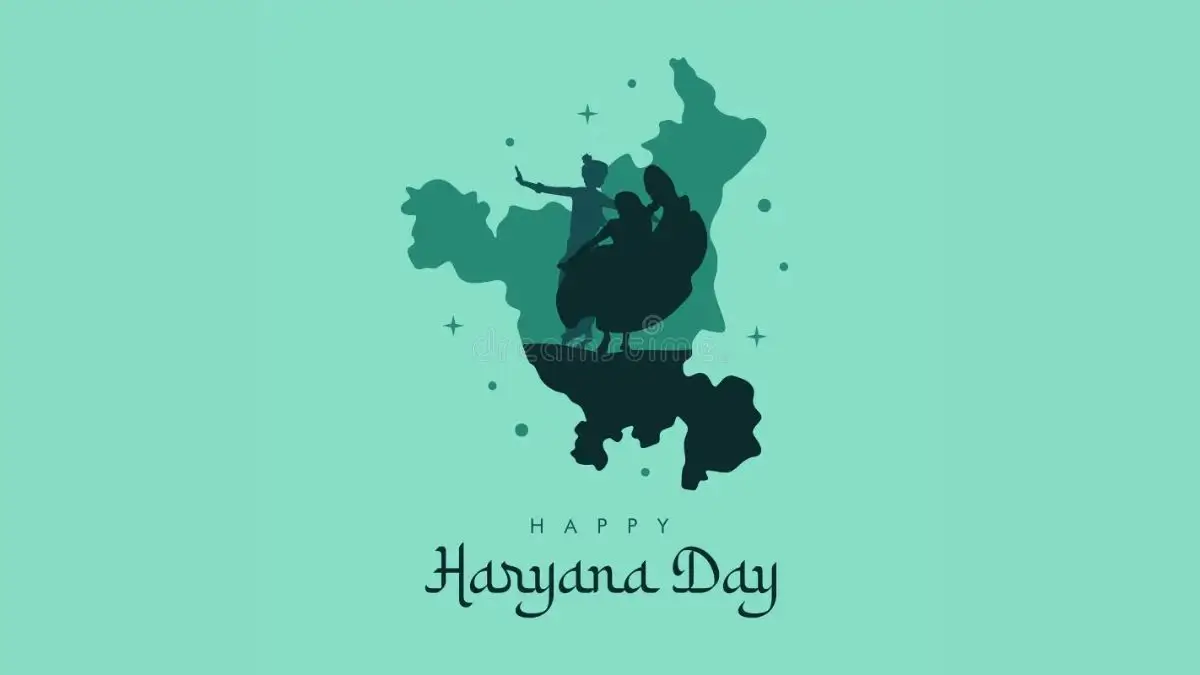
Haryana Day is a celebration held every year on 1st November to celebrate the creation of the state of Haryana in 1966. The 60th anniversary will be celebrated in 2026. It was created from the previous state of Punjab after linguistic, cultural and regional demands were made. The celebration marks how Haryana has a rich history, has developed it’s agriculture and has strong cultural values and has contributed to India’s economy.
Haryana Day History
Haryana Day is a day that celebrates the creation of Haryana as a new state on the 1st November 1966. Before this date the region was part of Punjab. During the 1950’s and 1960’s people began to demand Haryana be a new state.
The celebrations take place throughout the state. There are many cultural events, sports days, cycling parades, food festivals, blood donation drives and music performances. The government buildings will often have lights on and there will be special events in the tourism centres.
Historical Background – Creation of Haryana
Haryana pre-independence
- Haryana has a rich history with many ancient kingdoms, religious beliefs and important political changes throughout northern India. During the British period, most of the area was run as part of Punjab province.
- After Independence in 1947 the region was still part of Punjab. However, there were increasing demands to create a new state due to the differences in languages, cultures and regional desires.
Demand for a new state
There were increasing demands for Haryana to be a new state due to,
- Linguistic – Areas that spoke Hindi wanted to be recognised separately from the majority Punjabi-speaking areas.
- Cultural – The culture of the region was very different.
- Administrative – People believed they would have better governance if they were their own state.
- Regional – They wanted more political representation.
Shah Commission and creation in 1966
- In April 1966 the Government of India set up a commission led by Justice J.C. Shah to investigate how Punjab should be reorganised and make recommendations on where the borders of Haryana should be.
- The Shah Commission presented their findings in May 1966. The Punjab Reorganisation Act 1966 was then passed in Parliament. This came into effect on the 1st November 1966.
This meant that,,
- Haryana became a new state.
- Chandigarh became a Union Territory.
- Chandigarh became the joint capital of Punjab and Haryana.
- Some hill areas were moved to Himachal Pradesh.
- Bhagwat Dayal Sharma became the First Chief Minister of Haryana.
- This was an important event in the reorganisation of states after independence.
Constitutional and Legal Background
- Article 3 of the Indian Constitution
- Article 3 gives Parliament the power to reorganise the territory of India. This can be done by:
- Creating a new state from an existing state.
- Joining together two or more states or parts of states.
- Increasing/decreasing the size of a state.
- Changing the boundaries of a state.
- Renaming a state.
- Creating Haryana was an example of this happening.
Key facts about Haryana
| Feature | Details |
| Creation Date | 1st November 1966 |
| 60th Anniversary | 1st November 2026 |
| Creation Legislation | Punjab Reorganisation Act 1966 |
| Original State | Punjab |
| Capital | Chandigarh |
| First Chief Minister | Bhagwat Dayal Sharma |
| First Governor | Dharma Vira |
| Official Language | Hindi |
| Other Language | Punjabi |
| High Court | Punjab and Haryana High Court |
| Important Harappan Site | Rakhigarhi |
| Main Historical Site | Kurukshetra |






 Punjab Formation Day 2026: History, Reor...
 Chhattisgarh Formation Day 2026: History...
 Madhya Pradesh Foundation Day 2026: Hist...