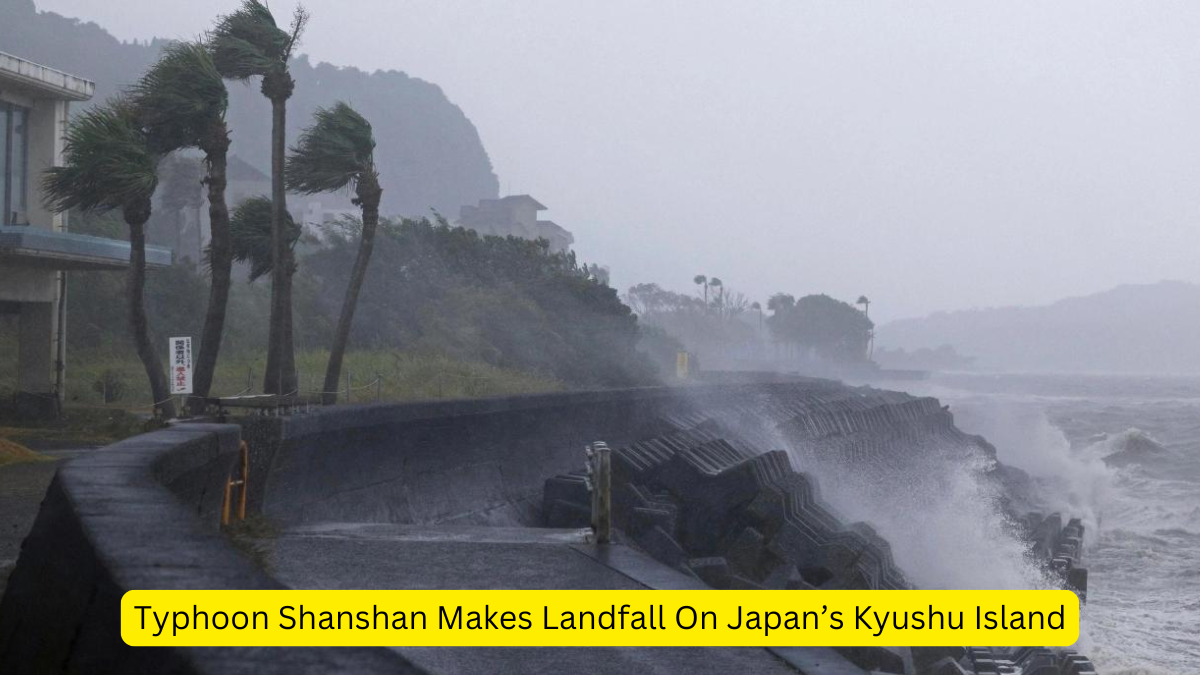
Typhoon Shanshan made landfall on Japan’s southwestern main island of Kyushu on August 29, the weather agency said, bringing heavy rain and strong winds that left at least 40 people injured in three prefectures. The Japan Meteorological Agency urged residents in affected areas to remain on high alert for natural disasters, while public transport operators canceled trains and flights, and some homes were left without power as the storm advanced.
Country’s strongest typhoon of the year
Japan Meteorological Agency (JMI) referred to it as the as the country’s strongest typhoon of the year. Typhoon Shanshan is bringing with it torrential rain and winds of up to 252 kilometres per hour, strong enough to destroy homes.
Rare special typhoon warning
The JMI said a rare special typhoon warning has been issued for most parts of Kagoshima Prefecture. The storm was heading in a northerly direction. Due to heavy rainfall, the central Japan bullet train services on the Tokaido Shinkansen Line between Shizuoka and Kakegawa were suspended last night. According to the prefectural governments, at least three people have died and nine people have been injured.
Accurate information and support
Prime Minister Fumio Kishida has asked authorities to provide timely and accurate information regarding evacuation, heavy rain, rainstorms, and river conditions with the approach of Typhoon Shanshan. He asked authorities to work closely with local governments and take all possible measures, like support for evacuation.
Important takeaways for all competitive exams
- Japan Capital: Tokyo
- Government in Japan: Democracy, Unitary state, Parliamentary system, Constitutional monarchy.
- Prime minister of Japan: Fumio Kishida.
- Japan Currency: Japanese yen (¥)








 COP31 2026: Venue, Dates, President, Key...
 California Bans Child Marriage: Minimum ...
 Fatima Zahra El Mansouri Becomes Morocco...