Did you know that India is home to many mighty rivers that support millions of people and rich wildlife? Some rivers are so large and powerful that they are often compared with famous rivers of the world. One such river in India is popularly called the “Amazon of India.”
This river is known for its huge volume of water, wide basin, and strong flow throughout the year. It passes through dense forests, hills, and fertile plains, playing a vital role in agriculture, transportation, and biodiversity.
Many towns, villages, and cultures have grown along its banks over centuries. The river also supports several wildlife species and forms an important natural ecosystem in the region.
Because of its size, water discharge, and importance to nature, people often compare this Indian river with the mighty Amazon River. That is why it has earned the special nickname “the Amazon of India.”
Which River is known as the Amazon of India?
The river known as the Amazon of India is the mighty Brahmaputra River. It is one of the largest and most powerful rivers in Asia.
The Brahmaputra carries an enormous volume of water and flows through vast plains and dense forests, just like the Amazon River in South America. Its powerful flow, rich biodiversity, and wide channels have earned it this unique title.
The river supports millions of people and countless plant and animal species, making it one of the most important natural resources in India.
Origin of the Brahmaputra River
The Brahmaputra River begins high in the Himalayan region. Its source is the Angsi Glacier near Mount Kailash in Tibet.
At its starting point in Tibet, the river is known as the Yarlung Tsangpo. From there, it flows eastward through the Tibetan Plateau before entering India.
Because it originates at an altitude of more than 5,000 meters above sea level, the river travels through some of the highest landscapes in the world before reaching lower plains.
Course of the River through Different Countries
The Brahmaputra follows a long and remarkable journey across three countries.
First, it flows through Tibet in China, where it is called the Yarlung Tsangpo. After crossing the Himalayan mountains, the river enters India through the state of Arunachal Pradesh.
In Arunachal Pradesh, it is known as the Siang or Dihang River. Later, when it reaches the plains of Assam, it becomes the Brahmaputra.
After travelling across Assam, the river enters Bangladesh, where it merges with the Ganges River before finally flowing into the Bay of Bengal.
Why the Brahmaputra is known as the Amazon of India?
Here are some reasons why the Brahmaputra River is known as the Amazon of India:
Massive Water Volume
One of the main reasons the Brahmaputra is compared to the Amazon is its enormous water discharge. It carries more water than any other river in India.
During the monsoon season, the river becomes extremely wide, sometimes spreading more than 10 kilometers across. Its powerful flow often causes floods that reshape the surrounding land.
Rich Biodiversity
The Brahmaputra basin is one of the most biologically rich regions in India. Dense forests and wetlands along the river support a wide range of wildlife.
The river ecosystem is home to rare species such as the Indian one-horned rhinoceros, the Ganges river dolphin, and the Royal Bengal tiger. These animals thrive in the fertile and water-rich environment created by the river.
Braided River System
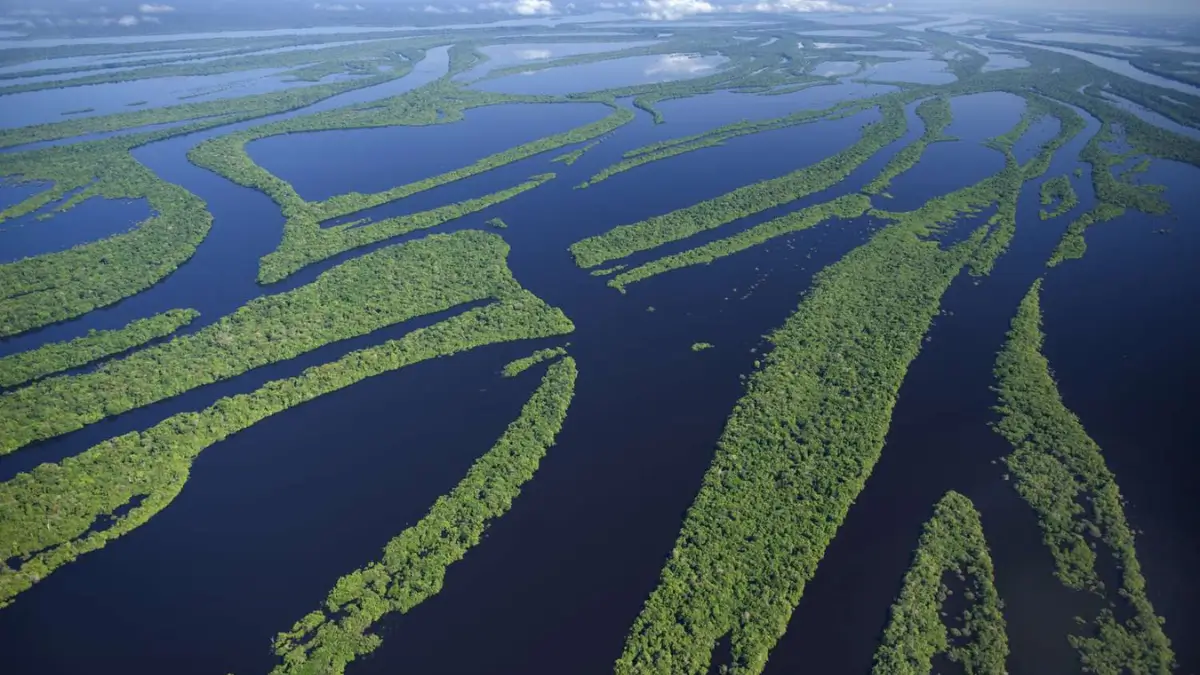
Another special feature of the Brahmaputra is its braided channel system. Instead of flowing in a single straight path, the river divides into many smaller channels.
These channels split and rejoin repeatedly, creating numerous sandbars and islands. This complex network of waterways is similar to the river patterns seen in the Amazon basin.
Fertile Floodplains
The Brahmaputra carries large amounts of silt from the Himalayan mountains. When the river floods, this nutrient-rich soil spreads across the surrounding plains.
This process makes the land extremely fertile and suitable for agriculture. Farmers in Assam depend heavily on this fertile soil for growing crops.
Interesting Facts About the Brahmaputra River
- A Rare “Male” River: Most rivers in India are considered feminine in traditional belief systems. However, the Brahmaputra is unique because its name means “Son of Brahma,” making it one of the few rivers regarded as masculine.
- Home to the World’s Largest River Island: The river is home to Majuli, which is recognized as the world’s largest river island. Majuli is known for its cultural heritage and unique river-based lifestyle.
- One of the Deepest Rivers in India: In some places, the Brahmaputra reaches depths of more than 120 meters. This makes it one of the deepest rivers in the country.
- A Powerful and Dynamic River: The Brahmaputra constantly changes its course due to erosion and flooding. Because of this, islands and sandbanks often appear and disappear over time.
Importance of the Brahmaputra River
The Brahmaputra is extremely important for the environment and the people living around it. It provides water for drinking, farming, and transportation.
The river also supports fisheries and helps maintain forests and wetlands. In addition, it plays a major role in maintaining the ecological balance of northeastern India.
Many national parks and wildlife reserves depend on the river system for water and nutrients.







 Weekly Current Affairs One Liners (5th t...
 Who Is Navi Pillay? Nobel Peace Prize 20...
 Vande Bharat vs Amrit Bharat Express: Ke...