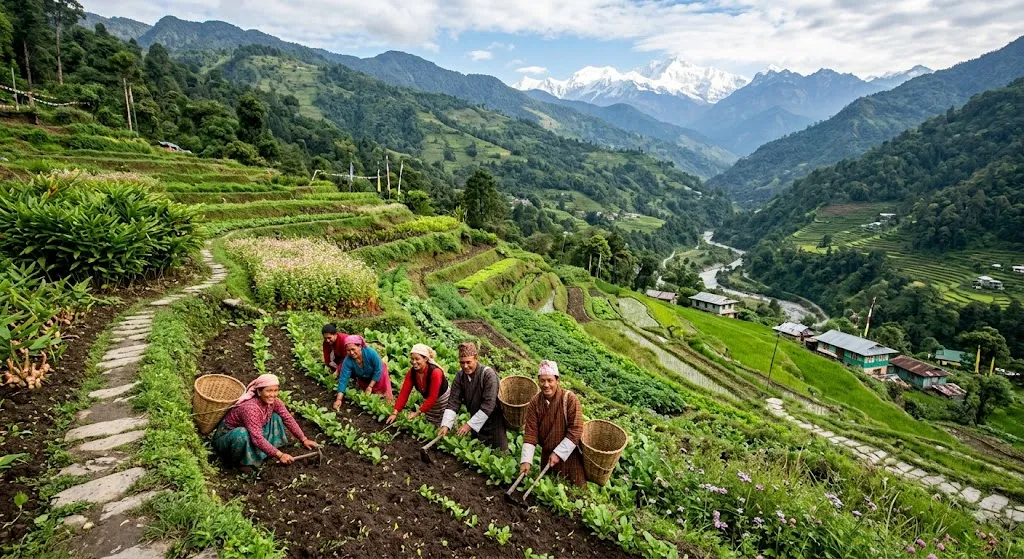
India is one of the world’s major agricultural countries, with farming playing an important role in the country’s economy and rural livelihoods. Among Indian states, Sikkim holds a unique position as India’s first fully organic state.
Sikkim achieved the milestone in 2016 after converting its entire agricultural area to certified organic farming. The state’s transition towards organic agriculture began much earlier and involved a gradual reduction in the use of chemical fertilisers and pesticides.
Which Is India’s First 100% Organic State?
Sikkim is India’s first 100% organic state.
The state became the first state in the world to adopt organic farming across its entire agricultural land at the state level. Sikkim achieved this landmark in 2016, after years of efforts to shift farmers towards organic agricultural practices.
The achievement made Sikkim a prominent example of sustainable and environmentally friendly agriculture.
When Did Sikkim Start Its Organic Farming Mission?
Sikkim began its transition towards organic farming in 2003. The state gradually reduced the use of chemical fertilisers and pesticides and encouraged farmers to adopt organic and natural farming practices.
The transition continued for more than a decade before Sikkim officially achieved its fully organic status in 2016.
How Much Land Is Under Organic Farming in Sikkim?
Around 75,000 hectares of agricultural land in Sikkim was brought under organic farming.
Farmers were supported in moving from conventional agricultural practices to organic methods. The process included reducing dependence on synthetic agricultural inputs and promoting environmentally sustainable farming.
Which Crops Are Grown Organically in Sikkim?
Sikkim produces a variety of crops through organic farming. Major organic crops grown in the state include:
- Large cardamom
- Ginger
- Turmeric
- Buckwheat
- Rice
- Fruits
- Vegetables
Sikkim is also well known for its production of organic large cardamom, which is an important agricultural product of the state.
How Has Organic Farming Helped Sikkim’s Tourism?
Sikkim is known for its scenic landscapes, biodiversity and natural environment. Its organic farming model has added another dimension to the state’s tourism potential.
Organic farms and locally produced organic products have become part of Sikkim’s rural economy and tourism experience. The state’s focus on sustainable agriculture also complements its image as an environmentally conscious destination.
India’s First 100% Organic State: Key Facts
| Feature | Details |
|---|---|
| State | Sikkim |
| Achievement | India’s first fully organic state |
| Organic Status Achieved | 2016 |
| Organic Farming Mission Started | 2003 |
| Agricultural Area | About 75,000 hectares |
| Major Crop | Large cardamom |
| Other Major Crops | Ginger, turmeric, buckwheat, rice, fruits and vegetables |
Why Is Sikkim’s Organic Farming Model Important?
Sikkim’s organic farming initiative demonstrates how a state can gradually transform its agricultural system by promoting sustainable farming practices. The transition has helped reduce dependence on synthetic agricultural inputs while strengthening the state’s identity as an organic farming destination.
The model is also significant from an environmental perspective because organic agriculture focuses on maintaining soil health, protecting biodiversity and promoting sustainable agricultural practices.
Key Takeaways for Competitive Exams
- India’s first fully organic state: Sikkim
- Year Sikkim achieved fully organic status: 2016
- Organic farming mission started: 2003
- Agricultural area brought under organic farming: About 75,000 hectares
- Major organic crop: Large cardamom
- Other important crops: Ginger, turmeric, buckwheat, rice, fruits and vegetables
- Sikkim is recognised for: State-wide organic farming





 Uttarakhand Becomes India’s 6th Fully ...
 Odisha Launches India’s First MICE Inc...
 UP Kamadhenu Pashu Bima Yojana 2026: Lat...