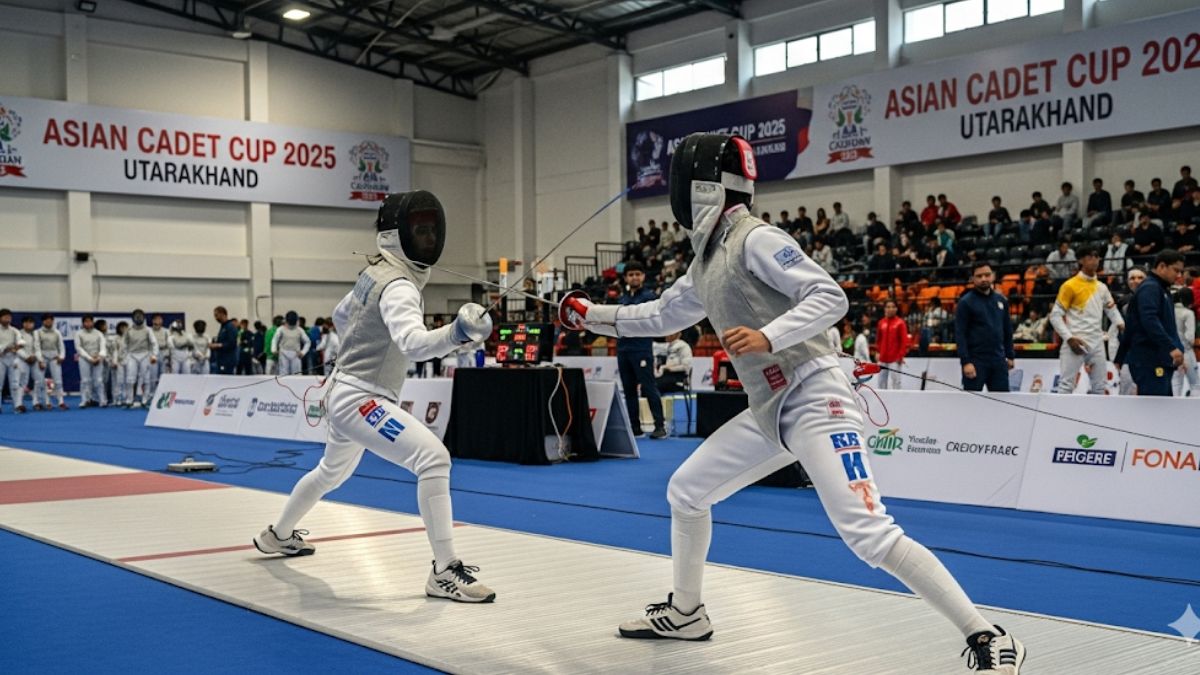
Uttarakhand marked a historic moment in Indian sports by hosting the Asian Cadet Cup India-2025 in Haldwani, inaugurated by Chief Minister Pushkar Singh Dhami on September 19, 2025. Organised by the Fencing Association of India, the international tournament is being held at Manaskhand Hall in the Indira Gandhi International Sports Stadium.
This is the first-ever international fencing event held in India, drawing participation from over 250 athletes, including 150 Indian competitors, as well as teams from countries like Tajikistan, Syria, Malaysia, Sri Lanka, Thailand, and Indonesia.
Fencing Gains Ground Among Indian Youth
- Fencing, once a lesser-known sport, has rapidly gained recognition among Indian youth. Inspired by athletes like Arjuna Awardee Bhavani Devi, many young Indians are now pursuing fencing at competitive levels.
- Indian fencers would soon bring international acclaim, just as the country has done in shooting, archery, and javelin throw. Highlighting fencing’s roots in ancient Indian martial traditions, he emphasized its modern resurgence as a symbol of discipline, focus, and national pride.
Boosting Sports Through Government Initiatives
- Establishment of the State’s First Sports University and Women’s Sports College in Haldwani.
- Launch of the Sports Legacy Plan, with 23 sports academies across eight cities.
- Investment of ₹517 crore in world-class sports infrastructure.
- Expansion of Pantnagar Airport and new train services to improve access for athletes and tourists.
- Introduction of a 4% sports quota in government jobs for athletes.
- Implementation of a new sports policy offering out-of-turn jobs to medal winners at national and international events.
A Vision for Sporting Excellence
- The inauguration of the Asian Cadet Cup 2025 is not just an international event but a symbol of Uttarakhand’s emergence as a sports destination. CM Dhami’s comprehensive vision—blending sports development, youth empowerment, and infrastructure expansion—lays the foundation for long-term growth in Indian athletics.
- As fencing continues to grow in popularity, events like this will inspire more youth to engage in the sport, uphold India’s rich martial heritage, and represent the country on global platforms.








 Asian Games to LA28: Which Sports Earned...
 Pramod Bhagat and Bhavina Patel Named In...
 Lionel Messi’s Argentina Farewell: Wor...