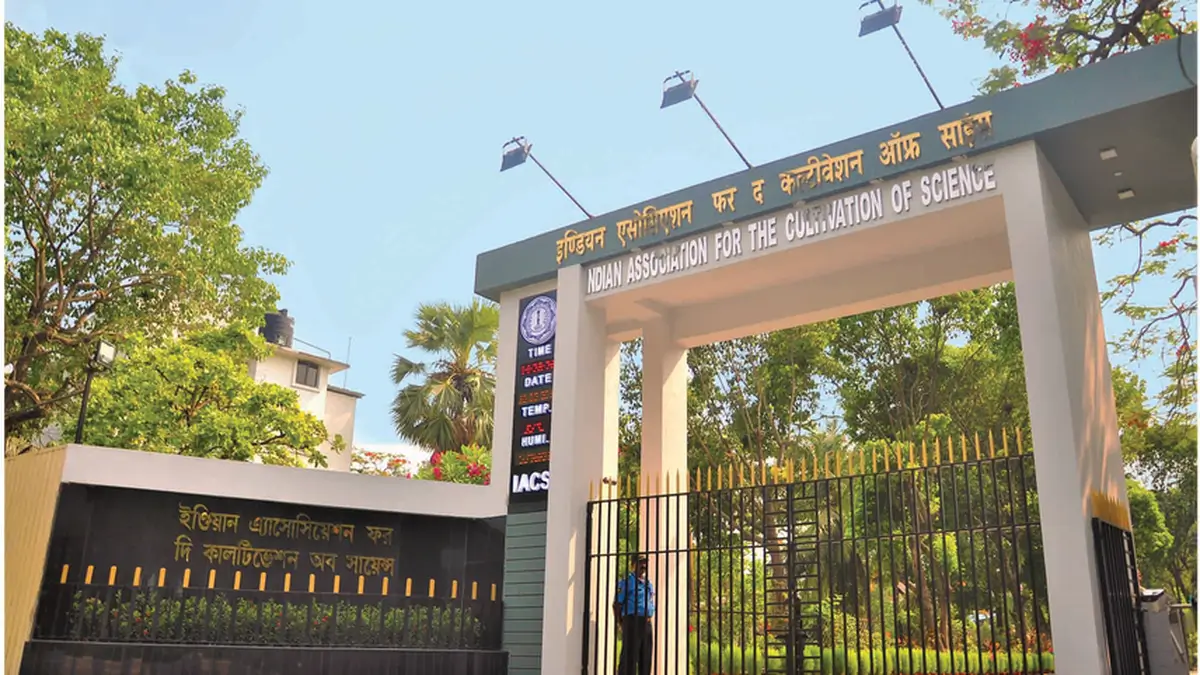
The Indian Association for the Cultivation of Science (IACS), India’s oldest scientific research institution, is celebrating its 150th anniversary in 2026. Established in 1876 by visionary physician and social reformer Dr. Mahendralal Sircar, the institution has played a pioneering role in promoting scientific research and nurturing generations of Indian scientists.
Over the past one and a half centuries, IACS has become synonymous with scientific excellence, innovation, and nation-building, making significant contributions to physics, chemistry, biology, materials science, and interdisciplinary research.
Foundation of IACS
The Indian Association for the Cultivation of Science (IACS) was founded on 29 July 1876 in Calcutta (now Kolkata).
At a time when scientific research in colonial India received little official encouragement, Dr. Mahendralal Sircar envisioned an institution where Indians could pursue scientific research independently and contribute to the advancement of global knowledge.
His objective was to promote science education, encourage original research, and create an environment where scientific inquiry could flourish.
Role During the Bengal Renaissance
The establishment of IACS coincided with the Bengal Renaissance, one of India’s most influential intellectual and cultural movements during the 19th century.
The movement encouraged progress in:
- Science
- Education
- Literature
- Philosophy
- Social reform
- Arts
IACS emerged as one of the leading scientific institutions of this era, helping lay the foundation for modern scientific research in India.
Contributions to Indian Science
Over the last 150 years, IACS has made outstanding contributions across various scientific disciplines.
Its researchers have contributed to:
- Physics
- Chemistry
- Materials Science
- Biological Sciences
- Chemical Sciences
- Interdisciplinary Research
The institution has also trained thousands of scientists who have contributed significantly to India’s scientific and technological development.
Nobel Prize Connection
One of the most historic achievements associated with IACS came through Sir C. V. Raman.
It was at the laboratories of IACS that Raman discovered the Raman Effect on 28 February 1928, a breakthrough that earned him the 1930 Nobel Prize in Physics, making him the first Asian scientist to receive the Nobel Prize in the sciences.
The discovery is commemorated every year as National Science Day in India on 28 February.
IACS Today
Today, the Indian Association for the Cultivation of Science functions as an autonomous research institute under the Department of Science and Technology (DST), Government of India.
The institution continues to undertake cutting-edge research in frontier areas of science and collaborates with national and international research organizations.
Significance of the 150th Anniversary
The sesquicentennial celebration recognizes:
- 150 years of scientific research.
- India’s rich scientific heritage.
- Contributions of Indian scientists to global knowledge.
- Promotion of scientific temperament.
- Continued commitment to innovation and research excellence.
The milestone also highlights the importance of investing in science, technology, and innovation to address future global challenges.








 ISRO Advanced Radar Research Centre: Fou...
 Indian Astronomers Find Rapidly Shrinkin...
 NASA Advances PRIMA Far-Infrared Telesco...