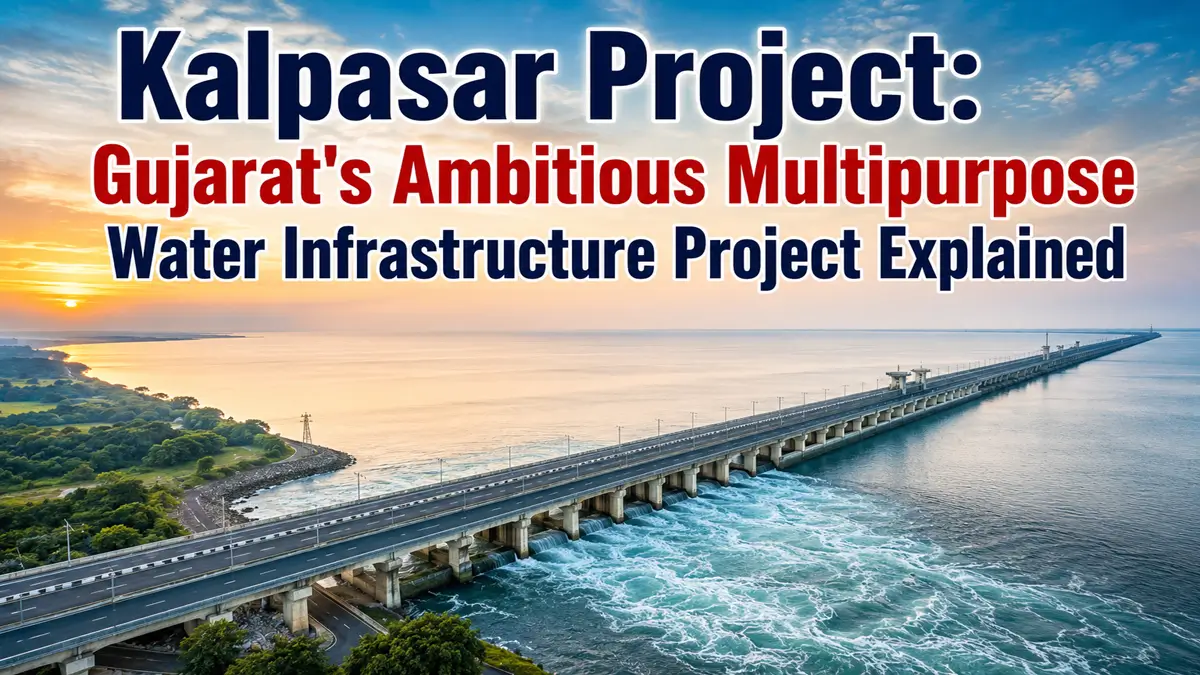
The Kalpasar Project, officially known as the Gulf of Khambhat Development Project, is one of India’s most ambitious water infrastructure projects. The project aims to address water scarcity, irrigation, drinking water supply, transportation, and renewable energy needs in Gujarat, particularly in the Saurashtra region.
Recently, the Central Government informed the Rajya Sabha that the Detailed Project Report (DPR) for the Kalpasar Project is at an advanced stage of finalisation, indicating progress towards the implementation of this long-pending mega project.
What is the Kalpasar Project?
The Kalpasar Project (Gulf of Khambhat Development Project) is a proposed multipurpose infrastructure project that involves constructing a 64-kilometre-long dam (dyke) across the Gulf of Khambhat in Gujarat.
The project seeks to create one of the world’s largest coastal freshwater reservoirs by storing freshwater that currently flows into the Arabian Sea through several rivers.
Key Objectives of the Project
The project has multiple objectives aimed at improving water and infrastructure development in Gujarat.
Major Objectives
- Increase freshwater availability.
- Provide irrigation to drought-prone regions.
- Supply drinking water.
- Reduce travel distance through a highway and railway corridor.
- Generate renewable energy.
- Promote regional economic development.
Major Features of the Kalpasar Project
1. World’s Largest Coastal Freshwater Reservoir
The project proposes constructing a 64-km-long dam across the Gulf of Khambhat.
This will create a freshwater reservoir covering approximately:
- 2,000 square kilometres
The proposed reservoir will have a gross storage capacity of 13,000 Million Cubic Metres (MCM).
For comparison:
- Kalpasar Reservoir: 13,000 MCM
- Sardar Sarovar Dam: 9,460 MCM
This would make Kalpasar one of the largest freshwater storage projects in the world.
2. Rivers Feeding the Reservoir
The reservoir will store freshwater from four major rivers:
- Sabarmati
- Mahi
- Dhadhar
- Narmada
Instead of flowing directly into the Arabian Sea, the freshwater will be conserved for productive use.
3. Irrigation Benefits
The project is expected to provide irrigation to nearly:
- 10 lakh hectares
across nine districts of the Saurashtra region, significantly improving agricultural productivity.
4. Drinking Water Supply
One of the project’s primary objectives is to improve drinking water availability in water-scarce areas of Gujarat, especially Saurashtra.
5. Highway and Railway Corridor
A highway-cum-rail corridor will be developed over the proposed dam.
This corridor is expected to reduce the distance between:
- Bhavnagar and Surat
from approximately:
- 356 km to about 177 km
This represents a reduction of nearly 179 km, improving connectivity and reducing travel time.
6. Renewable Energy Generation
The Kalpasar Project also includes the development of approximately:
- 2,470 MW
of hybrid renewable energy capacity on reclaimed land that remains submerged during high tide.
The generated electricity will be used for:
- Pumping freshwater.
- Supporting irrigation systems.
- Meeting regional energy requirements.
International Cooperation
The Netherlands is providing technical expertise and engineering support for the Kalpasar Project due to its globally recognized experience in:
- Coastal engineering
- Water resource management
- Flood control
- Land reclamation
Why is the Kalpasar Project Important?
If implemented successfully, the Kalpasar Project could become one of India’s most transformative infrastructure initiatives.
Expected Benefits
- Improved water security.
- Enhanced agricultural productivity.
- Reliable drinking water supply.
- Better road and rail connectivity.
- Increased renewable energy generation.
- Economic development in coastal Gujarat.
- Sustainable management of freshwater resources.








 India’s Classical Languages: 5 More La...
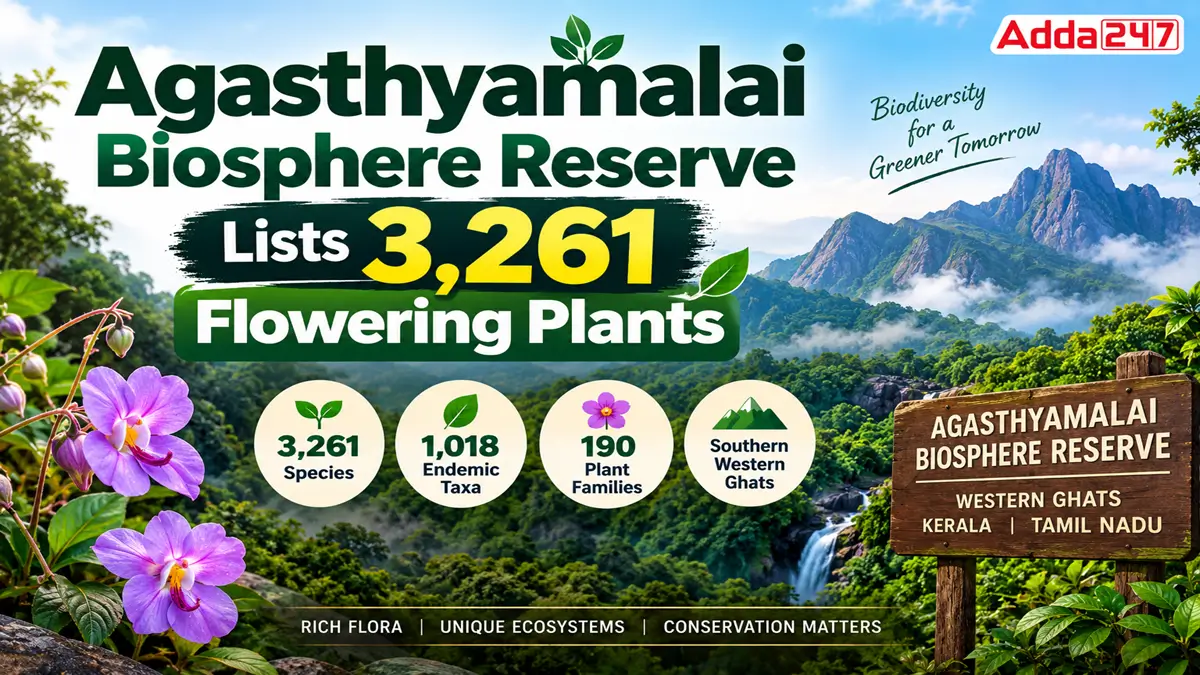 Agasthyamalai Biosphere Reserve Records ...
 Vastra Utsav 2026 Celebrates India's Tex...