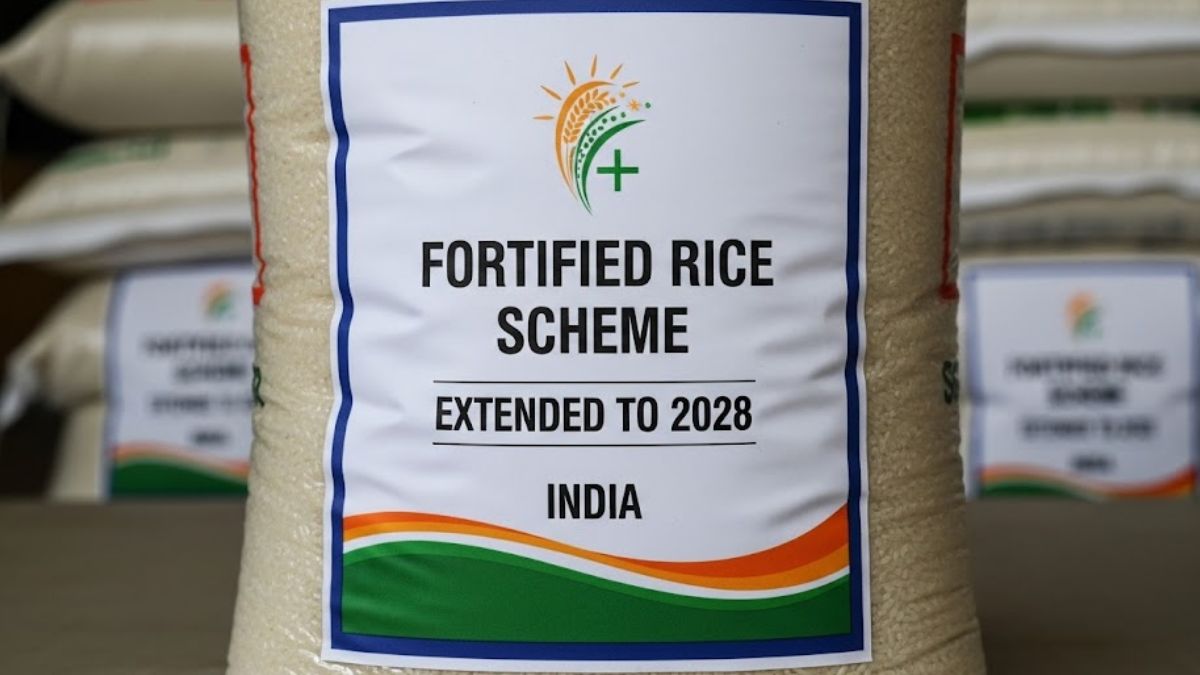
India has significantly ramped up its fight against anaemia and malnutrition through the continued rollout of fortified rice and other nutrient-enhanced food staples under various government schemes. With the Cabinet’s approval to extend the Fortified Rice Scheme until December 2028, the initiative aims to enhance the nutritional profile of the nation’s population—especially school children, adolescent girls, and women. This ambitious health-centric intervention is backed by a ₹17,082 crore budget and cuts across multiple ministries and programs.
A National Strategy Rooted in Nutrition Reform
From Pilot to Universal Coverage
The journey began with the launch of the Anemia Mukt Bharat (AMB) initiative in 2018, aiming to reduce anaemia through fortified foods. A pilot for rice fortification followed in 2019. Recognizing the health benefits, the government approved a nationwide rollout in 2022, ensuring that by March 2024, all custom-milled rice distributed under food safety net schemes was fortified.
With the latest extension, fortified rice will now continue to be distributed until 2028 across key government schemes like the Targeted Public Distribution System (TPDS), Mid-Day Meal (PM POSHAN), Integrated Child Development Services (ICDS), and others.
PM POSHAN Scheme: Fortification in School Meals
Fortified Staples in Mid-Day Meals
Under the PM POSHAN Scheme, all States and Union Territories use fortified rice to prepare meals served to school children. The rice is enriched with Iron, Folic Acid, and Vitamin B12 to tackle micronutrient deficiencies that lead to anaemia and poor developmental outcomes.
Additional Fortified Ingredients Used
- Double Fortified Salt (DFS) with Iron and Iodine to combat anaemia and goitre.
- Fortified Edible Oil with Vitamins A & D, preventing common vitamin deficiencies.
- The cost of fortification is fully borne by the Government of India, ensuring affordability for implementing agencies and states.
Nutrition Support Beyond Grains
NDDB’s Gift Milk Programme
The National Dairy Development Board (NDDB) has taken parallel steps to enhance children’s nutrition through its Gift Milk programme, executed by the NFN (NDDB Foundation for Nutrition). Since its inception,
- 7.10 lakh litres of fortified milk have been distributed.
- Reaching 41,700 children in 257 schools across 11 states.
- Amounting to 35.4 lakh child milk days.
- This initiative not only promotes dairy consumption but also provides micronutrient-rich nutrition support through fortified milk.
Targeted Fortification for Women and Adolescents
Wheat-Based Nutrition Programme (WBNP) and Scheme for Adolescent Girls (SAG)
- Responding to the Prime Minister’s call on the 75th Independence Day, fortified rice has been included in both WBNP and SAG since 2021–22. This has enhanced nutritional intake among women and adolescent girls, combating micronutrient deficiencies that lead to fatigue, poor immunity, and developmental disorders.
- These schemes emphasize the inclusion of Iron, Folic Acid, and Vitamin B12, crucial for maternal and adolescent health.
Enabling Infrastructure: Food Processing Sector Support
The Ministry of Food Processing Industries (MoFPI) complements fortification efforts by supporting food manufacturing through,
- Pradhan Mantri Kisan SAMPADA Yojana (PMKSY)
- Production Linked Incentive Scheme for Food Processing Industry (PLISFPI)
- PM Formalization of Micro Food Processing Enterprises (PMFME)
These schemes are designed to build modern infrastructure, enhance supply chain efficiency, and boost fortified food production. Though not directly responsible for fortification, these programs enable a sustainable ecosystem for processing and distributing nutrient-rich foods.


 PM Mudra Yojana Marks 11 Years of Suppor...
 Ministry of Textiles Extends RoSCTL Sche...
 Delhi Government Launches the Lakhpati B...