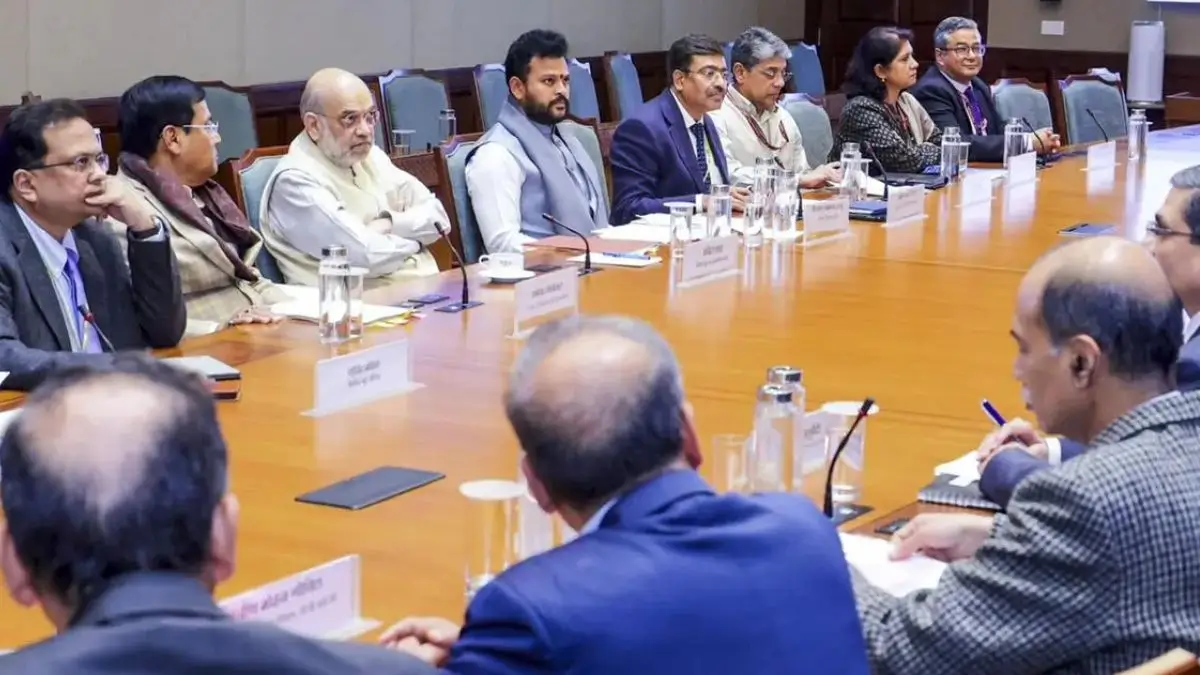
The Government of India has established the Bureau of Port Security (BoPS) under the Ministry of Ports, Shipping and Waterways. This body has been formed to oversee the security of ships, ports and related infrastructure and also addressing the emerging threats such as cyberattacks. It is also modelled on the Bureau of Civil Aviation Security (BCAS) and BoPS will serve as the India’s apex regulatory authority for the maritime security, ensuring safer port operations, stronger surveillance and improved the coordination among the security agencies.
What is the Bureau of Port Security (BoPS)?
The Bureau of Port Security (BoPS) is the newly established national body which is responsible for the regulating and overseeing the security of ships and port facilities across India.
The Government officially notified the its constitution through the Official Gazette, with the immediate effect.
Initially, the Bureau will function under the Directorate General of Shipping, which is being renamed as the Directorate General of Maritime Administration (DGMA).
During the transition period, Shyam Jagannathan, Director General of Maritime Administration, will serve as the Director General of the BoPS.
Why Has the Bureau Been Created?
India has witnessed the rapid growth in maritime trade, port infrastructure and digitalization of shipping operations.
With the increasing maritime traffic and evolving security threats, there is the growing need for a specialized agency to oversee the,
- Port security
- Ship security
- Maritime cyber security
- Security compliance
- Risk assessment
- Emergency preparedness
The Bureau has been established to strengthen the country’s maritime security architecture and also align it with international security standards.
Key Functions of the Bureau of Port Security
BoPS will perform the several regulatory and oversight responsibilities.
Its major functions includes the,
Security Regulation
- Formulating security standards for the ships and ports.
- Monitoring implementation of maritime security measures.
- Conducting inspections and audits.
Security Oversight
- The Bureau will supervise the compliance with national and international maritime security regulations.
Information Sharing
BoPS will facilitate the,
- Collection of the security-related intelligence.
- Analysis of maritime threats.
- Timely sharing of security information among stakeholders.
Cyber Security
A dedicated cyber security division will,
- Protect port IT infrastructure.
- Prevent cyberattacks.
- Strengthen digital resilience.
- Safeguard maritime information systems.
Modelled on the Bureau of Civil Aviation Security
The Government has designed the BoPS on the lines of the Bureau of Civil Aviation Security (BCAS).
Just like BCAS regulates the aviation security, BoPS will function as the apex authority which is responsible for the maritime security standards.
This institutional model is also expected to improve the coordination, accountability and security preparedness across India’s ports.
Role of the Directorate General of Maritime Administration
The Directorate General of Shipping is being renamed as the Directorate General of Maritime Administration (DGMA).
For the initial one-year transition period, DGMA will,
- Oversee BoPS operations.
- Build institutional capacity.
- Develop operational procedures.
- Ensure smooth implementation.
Eventually, the Bureau will be headed by the Indian Police Service (IPS) officer of Pay Level 15.
CISF to Play a Key Role in Port Security
To further strengthen the maritime security, the Central Industrial Security Force (CISF) has been designated as the Recognised Security Organisation (RSO) for port facilities.
Its responsibilities includes the,
- Conducting port security assessments.
- Preparing Port Facility Security Plans.
- Evaluating vulnerabilities.
- Recommending security improvements.
The CISF will also assist in to enhancing the operational security standards across Indian ports.
Training of Private Security Agencies
The Government has also assigned CISF the responsibility of building the capacity of Private Security Agencies (PSAs) operating at ports.
Under the new framework,
- CISF will train private security personnel.
- Only licensed security agencies will be permitted to operate.
- Regulatory mechanisms will ensure compliance with prescribed standards.
- Security personnel will receive standardized training.
This move aims to improve professionalism and uniformity in port security operations.
Focus on Maritime Cyber Security
Modern ports increasingly depend on digital systems for cargo management, vessel movement, logistics and communication.
Recognizing this challenge, BoPS will establish a dedicated cyber security framework to:
- Protect digital infrastructure.
- Detect cyber threats.
- Prevent ransomware attacks.
- Secure operational technology systems.
- Improve cyber resilience across ports.
Strengthening cyber security has become essential as global maritime operations become increasingly technology-driven.







 Supreme Court Constitutes Standing Commi...
 Aadhaar Name Change Rules Revised: Docum...
 IMC 2026: PM Modi Highlights India’s 5...