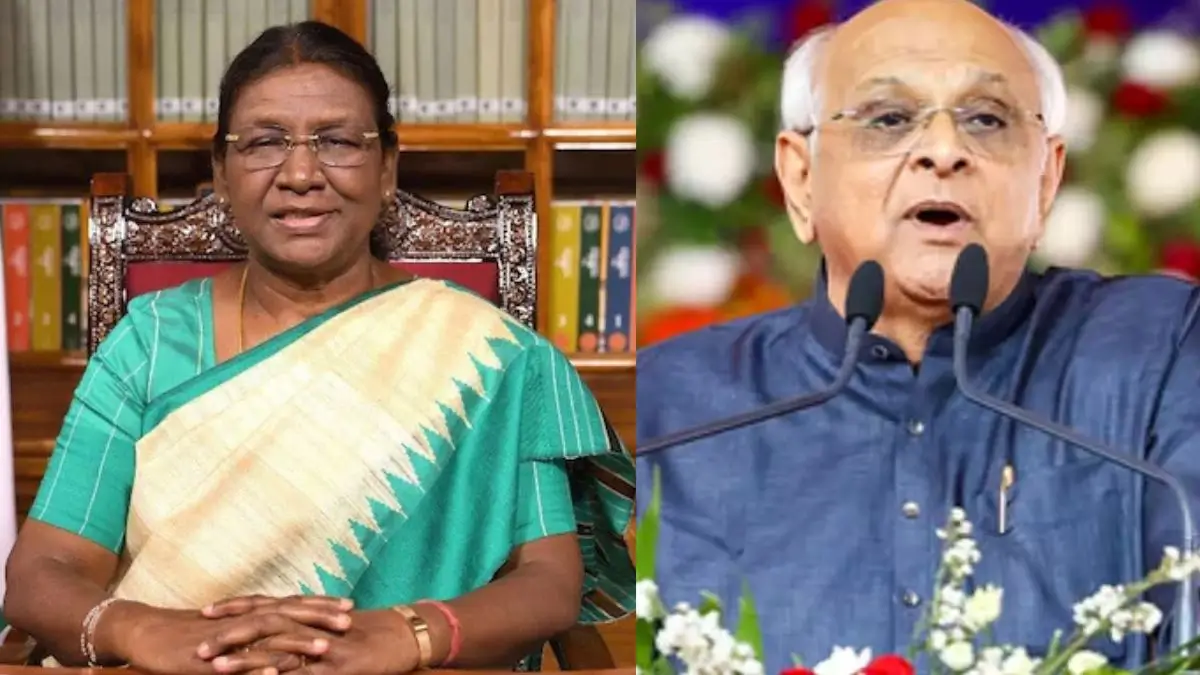
Honorable President of India, Droupadi Murmu has given the assent to the Gujarat Uniform Civil Code Bill 2026 on 17th of September 2026, as per the gazette issued by the Gujarat government on 1st of October. This law was passed by the Gujarat Assembly following intense discussion in March. This bill laid down a common legal framework regarding the certain civil issues, including marriage, divorce, succession, adoption, and live-in relationship.
What Does the Gujarat UCC Law Include?
This law lays down certain common provisions relating to specified personal civil issues, irrespective of the personal law framework that is applicable to these personal laws.
It includes the following key aspects,
- Marriage
- Divorce
- Succession & Inheritance
- Adoption
- Live-in Relationships
- Other civil relationship-related matters
This law is largely based on the precedent set up by Uttarakhand, which is the first state in modern India to implement such a UCC law. Gujarat follows Uttarakhand in being the second state to pass such legislation.
Regulation of Live-in Relationships Under the Gujarat UCC
It is worthy to note that one of the aspects of the legislation of Gujarat is the regulation of live-in relationships. In this regard, the legislation of Gujarat offers a legal basis for such relationships and also deals with the rights of the children who are born through live-in relationships.
As indicated by reporting on the legislation that has been adopted, children born from live-in relationships are recognized in the law and thus have certain legal rights. Furthermore, there are provisions related to the registration of live-in relationships.
Changes Related to Marriage, Divorce and Succession
UCC includes common provisions related to marriage and divorce and also changes rules related to succession and inheritance.
The succession system provides certain shares to spouses, children, and parents in case of death of a person without any will. These groups are covered under the Code’s succession system and not only the personal law system.
Moreover, the legislation also includes provisions regarding marriage requirements and divorce procedures. Thus, there is a common statutory system regarding those issues which fall under the Code.
Whom Does the Gujarat UCC Exclude?
The law does not cover members of Scheduled Tribes.
Also, the individuals or groups whose rights are protected under Part XXI of the Constitution of India are excluded from the UCC according to the legislation.
This provision is very significant as part XXI of the Constitution includes provisions related to temporary, transitional and special provisions of certain states and regions.
From Committee Report to Legislation
In February 2025, the Government of Gujarat set up an expert five-member committee to assess the need for and enactment of the Uniform Civil Code in the state. Justice Ranjana Desai, retired the Supreme Court judge, was appointed the Chairperson of the committee.
The other members of the committee were retired IAS officer, C.L. Meena; advocate, R.C. Kodekar; former Vice-Chancellor of Veer Narmad South Gujarat University, Dakshesh Thakar and social activist, Geetaben Shroff. The committee submitted its report and bill to the state government in March 2026.
Subsequently, the Gujarat Assembly enacted the UCC Bill on 24 March 2026 after a debate that lasted nearly eight hours.
Uniform Civil Code and the Constitutional Provisions
The concept of Uniform Civil Code is linked to Article 44 of the Constitution of India.
Article 44 is stated in Part IV – Directive Principles of State Policy and says that the state will work to implement a uniform civil code for all citizens of India.
The Directive Principles are covered in Articles 36 to 51. These principles are fundamental to the governance of the nation, but according to Article 37, these are not enforceable through any court.
The constitutional provisions for Uniform Civil Code are thus located in the Directive Principles of State Policy and not in the Fundamental Rights section.
Implementation Status of Gujarat UCC
Presidential assent, on its own, does not ensure that all provisions become operative straightaway.
Commencement will be decided by the government of Gujarat using the prescribed procedure for issuing notifications. Up to 3 October 2026, the law had been assented to and published in the extraordinary Gazette, but the state government had not decided the date for implementation yet.
It is necessary to make this distinction when talking about the current status of the law.





 Delhi Institute for Transformation and I...
 Delhi Cabinet Approves Go-Delhi Foundati...
 Asiatic Lions Return to Barda Wildlife S...