
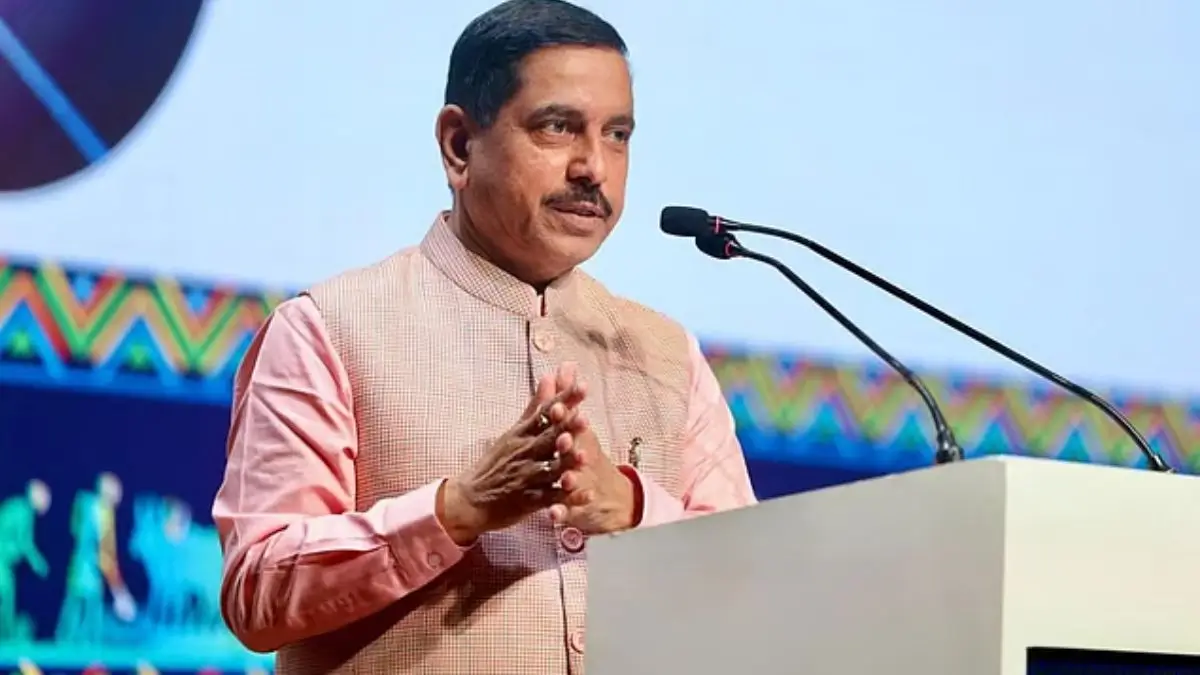
India has been re-elected as President for the third time at the ninth session of the International Solar Alliance (ISA), with France being re-elected as Co-President. Union Minister for New and Renewable Energy Pralhad Joshi announced this on the 3 rd November 2026. This shows how much support India has received from the member countries to continue to play a key role in enhancing international solar collaboration and increasing access to renewable energy.
What is the International Solar Alliance?
The International Solar Alliance is an international body looking to increase the large scale deployment of solar energy.
- Formed in 2015 by India and France.
- Headquartered in Gurugram, Haryana, India.
- Secretariat based in Gurugram.
- Vision: “One Sun One World One Grid”.
- Currently has 130 signatory and member countries, according to the minister on the 3 rd November 2026.
The alliance was launched by India and France at COP21 (Conference of the Parties) to the United Nations Framework Convention on Climate Change (UNFCCC) in Paris in November 2015. It entered into force under the framework agreement in December 2017.
Key priorities for the New Indian presidency
Union Minister Pralhad Joshi outlined several key priorities for the new alliance.
1. Solar Finance
- The minister mentioned the USD 200 million Africa Solar Facility that will provide investment for the country’s distributed renewable energy industry. He also mentioned how India has pledged around INR 225 crore (USD 25 million).
- Another example was the USD 300 million Nigeria Distributed Renewable Energy (DRE) Fund.
2. Solar for Farmers
- The alliance wants to increase the provision of solar technologies to other countries. An example of this is India’s PM-KUSUM scheme that uses solar to help lower irrigation costs for farmers.
- The minister also mentioned how Agrivoltaics (Agri-PV) can be used.
3. Solar Projects for Islands
The ISA has provided assistance to countries such as Fiji, Madagascar, Comoros and Seychelles to utilise solar energy.
This includes,
- Providing energy at health care facilities and schools.
- Access to clean drinking water.
- Solar powered farming.
- Improved climate resilience.
The alliance is also looking at providing hybrid solar and energy storage solutions for Small Island Developing States (SIDS) starting with Mauritius.
4. Technology Capacity Building
- Joshi mentioned how there are 17 Solar Technology Application Resource Centres being developed, the SHINE (Strategic Hub for Innovation and Execution) Global Capability Centre and an AI enabled ISA Academy. These will help increase the capacity of countries.






 Keisha Lance Bottoms Makes History as Fi...
 UN Peacekeeping Mission in Western Sahar...
 WMO Greenhouse Gas Bulletin 2026: Greenh...