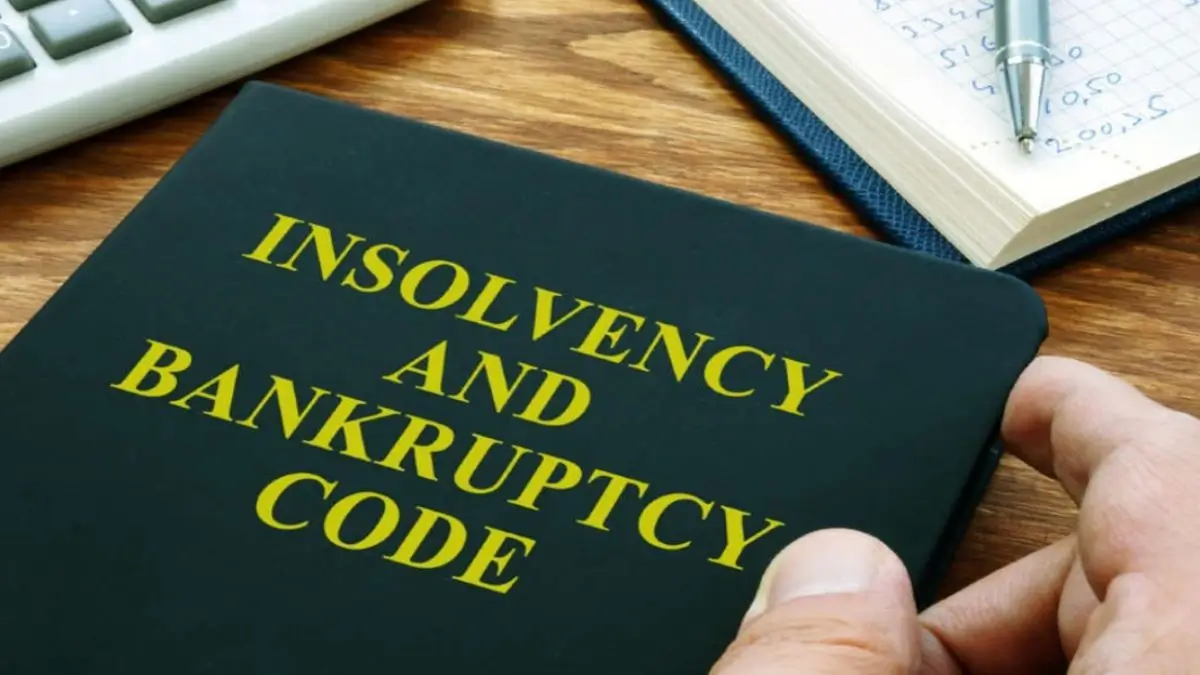
India’s Insolvency and Bankruptcy Code (IBC) which was launched in 2016 has completed the decade of implementation. It was introduced to address delays in the insolvency resolution and to improve debt recovery mechanisms. This code has fundamentally transformed the country’s financial scenarios. Over the last ten years IBC has creditor rights, encouraged to responsible borrowing, improved recovery rates and facilitated the revival of distressed businesses.
What is the Insolvency and Bankruptcy Code (IBC)?
The Insolvency and Bankruptcy Code (IBC) was enacted in the year 2016 to create the unified and time bound framework for resolving insolvency and bankruptcy cases including the companies, partnerships, and individuals.
Before the IBC, insolvency cases in India often remained unresolved for the many years and it leading to the significant loss of asset value and poor recovery for lenders.
This Code has introduced the creditor-driven resolution process aimed at maximizing value, ensuring business continuity, and improving financial discipline.
Its primary objectives includes the,
- Timely resolution of the stressed assets
- Maximization of asset value
- Protection of creditor interests
- Revival of financially distressed companies
- Improvement in the credit culture in the economy
Key Achievements of IBC in Its First Decade
The IBC performance over the last ten years growing with effectiveness in to resolving the financial distress.
As of March 2026, total of 8,987 insolvency cases had been admitted under the Code.
Out of these total 7,102 cases has reached to closure and indicating substantial progress in handling stressed assets.
Some notable achievements includes the,
- 1,419 cases has been successfully resolved through resolution plans
- More than ₹4 lakh crore realized for the creditors
- Recovery value has equivalent to 95% of fair value
- Recovery value equivalent to 167% of liquidation value
- 4,099 companies rescued and revived
- Over the 30,000 cases settled before formal admission
These figures highlights the Code’s effectiveness in to preserving economic value and ensuring better outcomes for stakeholders.
How IBC Improved Debt Recovery and Reduced NPAs
- One of the major contributions of the IBC has been its role in to strengthening India’s banking sector.
- Prior to the introduction of IBC, the recovery rates has been remained low and insolvency proceedings often stretched over several years.
- This Code has significantly changed this scenario by creating strong incentives for the borrowers to settle dues and avoid insolvency proceedings.
- The impact is visible in to the sharp decline in banking sector stress.
Key Improvements
- Total Gross NPA ratio declined from 11.8% in 2017 to 2.1% in September 2025.
- Average recovery rates also increased from 15-20% before IBC to around the 30% after IBC.
- Recovery rate under the IBC has reached at the 36.6% in 2024-25.
- Resolution timelines has also reduced from 6-8 years to nearly 2 years
- According to the RBI, IBC has emerged as the most effective channel for the recovering stressed assets among all available mechanisms.
Revival of Distressed Companies Through IBC
The major objective of the Code was not just merely liquidation but the revival of economically viable businesses.
This results show considerable success in this regard. Around 58% of closed cases are resulted in rescue or revival outcomes, helping preserve jobs, productive assets and economic value.
Notably, around the 42% of companies resolved under the IBC which are previously been referred to the Board for Industrial and Financial Reconstruction (BIFR) or had become defunct.
Impact on Credit Discipline and Borrower Behavior
The IBC has significantly altered the borrower behavior by creating the credible threat of insolvency proceedings.
The deterrent effect is evident from the large number of the settlements taking place before the formal insolvency admission.
More than 30,000 cases involving nearly ₹14 lakh crore were resolved through the settlements and withdrawals before entering into the insolvency process.
Global Recognition of India’s Insolvency Framework
India’s insolvency ecosystem has also received the international recognition.
S&P Global Ratings has also upgraded the India’s insolvency framework from Group C to Group B and it acknowledged the improvements in resolution efficiency and creditor recovery mechanisms.
This upgrade showcases the increasing confidence in to the India’s legal and financial institutions and strengthens the country’s attractiveness for the domestic and foreign investors.





 NPCI Defers 0.4% MDR on Select UPI Trans...
 SEBI Credit Risk-o-Meter for Bonds: Six ...
 RBI Raises Daily CRR Maintenance Require...