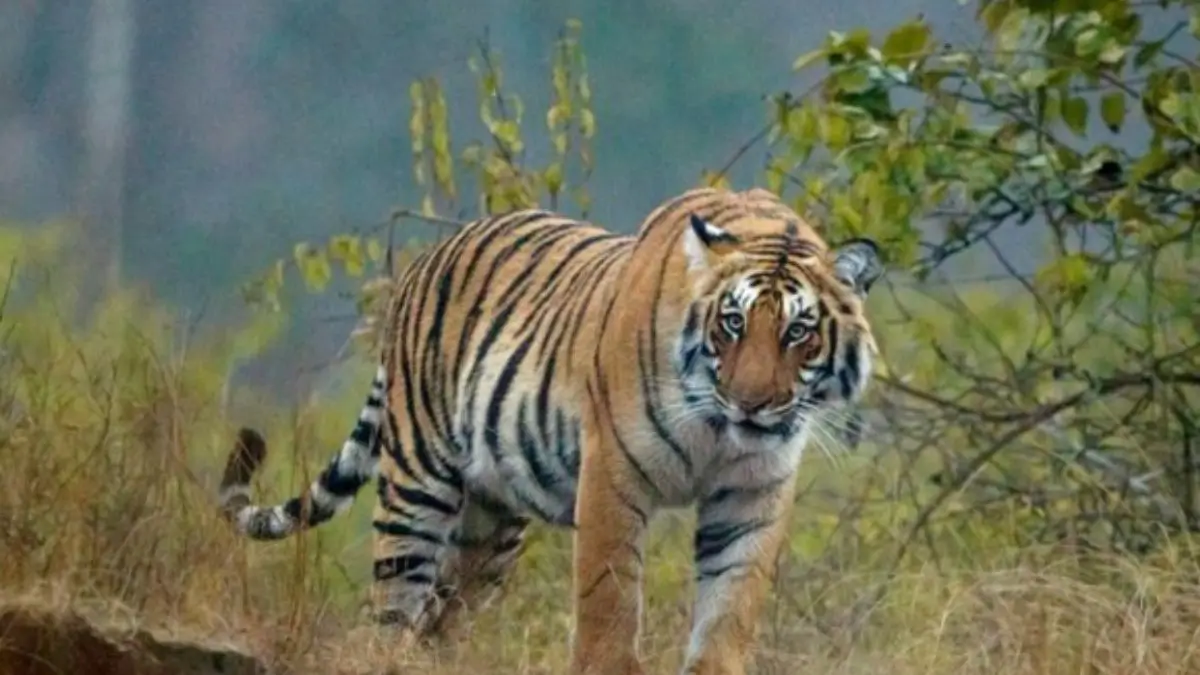
On 29th July, 2026 International Tiger Day will be observed worldwide, to raise the global awareness about the conservation of tigers and the urgent need to protect their natural habitats. The day is also known as the World Tiger Day or Global Tiger Day, and the annual observance highlights the threats such as poaching, habitat destruction, illegal wildlife trade, and climate change which continue to endanger the one of the world’s most iconic big cats.
As India is home to more than 70% of the world’s wild tiger population, it plays a leading role in the global tiger conservation via multiple initiatives such as Project Tiger, the National Tiger Conservation Authority (NTCA), and an expanding network of tiger reserves.
International Tiger Day 2026: Date and Theme
International Tiger Day is set to be observed every year on 29th July all across the world.
International Tiger Day 2026 Date
- Date: 29 July 2026
- Day: Wednesday
International Tiger Day 2026 Theme
The official theme for the International Tiger Day 2026 is,
“Securing the Future of Tigers with Indigenous Peoples and Local Communities at the Heart.”
This year theme emphasizes that the tiger conservation cannot succeed without the active participation of indigenous communities and the local people who are living near to the tiger habitat.
It also promotes the habitat restoration, protection of wildlife corridors, reduction of human-wildlife conflict, and community-led conservation initiatives.
What is International Tiger Day?
International Tiger Day, which is also known as the Global Tiger Day, an annual observance campaign which is dedicated to protecting wild tigers and their habitats.
This observance encourages the governments, conservation organizations, scientists, and local communities to work together to prevent the poaching, illegal wildlife trade, and habitat degradation.
This day als educates the people about the cological importance of tigers as apex predators which help to maintain the healthy forest ecosystems by regulating the prey populations and preserving the biodiversity.
The beginning of International Tiger Day go back to 2010 and the Tiger Summit, which took place in St. Petersburg, Russia.
At the summit, leaders from the several countries with wild tiger populations, including India, acknowledged that the overall number of tigers in the wild had seen a decline due to poaching, habitat loss, and trafficking.
At that time, only about 3,200 wild tigers were left in the world.
In order to deal with this problem the countries that took part in the summit adopted the TX2 goal to double the number of wild tigers in the world by 2022 through joint conservation programs and initiatives.
For this initiative, July 29th declare as the International Tiger Day.
Tiger Conservation in India
The consistent government policies, scientific monitoring, and community involvement made India the world leader in the field of tiger conservation.
Project Tiger
Project Tiger is the Indian conservation initiative started in 1973 with the aim of protecting the wild tiger population and its habitat and controlling illegal poaching.
National Tiger Conservation Authority (NTCA)
The NTCA was formed in 2005 for controlling tiger conservation policies, monitoring the tiger reserves, and doing scientific management of tiger population.
Tiger Reserves
In the year 2026, India has 58 tiger reserves protecting the habitat of tigers and other wildlife. These protected regions are crucial for ecological balance and biodiversity.
Scientific Monitoring
India carries out the All India Tiger Estimation every four years benefiting from camera traps, GPS, artificial intelligence, and surveys to analyze the number of tigers.
Anti-Poaching Measures
The departments of forests utilize modern technologies like drones, surveillance systems, camera traps, intelligence networks, and special forces to stop poaching activities and the illegal wildlife trade.
Interesting Facts About Tiger
- Tigers belong to the family Felidae and bear the scientific name Panthera tigris. Royal Bengal Tiger is India’s National Animal.
- 70% of wild tiger population in the world lives in India.
- Every tiger has a unique stripe pattern just like human fingerprints.
- Tigers are good swimmers and often cross rivers as part of their hunting or territorial activities.
- They can run nearly 65 km/h over short distances.
- A tiger’s roar can be heard from as far as 2 miles away.
- Tigers are solitary and territorial animals.
- They can be found in tropical forests, grasslands, mangroves, wetlands and foothill forests.
Major Threats to Tigers
Despite numerous achievements in conservation, tiger populations still deal with various dangers throughout their territories.
Today, poaching represents the biggest hazard to the species with the illegal trade of tiger pelts, bones and other body parts responsible for most of the incidences. Besides poaching, tigers suffer from the lack of suitable living spaces due to deforestation, building of roads, mining and farming.
Climate change also pose a significant threat to vital ecosystems, such as the Sundarbans mangrove forests, because of rising sea levels and changing weather conditions associated with them. Furthermore, an increase in clashes between people and animals near forest borders undermines the success of conservation efforts.
Tiger Range Countries
Additionally, wild tigers are historically found across 13 tiger-range countries and most of the countries are located in Asia.
These countries are the,
India, Bangladesh, Bhutan, Nepal, China, Russia, Myanmar, Thailand, Malaysia, Indonesia, Cambodia, Laos, Vietnam.








 International Day for the Eradication of...
 World Food Day 2026: Theme, History, Sig...
 Mahila Kisan Diwas 2026 to Highlight Wom...