
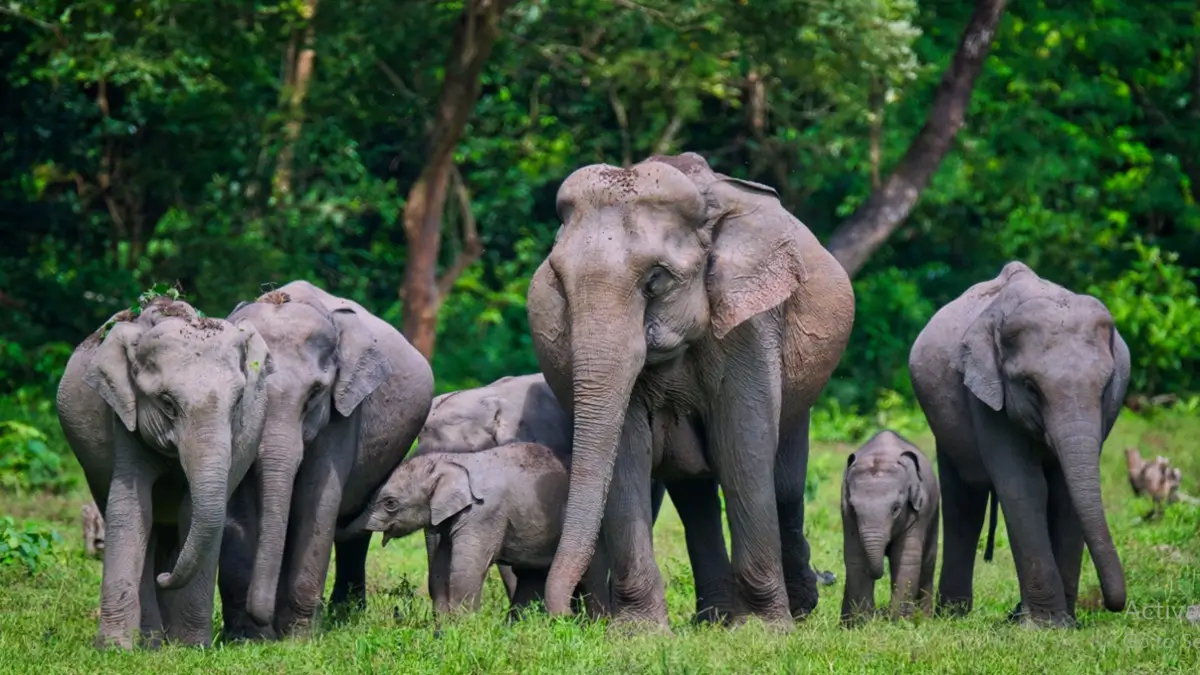
India is home to the largest population of Asian Elephants in the world and plays a central role in global elephant conservation. Elephants are deeply connected with India’s ecology, culture and biodiversity and are found across forests, grasslands and wildlife landscapes.
To protect this iconic species, India launched several initiatives including Project Elephant, development of Elephant Reserves, creation of Elephant Corridors, and participation in international conservation programmes.
As of 2026, India has 33 officially established Elephant Reserves spread across 14 states, covering nearly 80,000 sq. km of important elephant habitats.
Indian Elephant: Overview
The Indian Elephant is one of the three subspecies of Asian elephants and has the widest distribution among them.
Elephants are mainly found in:
- Southern Western Ghats
- North-East India
- Eastern India
- Central India
- Northern India
Important facts:
- Scientific Name: Elephas maximus indicus
- IUCN Status: Endangered
- Wildlife Protection Act, 1972: Schedule I
- CITES Status: Appendix I
- Gestation Period: Around 22 months
- Estimated Population in India: Around 28,000 elephants
World Elephant Day
World Elephant Day is observed every year on 12 August.
The day was launched in 2012 to raise awareness about:
- Elephant conservation
- Habitat protection
- Human-elephant conflict
- Prevention of poaching
What is Project Elephant?
Project Elephant was launched by the Government of India in 1992 as a centrally sponsored scheme.
The project focuses on long-term conservation and management of wild elephant populations.
Objectives of Project Elephant
Major objectives include:
- Protection of elephants and their habitats
- Conservation of elephant corridors
- Reduction of human-elephant conflict
- Welfare of captive elephants
- Scientific management of elephant populations
- Prevention of illegal ivory trade and poaching
Elephant Census in India
India conducts elephant estimation periodically under Project Elephant.
Methods used:
Direct Counting Method
Population is estimated through direct sightings.
Indirect Counting Method
Population is estimated using:
- Dung decay formula
- Statistical estimation models
States like Karnataka and Tamil Nadu commonly use this method.
State with Highest Elephant Population
According to the elephant estimation data:
- Karnataka – Highest elephant population
- Assam
- Kerala
Karnataka continues to hold the largest elephant population in India.
What are Elephant Corridors?
An Elephant Corridor is a narrow strip of habitat connecting larger elephant landscapes and enabling movement between habitats.
These corridors are important because they:
- Maintain genetic diversity
- Support migration
- Reduce habitat fragmentation
- Improve species survival
India currently has 88 identified elephant corridors.
Distribution of Elephant Corridors in India
The corridors are distributed as:
- South India – 20
- North-West India – 12
- Central India – 20
- Northern West Bengal – 14
- North-East India – 22
Threats to Elephant Corridors
Major challenges include:
- Urban expansion
- Road and railway construction
- Mining activities
- Habitat fragmentation
- Human settlements
- Poaching for ivory trade
Coal and iron ore mining remain major threats in central India.
Project RE-HAB: Reducing Human-Elephant Conflict
Project RE-HAB (Reducing Elephant-Human Attacks using Bees) was launched in Karnataka.
The project works through:
- Installation of bee boxes
- Creation of bee fences
- Preventing elephant intrusion into villages
Implementing Agency:
- Khadi and Village Industries Commission (KVIC)
The initiative functions under the National Honey Mission.
Monitoring of Illegal Killing of Elephants (MIKE Programme)
The MIKE Programme was launched under CITES.
Objectives:
- Measure elephant mortality trends
- Monitor illegal poaching
- Strengthen elephant conservation policies
- Build institutional capacity in elephant range countries
India currently has 10 MIKE Sites.
Major MIKE Sites in India
Some important MIKE locations include:
- Chirang-Ripu Elephant Reserve
- Dihing Patkai Elephant Reserve
- Eastern Dooars Elephant Reserve
- Garo Hills Elephant Reserve
- Mayurbhanj Elephant Reserve
- Mysore Elephant Reserve
- Nilgiri Elephant Reserve
- Wayanad Elephant Reserve
Haathi Mere Saathi Campaign
The Haathi Mere Saathi campaign was launched by:
- Ministry of Environment, Forest and Climate Change
- Wildlife Trust of India (WTI)
The campaign aims to:
- Increase awareness
- Promote coexistence
- Build community support for elephant conservation
Elephant Task Force
The Government of India established the Elephant Task Force (ETF) in 2010.
Key objective:
- Review elephant conservation policies
- Recommend future strategies
The task force submitted the report:
“Gajah: Securing the Future for Elephants in India.”
Major Elephant Reserves in India
Important reserves include:
- Shivalik Elephant Reserve (Uttarakhand)
- Singhbhum Elephant Reserve (Jharkhand)
- Kameng Elephant Reserve (Arunachal Pradesh)
- Mysore Elephant Reserve (Karnataka)
- Nilgiri Elephant Reserve (Tamil Nadu)
- Wayanad Elephant Reserve (Kerala)
- Periyar Elephant Reserve (Kerala)
- Garo Hills Elephant Reserve (Meghalaya)
- Mayurbhanj Elephant Reserve (Odisha)
- Eastern Dooars Elephant Reserve (West Bengal)
Important Facts for Competitive Exams
- Project Elephant launched → 1992
- World Elephant Day → 12 August
- Elephant Corridors in India → 88
- Elephant Reserves in India → 33
- Highest Elephant Population → Karnataka
- IUCN Status → Endangered
- Wildlife Protection Act → Schedule I








 UNESCO World Heritage Sites of India - D...
 Jamnagar Refinery: Why India's Oil Hub M...
 UNESCO World Heritage Sites of India - D...










