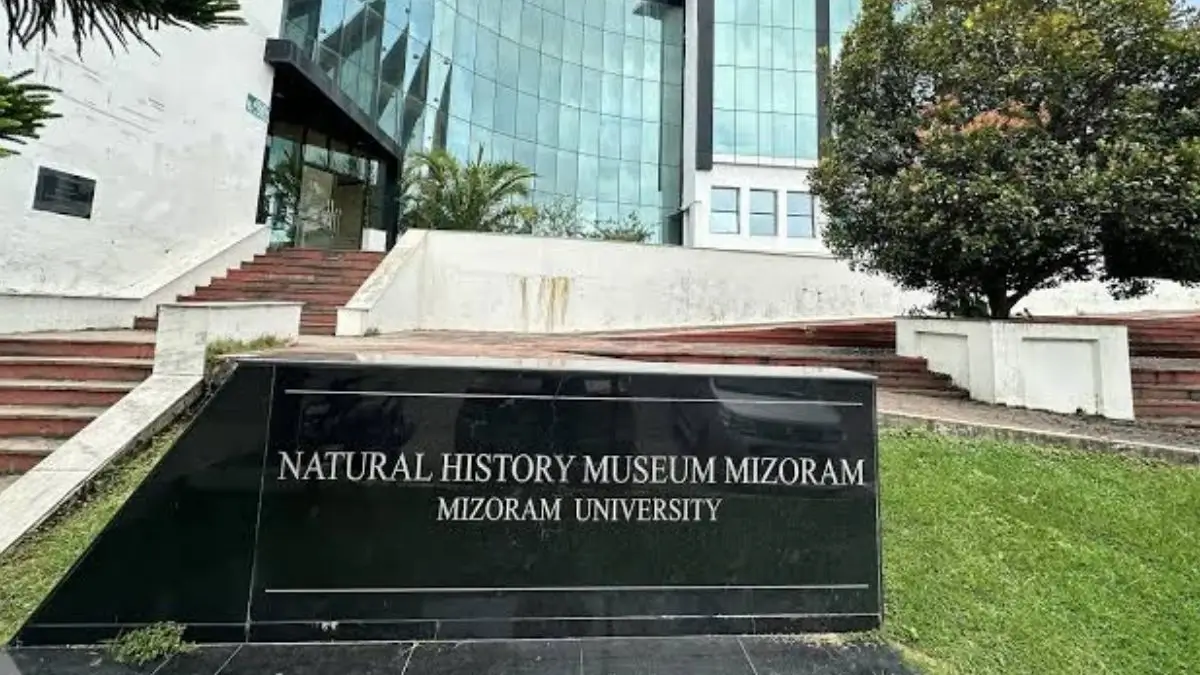
The Ministry of Environment, Forest and Climate Change (MoEFCC) has notified the Natural History Museum (NHM) of Mizoram University as the country’s 21st Designated Repository under Section 39 of the Biological Diversity Act, 2002. It was officially notified on 19th of June, 2026, after the recommendation of the National Biodiversity Authority (NBA), this status will enhance India’s scientific infrastructure to preserving biological specimens and it supports long-term conservation of the country’s rich biodiversity
NHM Mizoram as India’s 21st Designated Repository
The Ministry of Environment, Forest and Climate Change (MoEFCC) has granted the designated status to the Natural History Museum (NHM) of Mizoram University, Aizawl, under the provisions of the Biological Diversity Act, 2002.
This notification was issued on the 19th of June, 2026, after the proposal recommended by the National Biodiversity Authority (NBA), got approval from the Central Government.
After getting this recognition, NHM has become India’s 21st Designated Repository and it expands the country’s national network of institutions that are responsible for to preserving the authenticated biological specimens.
What Is a Designated Repository?
A Designated Repository is an institution that is officially recognized under Section 39 of the Biological Diversity Act, 2002 to preserve the biological specimens collected as per the Act.
This repository performs several functions such as, preserving authenticated biological specimens, maintaining reference collections for scientific research, supporting species identification and classification and protecting India’s biological resources.
Importance of the Natural History Museum of Mizoram
This institute was established in the year 2022 under the Mizoram University, it is uniquely located as it lies within the Indo-Burma Biodiversity Hotspot, it is one of the world’s richest regions for biological diversity.
The northeast region is home to more than 7,500 species of flowering plants and over of 2,000 faunal species.
This museum specializes in documenting and preserving several lesser-studied groups and it includes,
- Pteridophytes (ferns and related plants)
- Macrofungi
- Reptiles
- Amphibians
- Freshwater fishes
- Moths
- Beetles
- Butterflies
Scientific expertise of the institute fills the gap in the country’s biodiversity documentation network.
Its scientific expertise fills important gaps in India’s biodiversity documentation network.
Role in Conserving Rare and New Species
One of the major responsibilities of this museum is to preserve the voucher specimens and type specimens.
One of the major responsibilities of the museum will be preserving voucher specimens and type specimens.
Voucher Specimens
These are the authenticated biological samples which are collected during scientific studies and it serve as the permanent references for future research.
Type Specimens
Type specimens are the original specimens that are used to formally describe newly discovered species.
The repository will serve as the official depository for the new species discovered in the region, will ensuring the accurate scientific documentation and long-term preservation.
Scientific Preparedness Before Recognition
Even before receiving official designation, the Natural History Museum had established a strong scientific foundation.
The museum has already,
- Collected and preserved more than 500 biological specimens.
- Developed herbarium collections.
- Maintained wet-preserved zoological specimens.
Its multidisciplinary scientific team includes specialists across seven taxonomic groups, covering plants, fungi, insects, fish, reptiles, amphibians, and butterflies.
This readiness played a key role in its recognition as a Designated Repository.
Benefits of Biodiversity Conservation
The designation offers several long-term benefits for biodiversity conservation in India.
It will help to preserve biological specimens closer to their natural habitats, improve the scientific documentation, strengthen the species identification, also support the ecological restoration after habitat loss or natural disasters and facilitate the collaboration among the different biodiversity institutions.
This repository will also improve the coordination with the Mizoram State Biodiversity Board and regional research organizations.








 Asiatic Lions Return to Barda Wildlife S...
 Himachal Pradesh Inaugurates Its First S...
 Lakshadweep Becomes India’s First 100%...