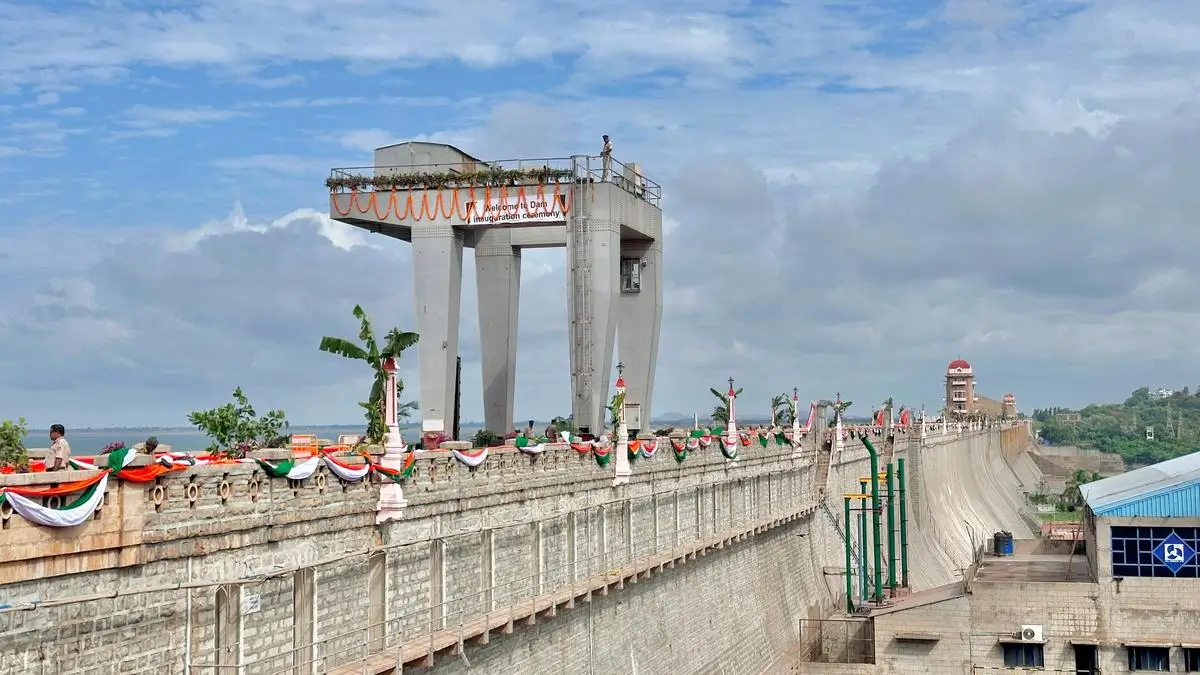
The Rajolibanda Diversion Scheme (RDS) is an important interstate irrigation project built across the Tungabhadra River, a major tributary of the Krishna River. The project plays a crucial role in supplying irrigation water to parts of Telangana, Karnataka, and Andhra Pradesh, supporting agriculture and rural livelihoods.
Recently, the Rajolibanda Diversion Scheme came into focus after Telangana Chief Minister A. Revanth Reddy urged the Central Government to find a permanent solution to the long-pending Tungabhadra river water-sharing dispute during the inauguration of the newly installed spillway crest gates at the Tungabhadra Dam in Karnataka.
Rajolibanda Diversion Scheme: Overview
| Particulars | Details |
|---|---|
| Project Name | Rajolibanda Diversion Scheme (RDS) |
| River | Tungabhadra River |
| Basin | Krishna River Basin |
| Type | Irrigation Diversion Project |
| States Benefited | Telangana, Karnataka and Andhra Pradesh |
| Primary Purpose | Irrigation and Water Supply |
What is the Rajolibanda Diversion Scheme?
The Rajolibanda Diversion Scheme (RDS) is an interstate irrigation project constructed across the Tungabhadra River near Rajolibanda village in Karnataka.
The project diverts river water through a network of canals to irrigate drought-prone agricultural areas in Karnataka, Telangana, and Andhra Pradesh. It is one of the important irrigation schemes in the Krishna River basin and has been a key source of water for farmers for several decades.
Objectives of the Rajolibanda Diversion Scheme
The scheme was developed with the following objectives:
- Provide irrigation water to drought-prone regions.
- Improve agricultural productivity.
- Ensure equitable sharing of Tungabhadra river water.
- Support farmers and rural livelihoods.
- Promote sustainable water management among the participating states.
Water Allocation Under the Scheme
Under the existing water-sharing arrangement:
- Telangana has been allocated 17.9 TMCFT of water through the Rajolibanda Diversion Scheme.
However, according to Telangana Chief Minister A. Revanth Reddy, farmers are currently able to utilize only 5–6 TMCFT of the allocated water, while nearly 10 TMCFT remains unutilized due to operational and infrastructure-related challenges.
The state has urged the Central Government to address these issues and ensure effective utilization of its allocated share.
Recent Developments
The Rajolibanda Diversion Scheme gained attention during the inauguration of the 33 newly installed spillway crest gates at the Tungabhadra Dam in Hosapete, Karnataka.
The event was attended by:
- Union Jal Shakti Minister C. R. Patil
- Telangana Chief Minister A. Revanth Reddy
- Karnataka Chief Minister D. K. Shivakumar
- Andhra Pradesh Chief Minister N. Chandrababu Naidu
During the meeting, the leaders discussed the long-pending Tungabhadra river water-sharing dispute and explored measures to improve interstate cooperation.
Major Issues Related to RDS
Several challenges continue to affect the efficient functioning of the Rajolibanda Diversion Scheme:
- Inadequate utilization of allocated water.
- Sedimentation reducing water availability.
- Canal maintenance issues.
- Interstate water-sharing disputes.
- Growing irrigation demand.
- Seasonal variations in river flow.
These issues have highlighted the need for better coordination among the beneficiary states and the Central Government.
Proposed Measures
During the meeting, several proposals were discussed to improve water management in the Tungabhadra basin.
These include:
- De-silting the Tungabhadra Reservoir to increase storage capacity.
- Examining the construction of a balancing reservoir at Navali.
- Improving canal infrastructure.
- Strengthening interstate coordination for equitable water distribution.
The Central Government has also indicated plans to undertake de-silting of major reservoirs across the country to improve storage capacity and water availability.
Importance of the Rajolibanda Diversion Scheme
The Rajolibanda Diversion Scheme plays a vital role in supporting agriculture across the three states.
Its significance includes:
- Irrigating thousands of hectares of agricultural land.
- Supporting food production and rural livelihoods.
- Improving water security in drought-prone regions.
- Strengthening interstate cooperation in water resource management.
- Contributing to regional agricultural development.
Key Facts
- The Rajolibanda Diversion Scheme is built on the Tungabhadra River.
- The Tungabhadra River is a major tributary of the Krishna River.
- The scheme benefits Telangana, Karnataka, and Andhra Pradesh.
- Telangana’s allocated share under the scheme is 17.9 TMCFT.
- The project primarily supports irrigation in drought-prone areas.
- The scheme is frequently discussed in the context of interstate river water-sharing issues.







 Khet Bachao Abhiyan–Rabi 2026: Launch ...
 Prime Minister Dhan-Dhaanya Krishi Yojan...
 Bhagini Nivedita Scheme 2027: West Benga...