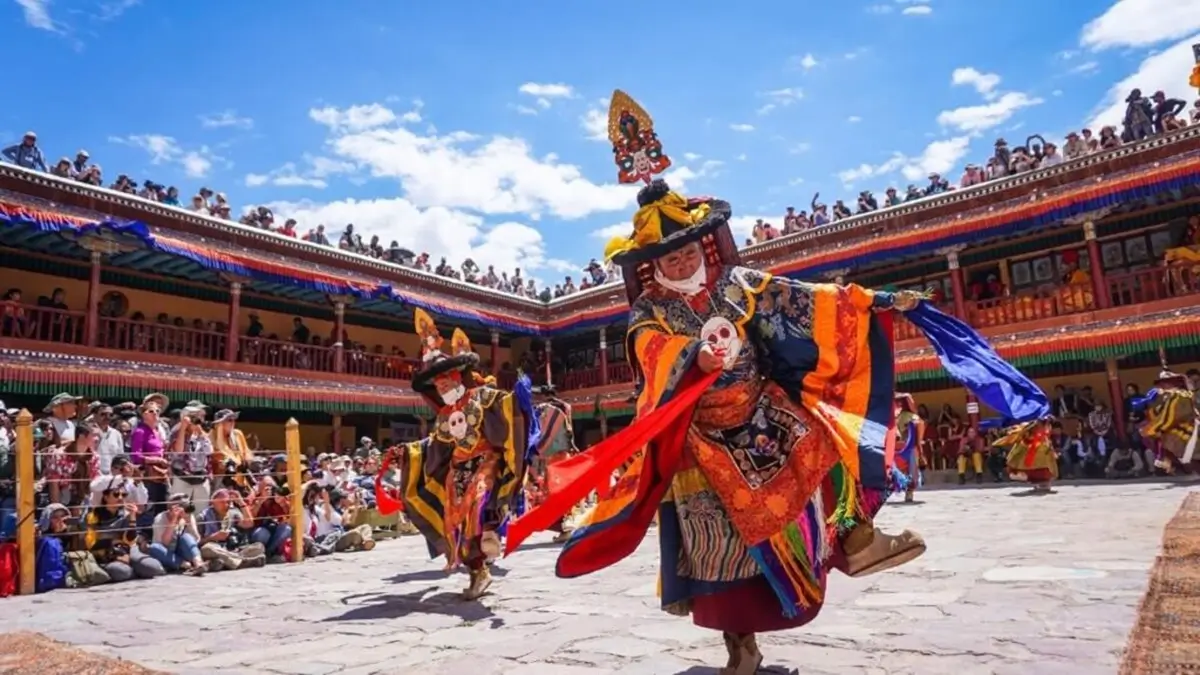
The Hemis Festival is one of the most vibrant and significant Buddhist festivals celebrated in Ladakh. Held annually at the famous Hemis Monastery in the Leh district, the festival commemorates the birth anniversary of Guru Padmasambhava, also known as Guru Rinpoche or the Second Buddha. It is celebrated with colorful masked dances, sacred rituals, traditional music, and prayers, attracting thousands of devotees and tourists from across the world.
In 2026, the Hemis Festival began on 24 June and concluded on 25 June at the Hemis Monastery. The inauguration ceremony was attended by the Lieutenant Governor of Ladakh, V. K. Saxena.
Hemis Festival 2026: Overview
| Particulars | Details |
|---|---|
| Festival Name | Hemis Festival |
| Date | 24–25 June 2026 |
| Location | Hemis Monastery, Leh, Ladakh |
| Occasion | Birth Anniversary of Guru Padmasambhava |
| Religion | Buddhism |
| Duration | Two Days |
| Celebrated By | Buddhist Monks, Local Communities and Tourists |
| Chief Guest (2026 Inauguration) | Lieutenant Governor V. K. Saxena |
What is the Hemis Festival?
The Hemis Festival is the largest and most popular religious festival of Ladakh, celebrated every year at the historic Hemis Monastery, one of the biggest and wealthiest monasteries in the region.
The festival honors Guru Padmasambhava, who introduced Vajrayana (Tantric) Buddhism to Tibet and the Himalayan region during the 8th century CE. He is regarded as the Second Buddha for his immense contribution to spreading Buddhism and overcoming negative forces.
The festival is celebrated according to the Tibetan lunar calendar on the 10th day of the fifth lunar month, which falls on 24–25 June in 2026.
Why is the Hemis Festival Celebrated?
The Hemis Festival is celebrated to commemorate the birth anniversary of Guru Padmasambhava and his role in establishing Buddhism in the Himalayan region.
According to Buddhist belief, Guru Padmasambhava defeated evil spirits and spread the teachings of compassion, wisdom, and spiritual enlightenment. The festival symbolizes the victory of good over evil and serves as a reminder of the importance of peace, harmony, and spiritual growth.
Every year, devotees gather at Hemis Monastery to seek blessings and participate in religious ceremonies.
Significance of the Hemis Festival
The Hemis Festival holds great religious and cultural significance for Buddhists and the people of Ladakh.
Its importance includes:
- Paying tribute to Guru Padmasambhava and his teachings.
- Celebrating the triumph of positivity over negative forces.
- Preserving Ladakh’s rich Buddhist heritage and traditions.
- Promoting peace, compassion, and spiritual awareness.
- Bringing together monks, local communities, and tourists from around the world.
- Showcasing the unique cultural identity of Ladakh.
The festival also plays an important role in promoting cultural tourism in the Union Territory of Ladakh.
Major Celebrations During the Hemis Festival
The two-day festival is marked by several religious rituals and cultural performances.
Cham Dance
One of the biggest attractions of the festival is the Cham Dance, performed by Buddhist monks wearing vibrant silk robes and elaborate masks representing deities, guardian spirits, and mythical figures.
The dance symbolizes the victory of wisdom and virtue over ignorance and evil.
Thangka Display
During a special 12-year cycle, a giant sacred Thangka (religious scroll painting) depicting Guru Padmasambhava is displayed at the monastery for devotees.
The rare display is considered highly auspicious and attracts thousands of pilgrims.
Traditional Tibetan Music
The celebrations feature traditional Buddhist musical performances using instruments such as:
- Dungchen (long copper trumpets)
- Gyaling (Tibetan oboe)
- Nga (ritual drums)
- Damaru (hand drum)
The music accompanies the religious ceremonies and masked dances.
Prayers and Ritual Offerings
Monks perform continuous chanting of sacred Buddhist scriptures inside the monastery.
Devotees offer:
- Butter lamps
- Flowers
- Rice
- Incense
- Tormas (ritual offerings made from barley flour and butter)
These offerings symbolize devotion, gratitude, and prayers for peace and prosperity.
Hemis Monastery
The Hemis Monastery, located about 45 km from Leh, is one of the most important Buddhist monasteries in Ladakh.
It belongs to the Drukpa Kagyu school of Tibetan Buddhism and is renowned for its ancient scriptures, priceless relics, murals, and annual Hemis Festival.
The monastery serves as the center of religious and cultural activities during the festival.
Importance for Tourism
The Hemis Festival has become one of India’s major cultural tourism attractions.
Every year, thousands of visitors from India and abroad visit Ladakh to witness:
- Colorful masked dances
- Buddhist rituals
- Traditional music
- Local handicrafts
- Ladakhi cuisine
- Monastic heritage
The festival significantly contributes to promoting Ladakh’s tourism and preserving its cultural identity.
Key Facts About Hemis Festival
- Celebrated annually in Hemis Monastery, Ladakh.
- Dedicated to Guru Padmasambhava (Guru Rinpoche).
- Observed on the 10th day of the fifth month of the Tibetan lunar calendar.
- One of the largest Buddhist festivals in India.
- Famous for the Cham masked dance.
- The sacred Thangka of Guru Padmasambhava is displayed once every 12 years.
- Attracts thousands of pilgrims and tourists from across the globe.







 UNESCO World Heritage Sites of India - D...
 Jamnagar Refinery: Why India's Oil Hub M...
 UNESCO World Heritage Sites of India - D...