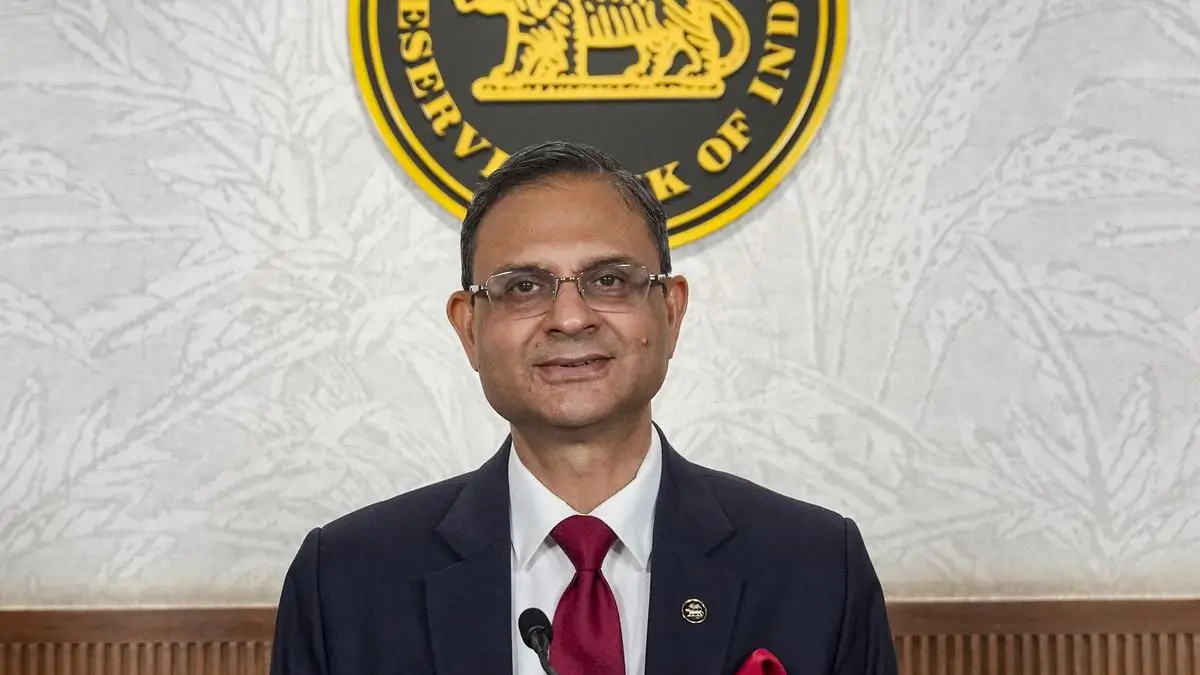
The Reserve Bank of India (RBI) announced its latest monetary policy decisions after the 61st meeting of the Monetary Policy Committee (MPC) held from June 3 to June 5, 2026, under the chairmanship of RBI Governor Sanjay Malhotra.
Amid rising geopolitical uncertainty, elevated energy prices, global supply chain disruptions, and inflation concerns, the committee decided to maintain the existing policy rate while continuing with a neutral policy stance.
The decision reflects RBI’s balanced approach of supporting economic growth while remaining vigilant against inflationary risks.
RBI Monetary Policy Meeting June 2026: Key Decisions
After reviewing domestic and global macroeconomic developments, the Monetary Policy Committee unanimously decided to:
- Keep the Repo Rate unchanged at 5.25%
- Maintain the Standing Deposit Facility (SDF) Rate at 5.00%
- Keep the Marginal Standing Facility (MSF) Rate at 5.50%
- Continue with the Neutral Policy Stance
The decision indicates that RBI is currently adopting a wait-and-watch approach before making further adjustments.
Members of the Monetary Policy Committee
The meeting was attended by:
- Shri Sanjay Malhotra – Governor, RBI
- Dr. Nagesh Kumar
- Shri Saugata Bhattacharya
- Prof. Ram Singh
- Dr. Poonam Gupta
- Shri Indranil Bhattacharyya
All members voted unanimously in favour of keeping the repo rate unchanged.
What is Repo Rate?
Repo Rate refers to the interest rate at which the Reserve Bank of India lends money to commercial banks.
Changes in repo rate influence:
- Loan interest rates
- Deposit rates
- Inflation levels
- Economic growth
- Consumer spending
A lower repo rate generally encourages borrowing and economic activity, while a higher repo rate helps control inflation.
Why Did RBI Keep Repo Rate Unchanged?
RBI noted that both growth and inflation risks have increased due to changing global conditions.
Major concerns highlighted include:
- Prolonged conflict in West Asia
- Rising crude oil prices
- Supply chain disruptions
- Commodity price increases
- Global financial market volatility
Although inflation remains under control at present, future price pressures remain uncertain.
The RBI concluded that additional clarity is needed before making further monetary policy adjustments.
Global Economic Outlook
The RBI observed that the global economy continues to face increasing uncertainty.
Key global developments include:
- Energy market volatility
- Declining crude oil reserves
- Rising commodity prices
- Tightening monetary conditions in advanced economies
- Strengthening US dollar
Global central banks are expected to remain cautious as inflation pressures persist.
India’s Domestic Economic Outlook
Despite global uncertainty, India’s economy has remained relatively resilient.
Major domestic indicators showed:
- Stable economic activity
- Strong private consumption
- Continued investment momentum
- Growth in merchandise exports
- Robust services exports
However, the effects of higher input costs and supply disruptions are beginning to emerge.
RBI Growth Forecast for FY 2026–27
Taking all factors into consideration, RBI projected:
Real GDP Growth: 6.6%
Quarter-wise projections:
- Q1: 6.6%
- Q2: 6.3%
- Q3: 6.5%
- Q4: 6.8%
The central bank highlighted that growth risks remain due to:
- Global supply disruptions
- Financial market volatility
- Weather-related uncertainties
Inflation Outlook for FY 2026–27
RBI revised inflation expectations upward due to higher food and energy prices.
Projected CPI Inflation:
5.1% for FY 2026–27
Quarter-wise estimates:
- Q1: 4.2%
- Q2: 5.1%
- Q3: 5.9%
- Q4: 5.4%
Core inflation is projected at:
4.7%
RBI stated that inflation may increase further because of rising fuel prices and second-round effects on production costs.
Major Inflation Risks Identified by RBI
The Monetary Policy Committee highlighted several emerging risks.
These include:
- Increase in petrol and diesel prices
- Higher transportation costs
- Rising industrial input prices
- Global energy shocks
- Supply chain bottlenecks
- Weak monsoon conditions
The possibility of broader inflation spreading across the economy remains an important concern.
Impact of Monsoon and El Niño on Policy Outlook
RBI also identified weather conditions as a major risk.
Concerns include:
- Deficient southwest monsoon
- El Niño conditions
- Pressure on agricultural production
- Rural demand uncertainty
However, mitigation measures such as:
- Crop diversification
- Water conservation
- Climate-resilient agriculture
- Short-duration crops
are expected to reduce some risks.
Government Measures Supporting Economic Stability
RBI acknowledged several government initiatives that strengthened resilience.
These include:
- Support for MSMEs
- Export promotion measures
- Domestic energy production expansion
- Import diversification
- Infrastructure investment
These measures are helping reduce vulnerability to global shocks.
What Does Neutral Stance Mean?
A neutral stance means RBI remains flexible.
The central bank may:
- Increase rates if inflation rises
- Reduce rates if growth weakens
- Maintain rates if conditions remain balanced
This approach allows RBI to respond quickly to future developments.
Why is RBI Monetary Policy June 2026 Important?
The June 2026 policy decision is important because it reflects RBI’s strategy of balancing:
- Inflation control
- Economic growth
- Financial stability
- Global uncertainty
- Domestic demand
The decision also signals that future policy actions will remain data-dependent.
When is the Next RBI MPC Meeting?
The Reserve Bank of India announced that the next Monetary Policy Committee meeting is scheduled from:
August 3 to August 5, 2026
The minutes of the June 2026 meeting will be released on June 19, 2026.
The RBI’s latest policy demonstrates cautious optimism—supporting growth while preparing for possible inflationary pressures and external shocks in the coming months.








 NPCI Defers 0.4% MDR on Select UPI Trans...
 SEBI Credit Risk-o-Meter for Bonds: Six ...
 RBI Raises Daily CRR Maintenance Require...