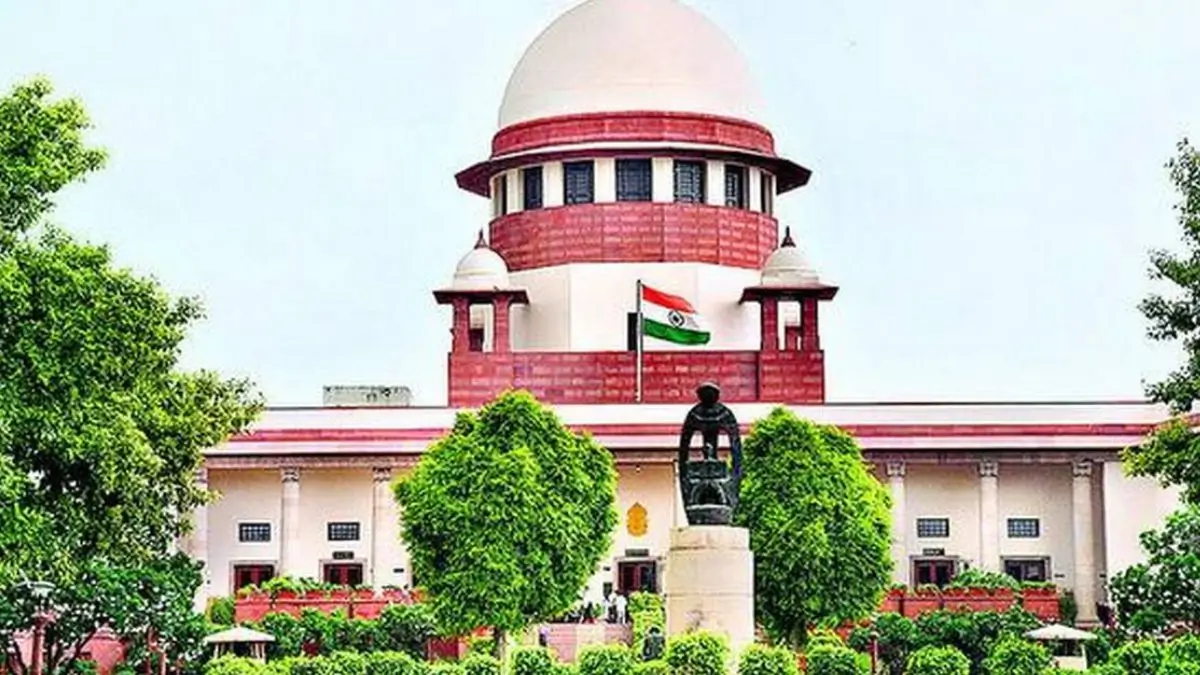
The landmark ruling came as the Honorable Supreme Court of India has declared that safe travel on to the National Highways is the part of the fundamental right to life under the Article 21 of the Constitution. This judgment will reinforces the state’s responsibility to ensure the road safety and to protect citizens from preventable accidents. The court have emphasized that the right to life is not just limited to mere survival but it also includes the right to safe and secure movement and specially on high-speed highways.
Why This Judgment Matters Now
This ruling comes in the backdrop of the alarming road safety statistics. National Highways holds the account for only about 2% of India’s road network but it contribute to nearly 30% of total road fatalities.
The court have highlighted that highways should not become the corridors of peril due to the administrative negligence, poor infrastructure or the unsafe practices like the illegal parking and roadside encroachments.
Ban on Dhabas and Commercial Structures on Highways
One of the important directions issued by the court is the complete prohibition on the construction or operation of dhabas, eateries or commercial establishments within the right of way of the National Highways.
The court have noted that such establishments will often lead to the,
- Illegal parking of the heavy vehicles
- Obstruction of the traffic flow
- Increased risk of accidents and specially at night
The authorities have been directed to remove all unauthorized structures within 60 days and have to ensure strict compliance.
Strict Rules for Vehicle Parking and Movement
The Supreme Court has also issued the clear instructions regarding vehicle movement on the national highways.
- There is no heavy or commercial vehicle should stop or park on to highways.
- Parking is allowed only at the designated bays, lay-bys or the nearby wayside amenities.
- Also the strict enforcement is required to the prevent accidents caused by roadside obstructions.
These will measures aim to reduce the sudden collisions and improve overall highway safety.
Tragic Incidents That Triggered the Case
The case was taken up the suo motu after the two tragic accidents in the November last year that claimed 34 lives.
In one incident came as in Rajasthan’s Phalodi a tempo traveler collided with the parked truck near a roadside eatery and it killing the 15 people.
In another accident in Telangana where the 19 people died after the bus collided with a lorry while trying to avoid the pothole.
These incidents have exposed the serious gaps in the highway safety and it prompted judicial intervention.
New Institutional Mechanism for Road Safety
To ensure the better implementation the top court has directed the formation of the District Highway Safety Task Force in every district.
Additionally,
- The District Magistrates have to must oversee removal of illegal structures.
- No license or approval can be granted near the highways without clearance.
- Also the make the coordination between authorities like NHAI and state agencies is mandatory.
Expanding the Scope of Article 21
The judgment will also strengthens the interpretation of the Article 21 (Right to Life) by expanding the its scope.
The court clarified that,
- The state has the positive obligation to ensure the safe conditions.
- Also the preventable deaths due to negligence violate the fundamental rights.
- The infrastructure and governance must prioritize the human safety.








 National Strategic Trade Command Centre ...
 India Plans Mandatory Automatic Emergenc...
 India Notifies New Telecom Rules for Tes...