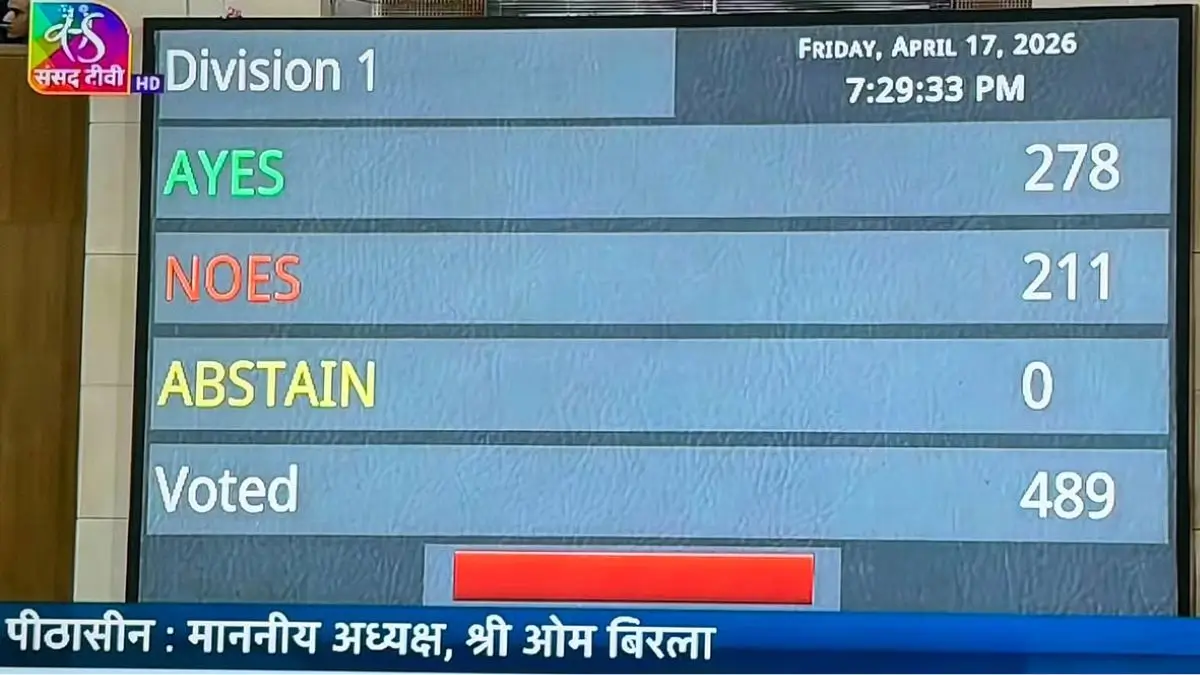
The Women’s Reservation Bill 2026 was defeated in the Lok Sabha even after securing the more votes in favor than the against. The Bill which is aimed to reserve the 33% seats for women in the Parliament and state assemblies which could not meet the strict constitutional requirement of the two-thirds majority. This development has sparked intense political debate and also raising questions about consensus, electoral reforms and the future of the women’s representation in India.
Women’s Reservation Bill Fails Despite Majority Support
The Constitutional 131st Amendment Bill, 2026 was put to the vote after the intense two-day debate in the Lok Sabha.
The results has surprised the many observers.
- Votes in favour: 298
- Votes against: 230
- Votes required: 360 at the full strength for the 2/3rd Majority
Even despite the Bill had more support than the opposition votes but it failed because of the constitutional amendments which require the special majority not just the simple majority. This makes it the rare instance where a Bill with clear support but still does not pass.
Notably this is the first constitutional amendment Bill in the 12 years which was introduced by the Modi government to be defeated in the Lok Sabha.
Why the Two-Thirds Majority Became the Deciding Factor
As per the Constitution of India any amendment which needs to change the constitutional part it requires the approval under a strict framework.
This includes,
- At least the two-thirds of members present and voting
- And also not less than 50% of the total strength of the House
As the current Lok Sabha strength is at 543 the Bill needed at least the 360 votes which it could not achieve. This rule ensures that the major constitutional changes are made only with the broad political consensus.
Political Divide and the Delimitation Debate
One of the biggest and main reasons behind the Bill’s defeat was the unified opposition stance. Several opposition parties have raised the concerns over the link between the women’s reservation and delimitation.
Delimitation refers to the redrawing of the electoral boundaries which is based on population changes.
Opposition leaders have argued that,
- It could disadvantage the southern states.
- It might alter the political balance across the regions.
- The government was using the women’s reservation as the cover to push delimitation reforms.
This issue have became the central point of the disagreement and prevented the consensus.
Government vs Opposition: The Clear Face-Off
The debate on this bill saw the strong positions from both sides.
- PM Narendra Modi urged all the parties to support the Bill and calling it the long-overdue step for women’s empowerment.
- Home Minister Amit Shah have accused the opposition of deliberately blocking progress.
- Opposition leaders have also maintained that structural concerns must be addressed first and especially regarding to the delimitation.
Despite last-minute efforts to gather support for the bill the political divide remained the hurdle for this historic bill.
The Long Journey of Women’s Reservation: Background
The idea to reserving seats for the women in legislatures is nothing new. It has been discussed for over the four decades.
The proposal aims to ensure the greater participation of women in decision-making.
Currently the women’s representation in the Parliament remains relatively low.
The previous attempts to pass the similar Bills have also faced the political hurdles.
Globally the many countries have adopted the gender quotas to improve the representation and which making India’s delay more noticeable all around the world.








 Aadhaar Name Change Rules Revised: Docum...
 IMC 2026: PM Modi Highlights India’s 5...
 Government Unveils 2026-2030 Strategy to...