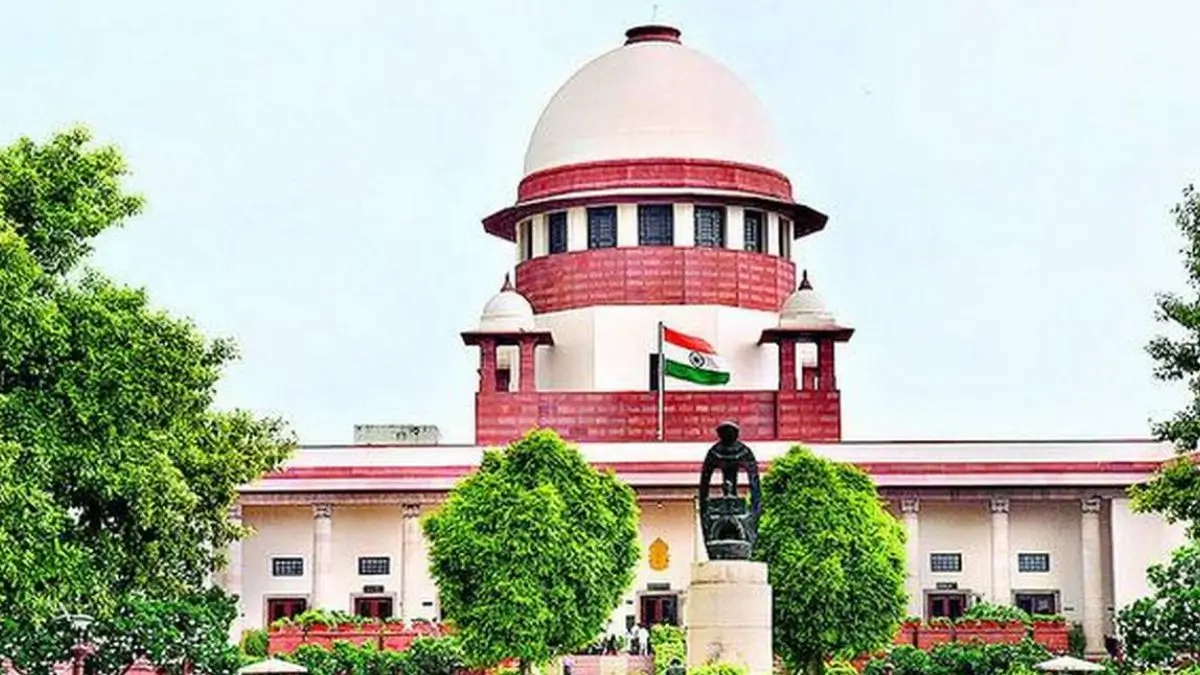
The Supreme Court has altered the criteria for entry level judicial service examinations by bringing down the practice period for candidates from three years to one year. The judgment, which has been rendered by the three-judge bench, headed by the Chief Justice of India Surya Kant, also provides some relief to the students of law and young lawyers, who have been adversely impacted by the earlier judgment of the Court regarding mandatory practice requirement.
Supreme Court Changes Three Year Practice Requirement
The recent judgment of the Supreme Court was passed while disposing of the review petitions filed against the judgment of the court, dated May 2025, which had made the requirement of three years of legal practice mandatory for candidates appearing in entry-level examinations for the judicial service.
It was alleged in the review petitions that the period of three years practice may come in the way of many talented students of law joining the judiciary right after they had finished their education in law.
While dismissing the review petitions, the three-judge bench headed by CJI Surya Kant and including AG Masih and K Vinod Chandran delivered a 2:1 split judgment.
Practice Period Cut Down to One Year
According to the new arrangement, the mandatory practice period for recruiting judges has been cut down to one year.
The court has also included two essential features in the process of recruiting and training,
- One year of training period
- One year of supervised clerkship
According to the Supreme Court, the process should continue for three years to see the results.
This will give the judicial bodies time to examine the quality of recruiting process, performance of the probationers and effectiveness of the supervised clerkship system.
Transitional Relief for Law Graduates
The court has also acknowledged the difficulty faced due to the abrupt implementation of the three-year practice period without any transitional provision.
Those candidates whose names are on the list of notifications regarding judicial examinations issued between May 20, 2025 and March 31, 2027 will have the eligibility to take part irrespective of the practice period.
It means those law graduates who qualify during the transitional period can appear for judicial service examination despite not having the three-year practice period.
Selections made in the Transition Period
Those who have been selected under this transition period will not get regular appointments as judicial officers.
Rather, they will be appointed as trainee judicial officers for a year.
For their application, these candidates will be considered to have practiced law actively for one year. Also, they will not have to give any certificate of their legal practice for that year.
This step aims to provide a systematic process for new graduates and budding lawyers.






 Centre Permits E100 Ethanol Fuel in Flex...
 Supreme Court Supports Raising District ...
 Cyclone Arnab 2026: Landfall Forecast fo...