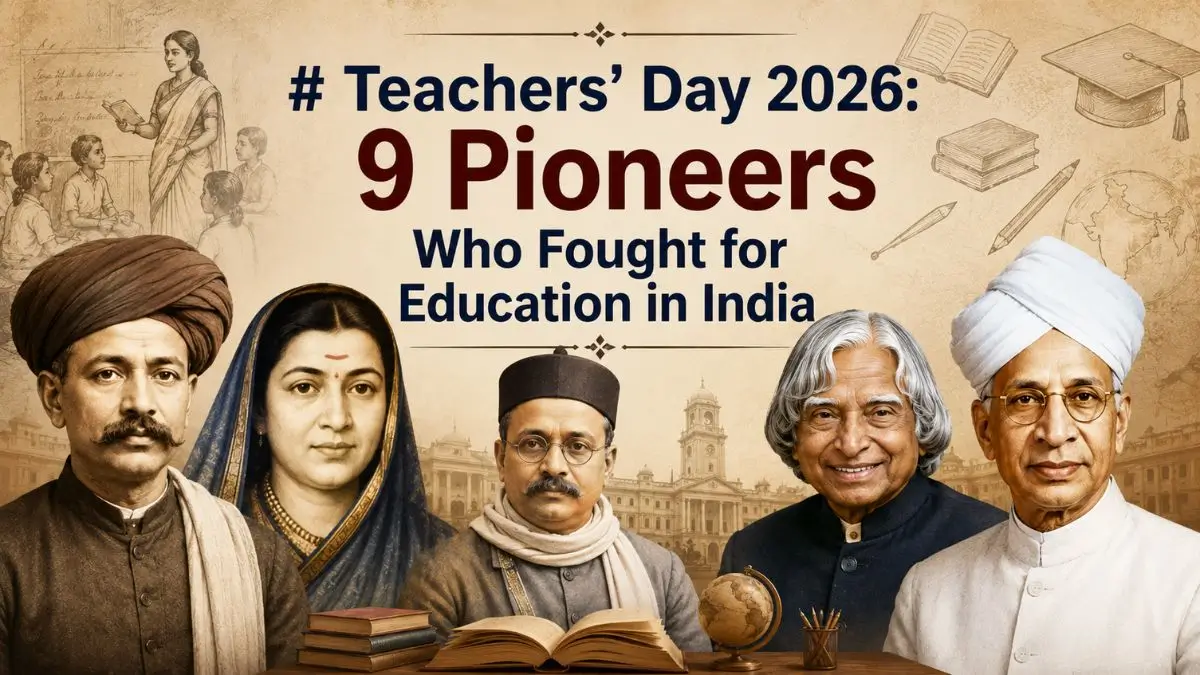
India celebrates Teachers’ Day on September 5, which marks the birthday of the late philosopher and former president of India, Dr. Sarvepalli Radhakrishnan. Nevertheless, there are other figures from India’s history of education who did not shy away from breaking the established social barriers to promote education to greater parts of society. From the efforts of Savitribai and Jyotirao Phule to provide girls with education in 19th century Maharashtra to those of Begum Rokeya in promoting Muslim girls’ education, their efforts linked education with empowerment.
9 Pioneer Figures Who Fought for Education in India
1. Jyotirao and Savitribai Phule
Among those who pioneered girl’s education and education for marginalised communities in 19th-century India are Jyotirao Phule and Savitribai Phule.
The couple founded an institution for girl’s education in Bhide Wada, Pune in 1848, with Savitribai Phule becoming one of India’s first female teachers in the modern era.
The Phules established several schools in and around Pune and aimed to facilitate education to communities which were socially discriminated against due to their castes or genders. They also organised night schools and facilitated access to education beyond traditional school hours.
2. Fatima Sheikh
Fatima Sheikh was an early Muslim woman educator who worked in tandem with Savitribai Phule. She was part of the Phules’ educational movements and taught children from socially discriminated against communities.
Her contribution is important as she was involved in the movement for women’s education during the time when girls faced difficulties getting educated due to their disadvantaged status.
3. Sethu Lakshmi Bayi
Sethu Lakshmi Bayi, the last Maharani to reign in Travancore, promoted women’s education and involvement in social affairs. Women’s educational prospects increased during her regency period.
Moreover, her government supported women’s prospects in further education and in working in public sectors, thereby highlighting the role played by institutional measures to complement other reforms.
4. Dr Sarvepalli Radhakrishnan
Dr Sarvepalli Radhakrishnan is a well-known philosopher, professor and educationist who contributed significantly to the academic world of India.
He taught philosophy at the Madras Presidency College, University of Mysore, and the University of Calcutta.
He worked as the Vice-President of India between 1952 and 1962 and became the President of India between 1962 and 1967.
His contributions are remembered in the form of celebrating Teachers’ Day on September 5 in India.
5. A.P.J. Abdul Kalam
A.P.J. Abdul Kalam was a celebrated scientist and 11th President of India who always remained close to the students in his lifetime. He resumed teaching after completing his tenure as President.
Kalam inspired the students to be scientific and to set high targets to work towards their development. The date of birth of Kalam, 15 October, is celebrated as World Students’ Day.
6. Gopal Krishna Gokhale
Gopal Krishna Gokhale was an important nationalist, social reformer, and an educationist. He was associated with Fergusson College, Pune, and founded Servants of India Society in 1905.
According to Gokhale, education is necessary for social development. In 1911, Gokhale introduced a bill in the Imperial Legislative Council for making primary education mandatory.
7. Sarala Devi Chaudhurani
Sarala Devi Chaudhurani was a nationalist, social reformer and also a significant supporter of women’s education. In the year 1910, she formed Bharat Stree Mahamandal, which aimed at fostering the cause of women’s education and development.
Furthermore, she formed educational institutions for girls and endeavored to provide opportunities to women of different social sections. Her contribution was a part of the broader movement for the empowerment of women during the colonial era.
8. Madan Mohan Malaviya
Madan Mohan Malaviya was an educationist, social reformer and also a nationalist leader who made a significant contribution towards the formation of Banaras Hindu University (BHU), which was formed in 1916 and became one of the most prominent institutions of higher education in India.
Malaviya considered education as a significant tool of nation building. He also provided support for increased educational opportunities for women.
9. Begum Rokeya Sakhawat Hossain
Begum Rokeya Sakhawat Hossain is considered to be one of the early proponents of Muslim women’s education in Bengal.
She started a school for Muslim girls in Bhagalpur in 1909, followed by the establishment of the Sakhawat Memorial Girls’ School in Calcutta in 1911.
She defied conservative views on the education of women, asserting that education was necessary for women to be able to stand on their own feet and be financially independent.






 History of Student Protests in France: F...
 Why Is Limoges Famous? Porcelain, Kaolin...
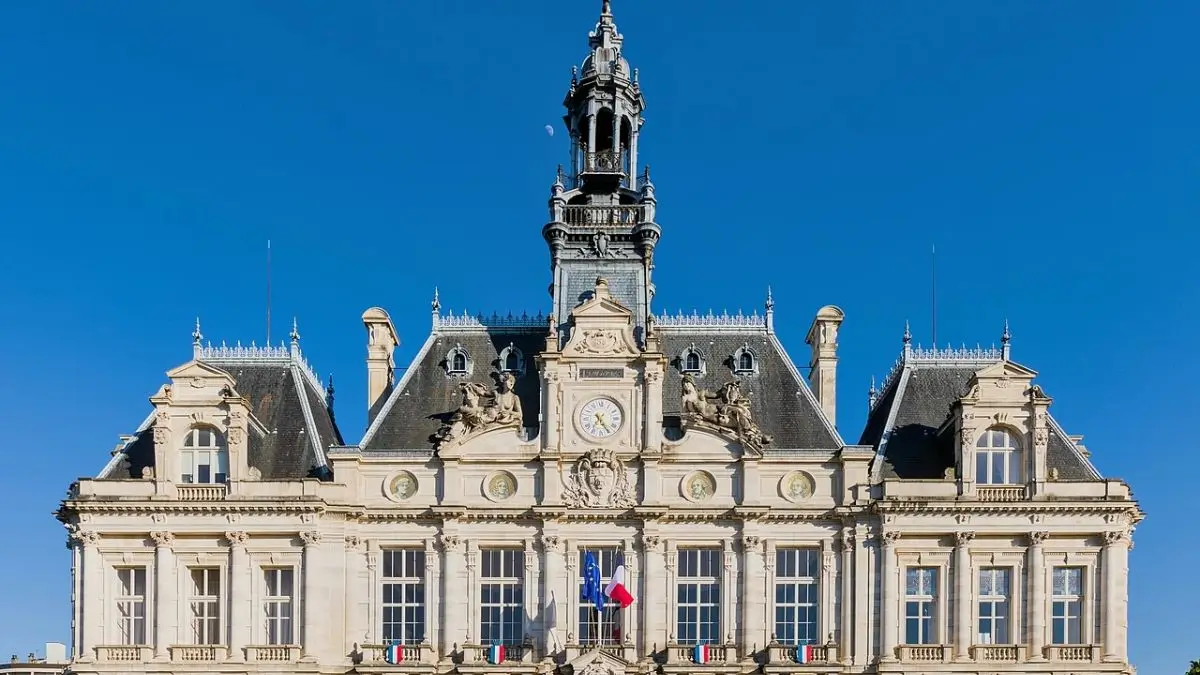 Limoges Town Hall, France: History, Arch...