Teachers’ Day 2026 offers a chance to honor those teachers who influence our thought process, inspire curiosity and enable us to learn about things that go far beyond what is taught to us in the books. Celebrated in India on September 5th, this day also serves as a reminder of the significance of education and continuous learning. Books are an integral part of this process through which we come across various concepts, history, culture, science and society. These ten books for Teachers’ Day 2026 are a good source of learning on topics such as Indian history, economics, education, spirituality and nation building.
Top 10 Books We Can Never Forget
1. In Custody – Anita Desai
In Anita Desai’s “In Custody”, the author addresses the themes of language, literature and relationships formed in moments when one’s life, culture and society fall into ruin. The main character, Deven, a Hindi teacher, finds himself involved in the world of Urdu poetry. Through his experience, he reveals aspects of language and literature which cannot be taught at schools.
“In Custody” by Anita Desai will be relevant for Teachers’ Day since the author shows that education is not confined only to textbooks and tests. She encourages people to admire Indian linguistic and literary heritage.
2. Code Name God – Mani Bhaumik
In “Code Name God”, scientist and entrepreneur Mani Bhaumik looks into the connection between science and spirituality. Relying on his experience in science and attempts to explore spirituality, the author wonders about the idea that science and religion have to be mutually exclusive and antagonistic to each other.
The book will encourage people to look at different kinds of knowledge with interest and curiosity. It will be interesting for students in particular.
3. The Vedas – Roshen Dalal
A book on the Vedas by historian Roshen Dalal, entitled The Vedas, gives a comprehensive insight into the Vedas along with their significance historically, culturally, philosophically and literary in the intellectual tradition of India.
The book is highly recommended as supplementary reading for those who are preparing for competitive exams and are interested in learning more about ancient Indian history, culture, religion and philosophy. Teachers’ Day is the perfect time to explore such books which connect one’s classroom learning to the intellectual heritage of India.
4. In Service of the Republic: The Art and Science of Economic Policy – Vijay Kelkar and Ajay Shah
This book written by economists Vijay Kelkar and Ajay Shah delves into economics, public administration and the art and science of economic policy-making in India. Readers will get to know what role does institutions play in making and implementing of economic policy and decisions in the development of India.
The book will be of great interest to all those who want to learn more about Indian economy and governance and the challenges associated with it.
5. The Penguin History of Early India – Romila Thapar
In her work titled The Penguin History of Early India: From the Origins to AD 1300, historian Romila Thapar has traced the history of the early India. The book covers the political, social, economic and cultural evolution of India for many centuries.
This book is important for the students studying Indian history to gain in-depth knowledge about ancient and early medieval history of India. The students can use these books rather than relying on mere memorisation of dates and dynasties for understanding the historical development in its social and cultural context.
6. Poor Economics – Abhijit V. Banerjee and Esther Duflo
Poor Economics is a book by Nobel Prize-winning economists Abhijit V. Banerjee and Esther Duflo that uses economic research in the form of evidence for examining poverty and development issues.
The authors discuss how interventions of the real world could impact people suffering from poverty and also the need for evidence while formulating development strategies. This book will be important for those students who are interested in development economics and poverty alleviation issues.
7. Makers of Modern India – Ramachandra Guha
This book contains excerpts and speeches by notable Indian leaders. The author, Ramachandra Guha, analyzes the major topics like nationalism, democracy, caste system, gender relations, economy and social reform based on selected materials.
The reader is introduced to various views that contributed to the development of modern India. In this way, the book offers valuable information about the intellectual discussion of India’s transformation into independent democratic state.
8. Ignited Minds – A.P.J. Abdul Kalam
Written by ex-President and scientist A.P.J. Abdul Kalam, the book deals with the topic of potential of India and youth contribution to its future.
Instead of suggesting the concrete recipe for success, Kalam appeals to readers to become ambitious and creative, to cultivate scientific spirit and self-confidence. This work is particularly topical for the celebration of Teachers’ Day due to its theme.
Its ideas remain valuable for students seeking to play their role in the development of the country.
9. Shiksha: Experiments As An Education Minister – Manish Sisodia
Shiksha covers experiences and reforms in the context of Delhi’s public education system during the period of Manish Sisodia’s ministerial tenure as Education Minister. The book is based on the following issues concerning infrastructure, institution, teacher and education.
The book makes one think about education beyond the classrooms as an institutional process involving institutions, teachers, students, administration and policies.
As Teacher’s Day, the book provides a good reading about education policy and its impact on the process of education.
10. India Since Independence – Bipan Chandra, Mridula Mukherjee and Aditya Mukherjee
India Since Independence is about the development of political, economic and social dimensions of India since independence.
It deals with themes like Constitution, foreign policy, democracy, economic and social development of India.







 History of Student Protests in France: F...
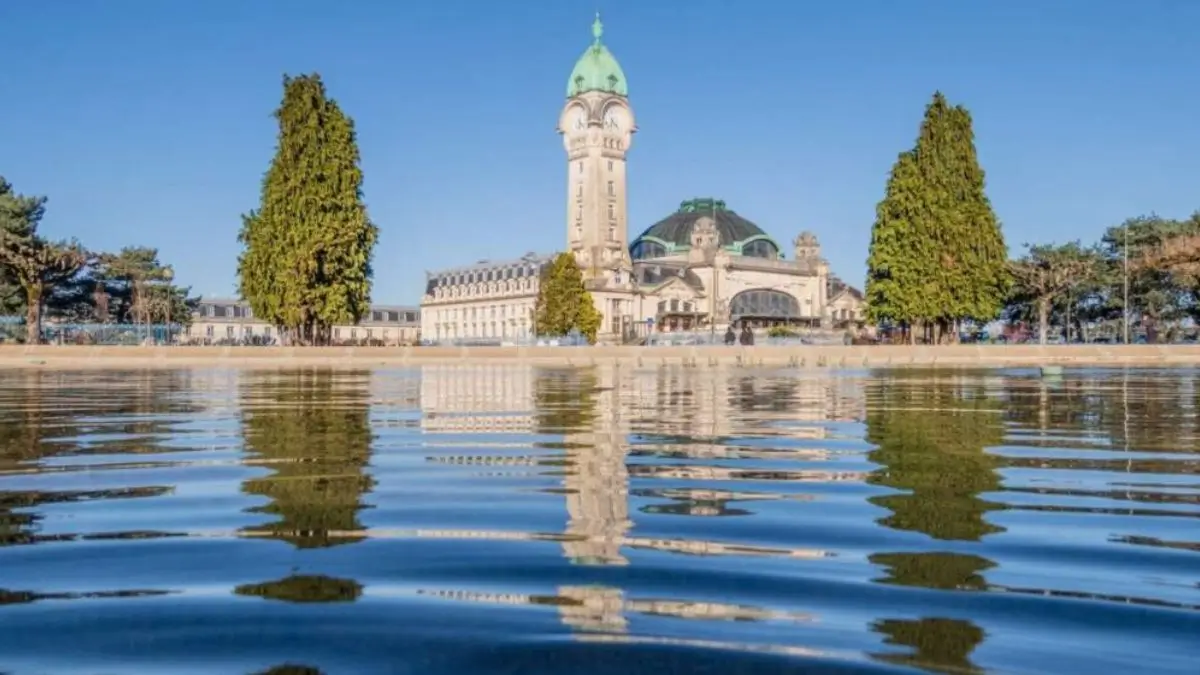 Why Is Limoges Famous? Porcelain, Kaolin...
 Limoges Town Hall, France: History, Arch...