
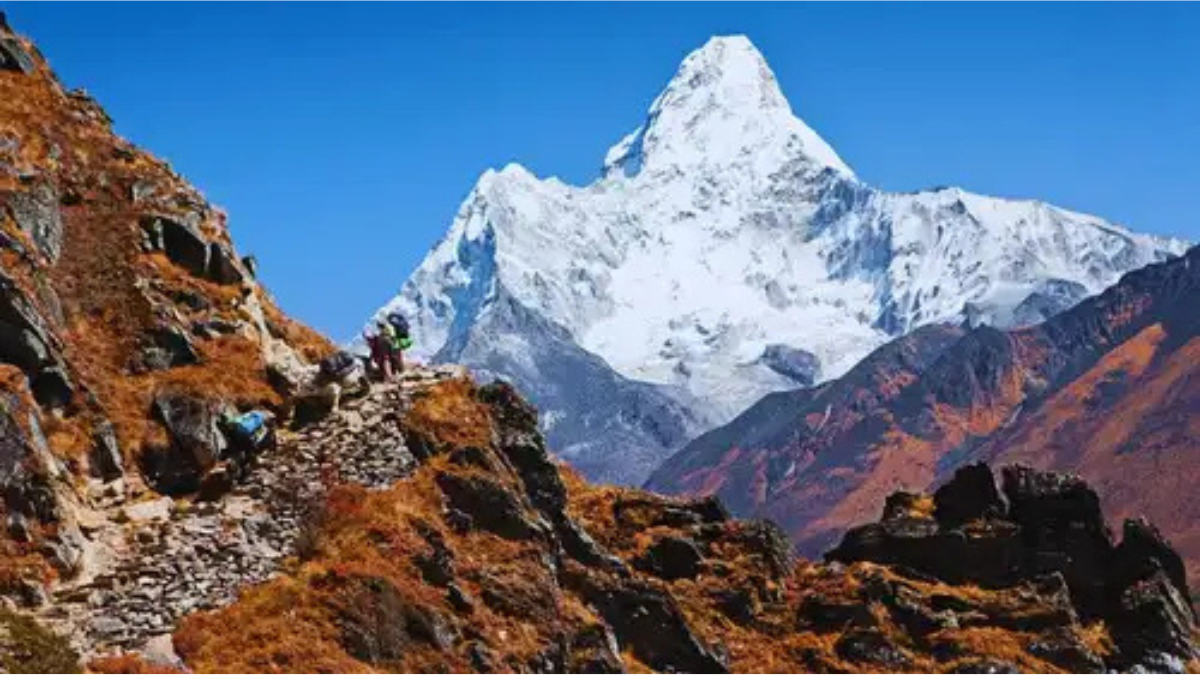
Mountains are one of nature’s greatest wonders. Some mountains are very old, while others are quite young in geological terms. Young mountains are still rising or forming due to earthquakes, volcanic activity, and tectonic plate movements. In this article, we will learn about the five youngest mountains on Earth, their location, age, and special features that make them stand out.
Youngest Mountain Range in the World
The Himalayas are known as the youngest mountain range in the world. They were formed about 50 million years ago when the Indian Plate collided with the Eurasian Plate. This powerful movement pushed the land upward, creating the world’s tallest peaks, including Mount Everest. The Himalayas are still rising slowly each year, which is why the region often experiences earthquakes. Their sharp peaks, great heights, and continuous growth make them geologically young compared to many other mountain ranges.
Top-5 Youngest Mountain Ranges in the World
Mountains are formed over millions of years, but some ranges are considered young because they are still rising and changing. These mountains have sharp peaks, high elevations, and active geological movements. Let’s explore the top five youngest mountain ranges in the world and their special features.
| Rank | Mountain Ranges | Location | Approx. Age |
| 1. | Himalayas | South Asia | 50 million years |
| 2. | Andes | South America | 65 million years |
| 3. | Alps | Europe | 65 million years |
| 4. | Rockies | North America | 70 million years |
| 5. | Southern Alps | New Zealand | 5 million years |
Other Young Mountain Ranges in the World
Apart from the Himalayas, there are several other young mountain ranges across different continents. These mountains are also geologically active, with high peaks, tectonic activity, and sometimes even volcanic eruptions. Let’s look at other youngest ranges:
Andes
The Andes are the longest continental mountain range in the world, stretching across Chile, Peru, and Argentina. Formed about 65 million years ago, they remain geologically active with many volcanoes and earthquakes. These mountains are home to diverse landscapes, including snow-capped peaks, deserts, and fertile valleys, making them unique and full of natural beauty.
Alps
The Alps formed nearly 65 million years ago and spread across France, Switzerland, Italy, and Austria. Known for their snow-covered peaks and scenic valleys, the Alps are popular for skiing and tourism. Their rugged appearance and sharp heights show they are relatively young mountains, still shaped by geological processes and glacial movements even today.
Rockies
The Rocky Mountains, commonly called the Rockies, are about 70 million years old. Stretching over 4,800 kilometers through the USA and Canada, they are famous for their tall peaks, wildlife, and national parks. Although older than the Himalayas and Alps, the Rockies are considered geologically young compared to ancient ranges like the Appalachians.
Southern Alps
The Southern Alps of New Zealand are among the youngest mountain ranges, formed only about 5 million years ago. Located on the South Island, they are shaped by active tectonic movements. Their highest peak, Mount Cook (Aoraki), attracts climbers and tourists. These sharp, rugged mountains highlight how Earth’s surface continues to change dramatically.


 Which Sweet is known as the King of Swee...
 Which City is known as the Silent City o...
 Which Place is known as the Onion Hub of...











