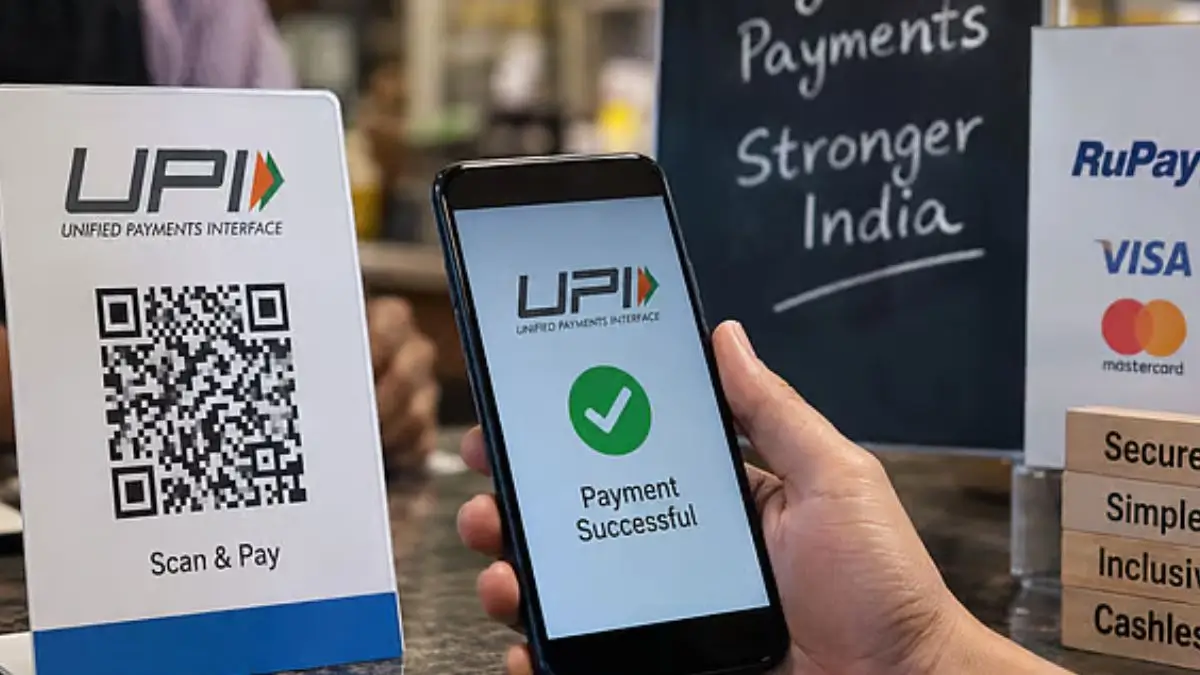
A merchant discount rate (MDR) set to be levied from October 15, 2026, on particular UPI transactions made to the merchants who belong to the P2M category. The MDR will be charged only when transactions exceed ₹2,000. However, customers will not have to pay any extra charges. Small vendors receiving transactions of ₹1 lakh or less per month via UPI will continue to remain exempted. The MDR of 0.4% will be charged in applicable P2M transactions, with a cap of ₹300 on transactions of ₹75,000 or above.
Is there an MDR in UPI?
No. An MDR is charged on merchants’ side and will not be paid directly by the customer.
Transfers among individuals, such as transferring money to family, friends, or colleagues, will not be charged any MDR. UPI AutoPay transactions, including subscription, systematic investment plans, and utility bill payments, will also not bear any prescribed MDR.
Hence, an individual making payment to a merchant via UPI will continue to pay the list price without incurring an extra UPI charge.
Exemption from MDR for Small Vendors
The vendors or micro merchants who come under the person-to-person-merchant (P2PM) are eligible for an exemption from MDR. It includes merchants who receive a maximum of ₹1 lakh in a month via their account through UPI QR code.
The exemption is also available when the individual UPI transaction value goes above ₹2,000. However, if the merchant is receiving more than ₹1 lakh through UPI for three continuous months, then the merchant can become eligible for P2M category. MDR will be levied after the classification of merchant as P2M by acquiring bank or payment service provider.
What is the MDR on UPI Transactions for Large Merchants?
MDR for the P2M merchant is 0.4% on all UPI transactions above ₹2,000.
| UPI Payment | MDR for Applicable P2M Merchant |
| ₹2,000 or below | No MDR |
| More than ₹2,000 | 0.4% |
| ₹75,000 or above | Capped at ₹300 |
| Customer fee | Nil |
The ₹2,000 is the minimum transaction limit, not the daily limit. More than one transaction of ₹2,000 can be received without MDR.
In case of ₹10,000 UPI payment, the applicable MDR will be ₹40. In case of ₹1 lakh UPI payment, the ordinary MDR will be ₹400 based on the rate of 0.4%, however, the applicable MDR is capped to ₹300.
₹5 MDR for Certain Categories of Merchants
A flat MDR of ₹5 would be charged per transaction for UPI payments above ₹2,000 for certain designated categories of merchants. The designated sectors may include railways, telecom services, insurance, fuel, bills and education sectors.
It will be charged from the merchant for processing UPI payments.
UPI MDR Versus Card Transactions
MDR is commonly known in case of card transactions wherein merchants make payments to acquiring banks or payment service providers for transactions processing. Typically, standard credit-card MDR is high while the debit-card MDR is capped at certain prescribed limit.
In the new UPI regime, the applicable P2M rate for transactions above ₹2,000 is 0.4%, while maximum MDR is ₹300 for transactions above ₹75,000.








 Ramsar Sites in India 2026: State-Wise L...
 Who Is Navi Pillay? Nobel Peace Prize 20...
 Vande Bharat vs Amrit Bharat Express: Ke...