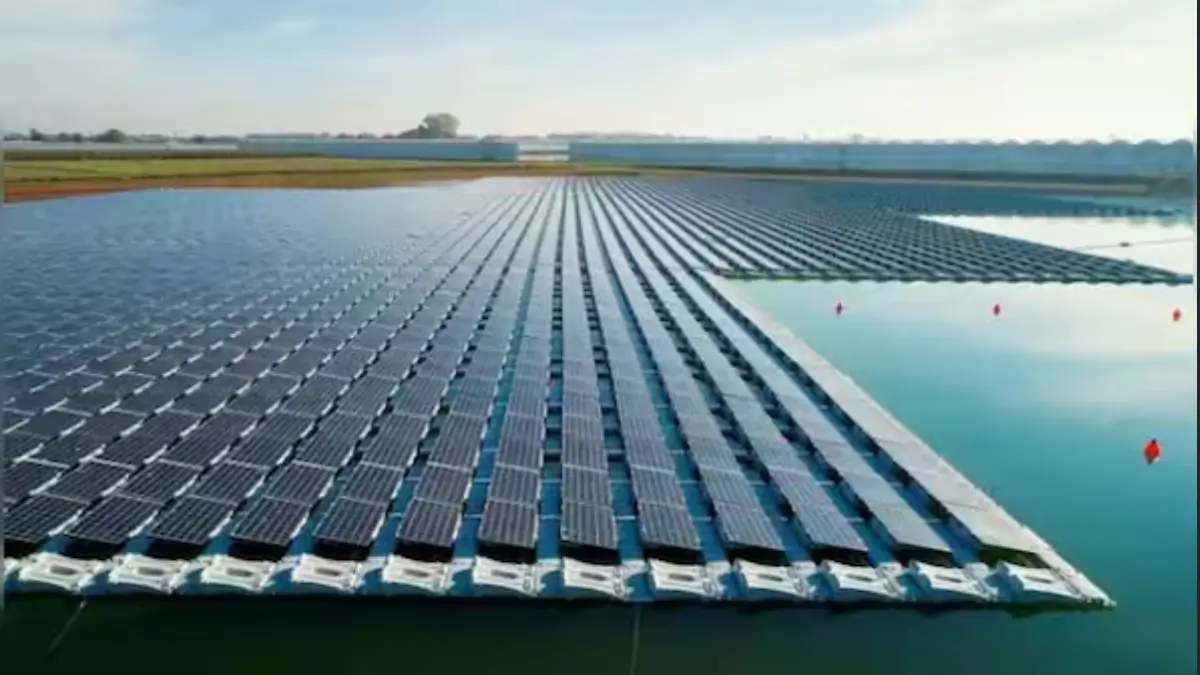
India is rapidly turning to renewable energy to reduce pollution and dependence on fossil fuels. Among the many innovations, solar energy plays a major role. While traditional solar plants are built on land, new technologies now allow solar panels to float on water bodies, saving land and boosting efficiency — a big step toward a cleaner future.
What is a Floating Solar Power Plant?
A floating solar power plant is a collection of solar panels installed on floating platforms placed over water bodies like lakes, reservoirs, or dams.
Just like traditional solar farms, these panels convert sunlight into electricity. However, because they rest on water, they stay cooler — helping them produce more energy efficiently.
Another advantage is that they reduce water evaporation, which is crucial for regions facing water shortages. Floating solar farms are also ideal for countries like India, where land is limited but renewable energy demand is rising.
How do Floating Solar Panels Work?
The working principle of floating solar panels is similar to that of land-based ones. The difference lies in where they are installed and how they operate in water conditions.
- Floating Platforms: The panels are mounted on specially designed floating structures that stay stable on the water’s surface.
- Energy Generation: When sunlight hits the solar panels, it is converted into electricity through photovoltaic cells.
- Cooling Advantage: The surrounding water keeps the panels cool, which improves performance and increases power output.
- Connection to Grid: The generated electricity is transmitted through underwater cables to the power grid for distribution.
This setup not only generates clean energy but also makes use of unused water surfaces efficiently.
India’s Largest Floating Solar Power Plant
The Omkareshwar Floating Solar Power Plant, located in Khandwa district, Madhya Pradesh, is currently the largest floating solar power project in India. It has become a model for innovation and sustainability in renewable energy.
Key Details:
- Location: Omkareshwar Dam Reservoir, Madhya Pradesh
- Capacity: 126 MW (megawatts) in the first phase
- Total Planned Capacity: 600 MW
- Area Covered: Around 260 hectares of water
- Developed By: Rewa Ultra Mega Solar Limited, NHDC Ltd., AMP Energy Green Pvt. Ltd., and SJVN Ltd.
- Construction Cost: Approximately ₹330 crore
The project also features the world’s largest floating inverter platform, which helps convert solar energy into usable electricity efficiently.
Benefits of the Omakareshwar Floating Solar Plant
This project brings several environmental and practical benefits:
- Clean Energy Generation – The plant produces around 204,580 MWh of electricity annually, which can power thousands of homes.
- Environmental Impact – It helps reduce 173,000 tonnes of CO₂ emissions every year, contributing to a cleaner atmosphere.
- Water Conservation – By covering a portion of the reservoir, it prevents the loss of 32.5 million cubic meters of water annually through evaporation.
- Efficient Land Use – Since the panels are on water, there is no need to use agricultural or forest land.
- Boost to Local Development – The project supports jobs and encourages new technology in the renewable energy sector.
Why Floating Solar is the Future?
Floating solar power is more than just an alternative — it’s a smart and sustainable solution for India’s growing energy needs.
Here’s why this technology is becoming increasingly popular:
- It helps generate more power using less land.
- It keeps water bodies cooler and cleaner.
- It supports energy goals under India’s National Solar Mission.
- It represents a cleaner path toward net-zero emissions in the future.
With several new floating projects planned across states like Kerala, Tamil Nadu, and Telangana, India is quickly becoming a global leader in floating solar innovation.








 Guava Capital of India: Which Place Is K...
 7 Most Beautiful Train Stations in the W...
 World Architecture Day 2026: 8 Clever Fe...