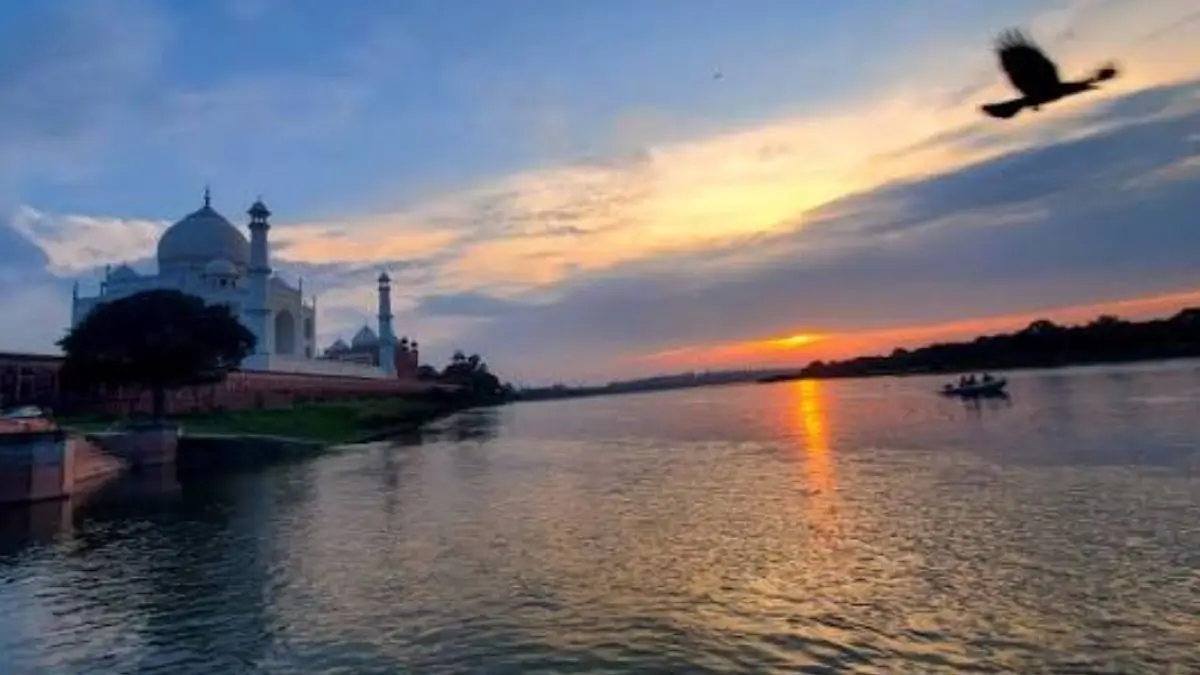
Yamuna River is considered to be the longest tributary of Ganga River, with a length of around 1,376 kilometers. Originating from the Himalayas, the river flows through the northern parts of India and meets the Ganga at Prayagraj, located in Uttar Pradesh. The route taken by the river passes through many major cities like Delhi, Mathura, Agra, and Prayagraj, while its tributaries and basin render it as one of the essential rivers in the Ganga river system. Geography and exams also include the river due to its origin, course, tributaries, dams, and well-known Triveni Sangam at Prayagraj.
Which is the Longest Tributary of the Ganga?
The Yamuna is the longest tributary of the Ganga, with a length of about 1,376 kilometers. The river is the right-bank tributary of the Ganga River and it meets the main river at Prayagraj in Uttar Pradesh.
The river originates from the Yamunotri Glacier in Uttarakhand, which belongs to the Bandarpoonch range of the Himalayas. From there, the river flows down into the northern plains and finally joins the Ganga.
From Where Does the Yamuna River Originate?
The Yamuna river originates from the Yamunotri glacier, situated in the state of Uttarakhand. The point where the river originates is located within the Bandarpoonch mountains of the Himalayas.
Yamunotri is also a significant religious site related to the river and represents one of the Char Dhams of Uttarakhand pilgrimage tradition.
How Long Is the Yamuna River?
The Yamuna river is about 1,376 kilometres long. Due to its long course, it is considered to be one of the most significant rivers of northern India.
The river starts in the Himalayas region and flows down into the plains, passing through or close to many major cities before joining the Ganga.
Where Is the Confluence of the Yamuna River with the Ganga?
The confluence of the Yamuna and Ganga rivers takes place in the city of Prayagraj, in the Indian state of Uttar Pradesh.
The famous confluence is called the Triveni Sangam. The Ganga and Yamuna are the two rivers visible at the confluence, whereas Saraswati is believed to flow underground there.
Is Yamuna a Right Bank or Left Bank Tributary?
Yamuna is a right bank tributary of the river Ganga.
The banks of a river are identified by looking towards the downstream direction. Since the river Yamuna merges into the river Ganga from the southern side in Prayagraj, it is called a right bank tributary.
States and Regions Covered by Yamuna River?
Some of the northern Indian states and regions linked with the river Yamuna are,
- Uttarakhand
- Himachal Pradesh
- Haryana
- Delhi
- Uttar Pradesh
Major Cities in the Basin of Yamuna River
The Yamuna River is associated with a number of cities that hold significance from both economic and historical perspectives.
- Delhi: The river passes through the eastern side of Delhi, which is considered to be the capital of India.
- Mathura: This city has great historical significance and is related with the river Yamuna.
- Agra: The river passes through the city of Agra, where the famous monument Taj Mahal has been constructed on the southern banks of the river.
- Prayagraj: The river Yamuna meets the river Ganga at Prayagraj, known for its Triveni Sangam.
Major Tributaries of Yamuna River
There are a number of important tributaries of the Yamuna River. They are as follows,
- Chambal
- Sind
- Betwa
- Ken
- Tons
Major Dams & Barrages in the Yamuna River Basin
| Infrastructures | Location/Details |
| Hathnikund Barrage | Haryana |
| Wazirabad Barrage | Delhi |
| Okhla Barrage | Delhi |
| Matatila Dam | Betwa River |
| Tajewala Irrigation Project | Upper Yamuna Region |
The above dams are linked to irrigation and management of water flow.
Yamuna and the Taj Mahal
The Yamuna has a unique link with Indian architecture since the Taj Mahal in Agra is located on its south bank.
The river is an important part of the environment around the monument and has played an integral role in shaping the geography of the city.






 Dussehra 2026: Top 30 Most Important GK ...
 Dussehra and UNESCO: Ramlila, Durga Puja...
 Mysuru Dasara 2026: History, Jamboo Sava...