
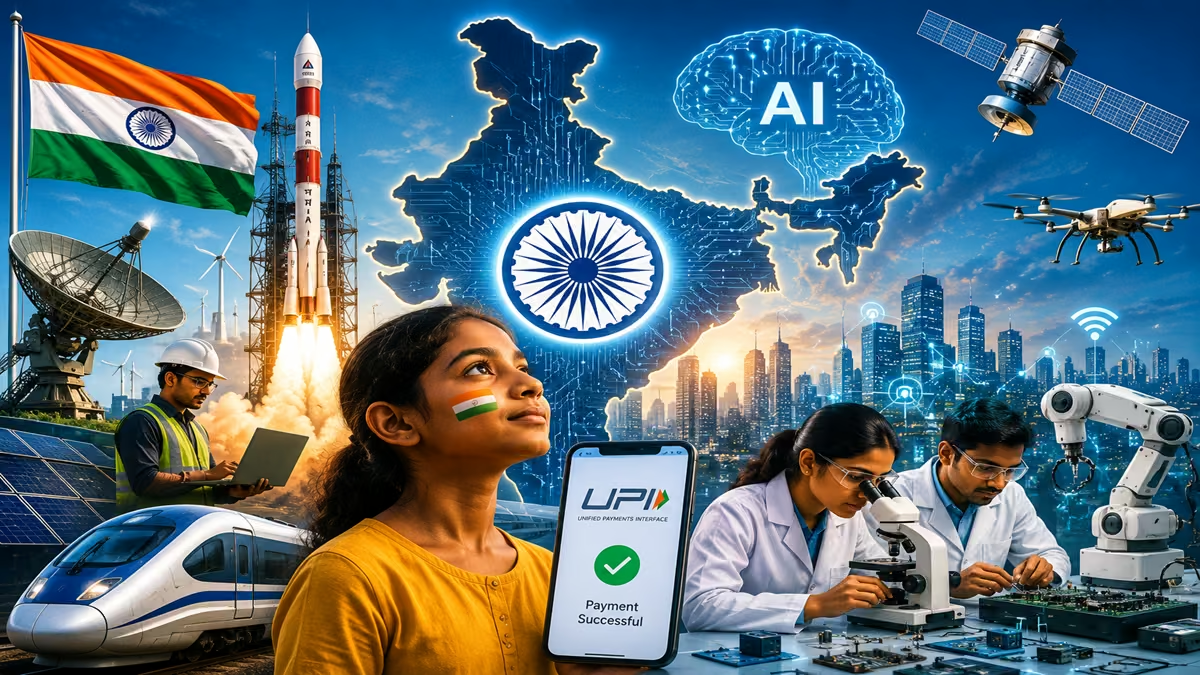
Every year, India celebrates National Technology Day on May 11. For many people, it appears to be just another date connected to science and government events. But in 2026, the importance of technology in India has become much bigger than a symbolic celebration.
Technology is now directly connected to:
- jobs,
- education,
- national security,
- digital payments,
- healthcare,
- startups,
- artificial intelligence,
- and India’s future economic growth.
That is why National Technology Day matters more today than it did a decade ago.
Why India Celebrates National Technology Day
National Technology Day is observed on May 11 to mark India’s successful nuclear tests conducted in Pokhran in 1998.
Those tests demonstrated India’s scientific and technological capabilities on the global stage. Over time, the day evolved into a broader celebration of innovation, research, engineering, and technological progress.
But in 2026, the meaning of technology itself has changed dramatically.
Technology is no longer limited to laboratories or scientists. It now affects nearly every Indian household.
Technology Is Quietly Running Everyday Life
Many people do not realize how dependent daily life has become on technology.
Today, Indians use technology for:
- online banking,
- UPI payments,
- booking transport,
- ordering food,
- studying online,
- applying for government services,
- shopping,
- telemedicine,
- digital investing,
- and communication.
Even small businesses now rely heavily on digital systems.
A vegetable seller using QR payments or a student attending online classes are both examples of how deeply technology has entered ordinary life.
Why Technology Matters More to India in 2026
India is currently in the middle of one of the largest digital transformations in the world.
Several major shifts are happening at the same time:
- AI adoption is increasing rapidly
- Digital payments continue growing
- Semiconductor manufacturing is expanding
- Defence technology investments are rising
- Space technology is attracting startups
- Cybersecurity threats are becoming more serious
- Automation is changing jobs
Because of this, technology is no longer just a support sector — it is becoming the foundation of India’s future economy.
Artificial Intelligence Is Changing the Job Market
One of the biggest reasons National Technology Day feels more important in 2026 is the rise of artificial intelligence.
AI tools are now affecting:
- customer service,
- content creation,
- software development,
- banking,
- healthcare,
- education,
- and recruitment.
Some traditional jobs may reduce over time, while entirely new careers are emerging.
Students today are increasingly learning:
- AI tools,
- coding,
- data analytics,
- cybersecurity,
- cloud computing,
- and automation skills.
Technology awareness is becoming necessary not only for engineers but for almost every profession.
India Wants to Become a Global Technology Power
India is now competing globally in several technology sectors.
The country is investing heavily in:
- semiconductor manufacturing,
- defence technology,
- digital infrastructure,
- AI research,
- drone technology,
- renewable energy systems,
- and space missions.
Government initiatives like Digital India and Startup India have also encouraged innovation and technology adoption across industries.
India’s success in digital payments through UPI has already gained international attention.
In many ways, technology is becoming one of India’s strongest global advantages.
Technology and National Security Are Now Connected
Technology is not only about apps and smartphones anymore.
Modern national security depends heavily on:
- cybersecurity,
- satellites,
- AI systems,
- drones,
- communication infrastructure,
- and digital intelligence.
Countries around the world are investing aggressively in advanced technologies because economic strength and technological strength are now deeply connected.
For India, reducing dependence on foreign technology has become an important long-term goal.
Why Students Should Care About National Technology Day
Many students see technology as relevant only for IT careers. That thinking is changing quickly.
Today, technology affects almost every industry:
- banking,
- media,
- healthcare,
- education,
- agriculture,
- logistics,
- manufacturing,
- marketing,
- and even government jobs.
Understanding technology trends can help students:
- choose future-ready careers,
- develop valuable skills,
- adapt to automation,
- and stay competitive in changing industries.
The future job market will likely reward people who can work alongside technology instead of avoiding it.
India’s Startup Ecosystem Is Also Driving Innovation
India now has one of the world’s largest startup ecosystems.
Technology startups are solving problems related to:
- education,
- healthcare,
- farming,
- finance,
- transportation,
- and small businesses.
This innovation ecosystem is creating:
- new jobs,
- investment opportunities,
- digital services,
- and global business potential.
National Technology Day also reflects how entrepreneurship and innovation are shaping modern India.
The Digital Divide Still Remains a Challenge
Despite major progress, India still faces important challenges.
Not everyone has equal access to:
- high-speed internet,
- digital education,
- advanced devices,
- or technology training.
Rural connectivity, digital literacy, and affordable access remain critical issues.
As technology becomes more important, ensuring equal opportunity will become even more necessary.
Technology Is Now About Survival, Not Just Convenience
A few years ago, technology mainly made life easier.
Today, it increasingly determines:
- employability,
- business growth,
- financial access,
- learning opportunities,
- and economic competitiveness.
Countries that adapt quickly to technological change may grow faster economically. Those that fall behind could struggle in future industries.
That is why technology discussions now receive much more attention globally.








 India’s Internet Subscribers Cross 1.1...
 JOSH Campaign Launched to Support Indiaâ...
 PM GatiShakti Completes Five Years: Obje...










