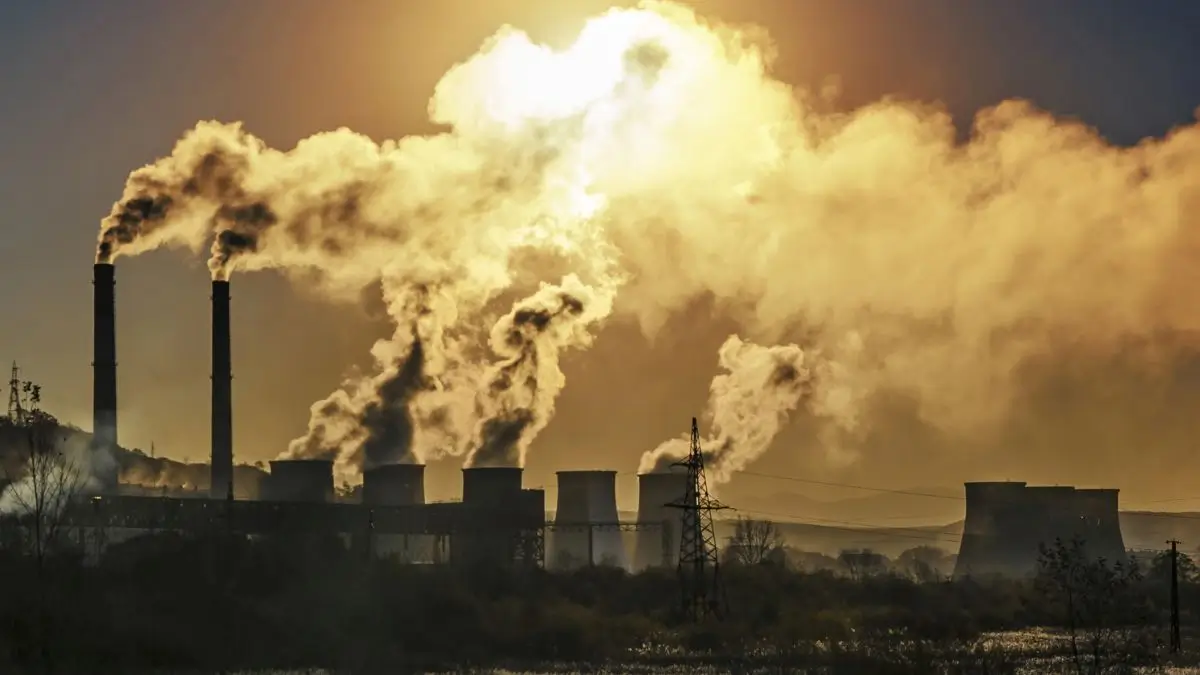
According to the World Meteorological Organisation, CO₂, CH₄ and N₂O had increased to record levels in 2025. In its Bulletin No. 22, the WMO warns of an increase in the levels of these gases, leading to long-term warming of the Earth’s atmosphere. The bulletin, which was published on 27 October 2026, also talks about the need for monitoring the climate impacts of the global energy transition.
Key Points from WMO Greenhouse Gas Bulletin 2026
The bulletin is based on the observations carried out by the WMO Global Atmosphere Watch (GAW) Programme. The programme takes the measure of atmospheric concentrations of long-lived greenhouse gases and not the emissions made during a given year.
| Greenhouse gas | Global average concentration in 2025 | Increase above pre-industrial levels |
| Carbon dioxide (CO₂) | 426.8 ppm | 53% |
| Methane (CH₄) | 1,948 ppb | 167% |
| Nitrous oxide (N₂O) | 339.1 ppb | 26% |
The three greenhouse gases all achieved record global average concentrations in 2025. Their increase makes the greenhouse effect even stronger and leads to more heat being trapped in the Earth’s atmosphere.
Carbon Dioxide Hits 426.8 ppm
The biggest cause of climate change caused by greenhouse gases that have long life is carbon dioxide. In 2025, its quantity reached 426.8 parts per million (ppm), which equals to 153% of its amount in pre-industrial times.
The world’s average increase in concentration was 2.8 ppm in the period from 2025 to 2024. Although this is less than an incredible increase 3.6 ppm, registered between 2023 and 2024, it is still more than the average annual increase of the last 10 years.
Methane: Concentration Reaches 1,948 ppb
Methane is the second most important greenhouse gas in relation to human impact. Its quantity for 2022 reached 1,948 parts per billion (ppb), or 267% of the carbon dioxide level.
Nitrous Oxide: Important Greenhouse Gas Name
Nitrous oxide (N₂O) reached a concentration of 339.1 ppb in the year of 2022, which is an increase of 1.1 ppb in comparison with the year 2021. This level corresponds to 26% higher than in pre-industrial times.
The natural and human-induced sources include,
- Use of nitrogen fertiliser in agriculture.
- Biomass combustion.
- Industrial activities.
What is Radiative Forcing?
Radiative forcing is the change in the balance between solar radiation energy entering the Earth system and energy leaving the Earth system. Positive radiative forcing usually results in warming, while negative radiative forcing leads to cooling.
Greenhouse gases trap and emit infrared radiation, leading to reduced heat emission into outer space. Increased concentration levels of these gases make them more effective in warming.
Industrial Gases and the Clean Energy Transition
The study focuses on the need for continuous monitoring of industrial gases associated with energy sector infrastructure and emerging energy technologies.
Sulphur Hexafluoride (SF₆)
- This chemical is utilised in equipment in the power industry and functions as a dielectric fluid that prevents electrical arcing in the electrical circuit.
- The atmospheric lifetime of SF₆ is over 1,000 years, and its 100-year global warming potential is about 24,300 times that of carbon dioxide, although it occurs in smaller quantities compared to CO₂.
Hydrogen Leakage
- Hydrogen is not a greenhouse gas, but it can have indirect effects on warming through its impacts on atmospheric chemistry and the lifetime of methane.
- Concentration of hydrogen in the atmosphere rose by 5.3 per cent between 2010 and 2024.
According to the WMO, the reasons behind such an increase remain unknown, and leaks from facilities producing and storing hydrogen should be taken into account.
What Causes the Increase in Greenhouse Gas Concentrations?
The main reasons are the burning of fossil fuels, deforestation, farming, industrial action and waste disposal. There exist natural carbon sinks which take up some CO₂ released into the atmosphere.
However, their effectiveness depends on the environment.
The intense El Niño of 2023–24 caused droughts and dry plants, which lowered land ecosystems’ efficiency of carbon absorption.
The World Meteorological Organisation also warns that continuing the use of fossil fuels and altering the absorption of CO₂ by the oceans and land might contribute to more releases of CO₂ into the atmosphere in 2026.








 US Federal Reserve Holds Interest Rates ...
 India Supports UN Resolution Calling for...
 COP31 2026: Venue, Dates, President, Key...