
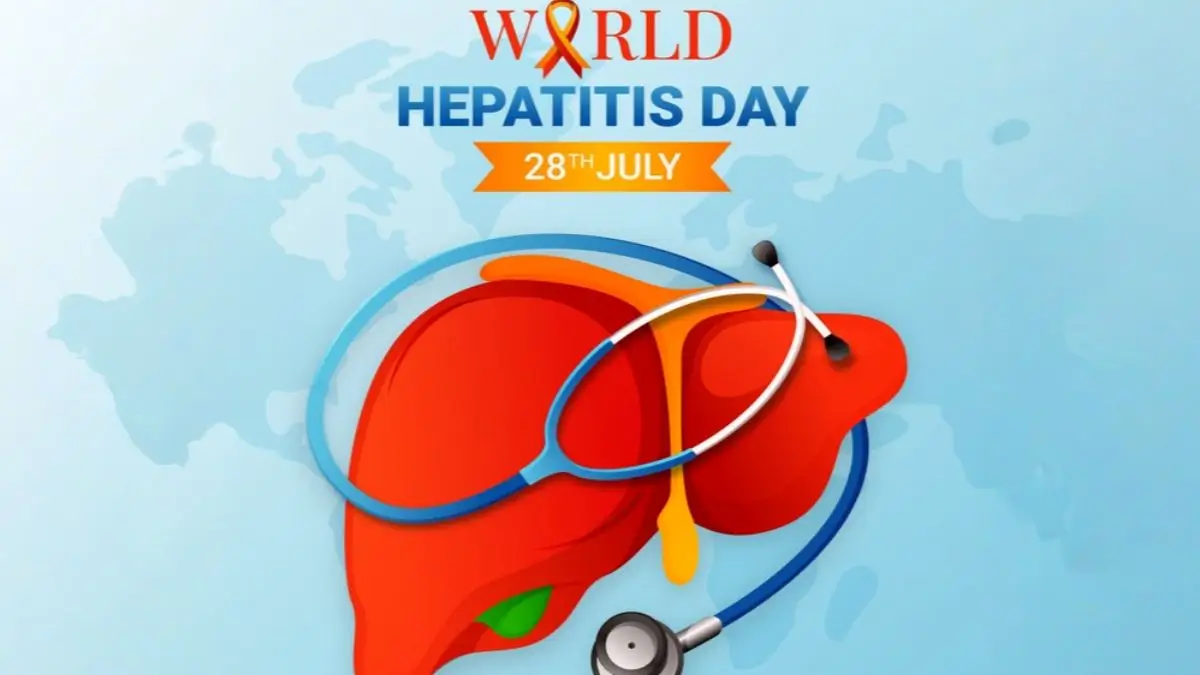
Every year, July 28 is celebrated as World Hepatitis Day for the purpose of raising public awareness about viral hepatitis, a dangerous ailment of the liver responsible for affecting millions of lives all over the world. The theme for the World Hepatitis Day 2026 is the issue of access to testing, vaccination, treatment, and healthcare with the provided focus for this world day is “Hepatitis: Let’s Break It Down.” Despite the numerous achievements in medicine, viral hepatitis is still one of the main causes of avoidable deaths around the globe.
What is World Hepatitis Day?
World Hepatitis Day is a worldwide health awareness campaign that takes place every year on July 28, and it commemorates the day of birth of Dr. Baruch Samuel Blumberg, who was awarded a Nobel Prize in Medicine for the discovery of the hepatitis B virus and creation of the first hepatitis B vaccine.
The campaign is managed by the World Health Organization (WHO) together with the government, healthcare sector, and civil society organizations with the aim of raising awareness about hepatitis viruses and fostering their prevention, testing, and treatment.
Thus, the campaign is aligned with WHO’s aim of making sure there is no viral hepatitis as a matter of public health by 2030.
Theme of World Hepatitis Day 2026
Hepatitis: Let’s Break It Down.
The theme for the World Hepatitis Day 2026 focuses on eliminating the barriers that obstruct access to the life-saving services of hepatitis.
The campaign’s main objectives are,
- Putting an end to the stigma around hepatitis
- Increasing the availability of screening and diagnosis
- Improving vaccination
- Making treatment affordable
- Ensuring strong political commitment and investment in healthcare
- Promoting health equity across all communities
The campaign sends a strong message to both governments and health management regarding the necessity of turning science into practice.
Latest Statistics on Hepatitis on a Global Scale
The latest estimations regarding hepatitis from around the globe indicate that,
- In 2024, 287 million people were diagnosed with hepatitis B or C.
- The hepatitis B birth-dose vaccination was administered to only 45% of newborns within the first 24 hours of life.
- About 1.3 million lives were lost to chronic hepatitis B and C in 2024.
- Because of effective vaccines and reliable diagnostic tools and treatments, millions continue to remain undiagnosed.
What is Hepatitis?
Hepatitis is an inflammatory disease of the liver, an important organ that has the following functions,
- Getting rid of toxins from the body
- Making important proteins
- Processing accessible nutrients from food
- Storing energy
- Assisting with digestion
Hepatitis may occur due to the use of alcohol, autoimmune diseases, taking certain medications, or due to some toxins. Yet, the most common types of hepatitis around the globe are viral liver infections.
Hepatitis can be,
- Acute: A temporary type of disease that usually goes away completely.
- Chronic: A type of disease that may remain unnoticed in a person’s body for many years and hence may harm the liver.
If there is no timely intervention in cases of chronic hepatitis, it may result in liver cirrhosis, liver failure, or even liver cancer.
Different Types of Viral Hepatitis
Hepatitis A (HAV)
- Normally transmitted through spoiled food and water.
- It generally causes short-term illness.
- It is preventable by vaccination and proper sanitation.
Hepatitis B (HBV)
- Usually transmitted through infected blood, unprotected sexual intercourse, and from mothers to their infants during delivery.
- It may become chronic.
- It is preventable via vaccination.
Hepatitis C (HCV)
- It is mostly transmitted by contaminated blood.
- It is one of the main causes of chronic liver disorders.
- At present, it can be cured using modern antiviral medical treatments.
Hepatitis D (HDV)
- It only occurs in people infected with hepatitis B.
- It worsens the liver injury.
Hepatitis E (HEV)
- Normally transmitted through polluted drinking water
- It causes disorders that are usually acute.
- It might be harmful to women during childbirth.
Typical Indicators of Hepatitis
Numerous individuals do not exhibit any symptoms in the early phase, which renders hepatitis a “silent illness.”
Common indicators encompass the,
- Tiredness
- Lack of appetite
- Nausea and throwing up
- Pain in the upper right side of the belly
- Dark-colored pee
- Light-colored stools
- Jaundice (yellow skin and eyes)
- High temperature
- Weakness
How to Stop Hepatitis from Spreading
Preventive practices are as follows,
- Vaccination against hepatitis A and B
- Consumption of safe and clean drinking-water
- Keeping good hygiene practices
- Usage of sterile medical supplies
- Safe blood transfusions
- Safe sexual practices
- Avoiding sharing of razors, toothbrushes, or needles
- Regular check-ups
Awareness of people and timely vaccination are the best means to prevent hepatitis infections globally.








 International Day for the Eradication of...
 World Food Day 2026: Theme, History, Sig...
 Mahila Kisan Diwas 2026 to Highlight Wom...










