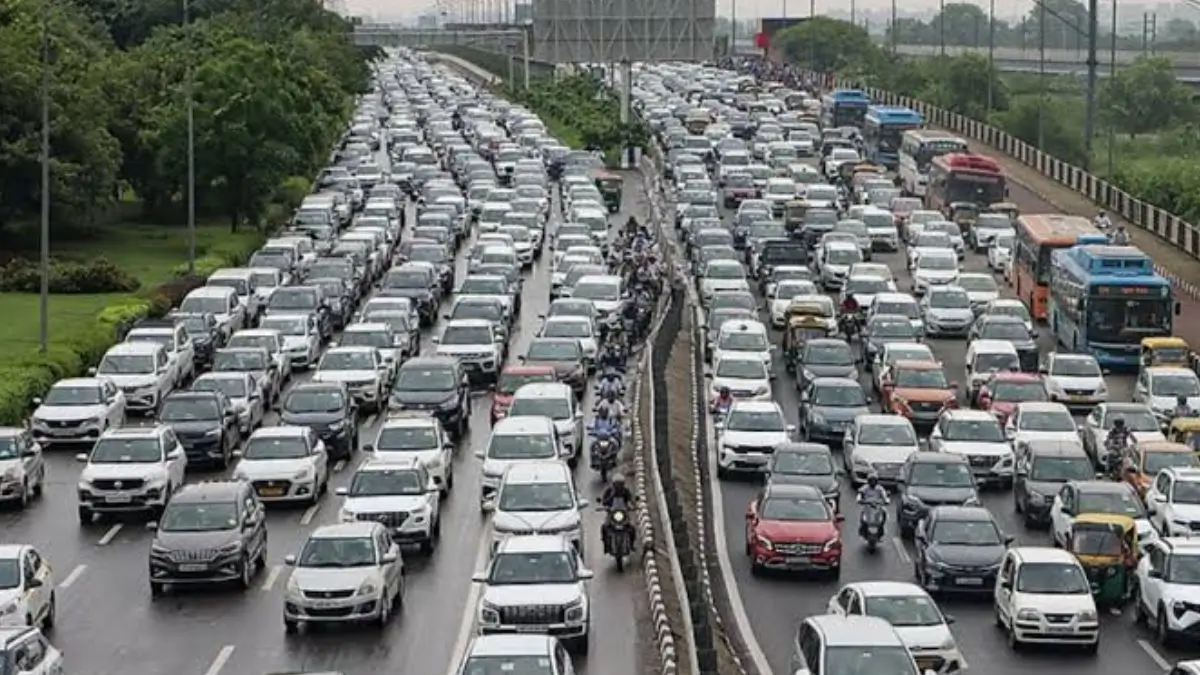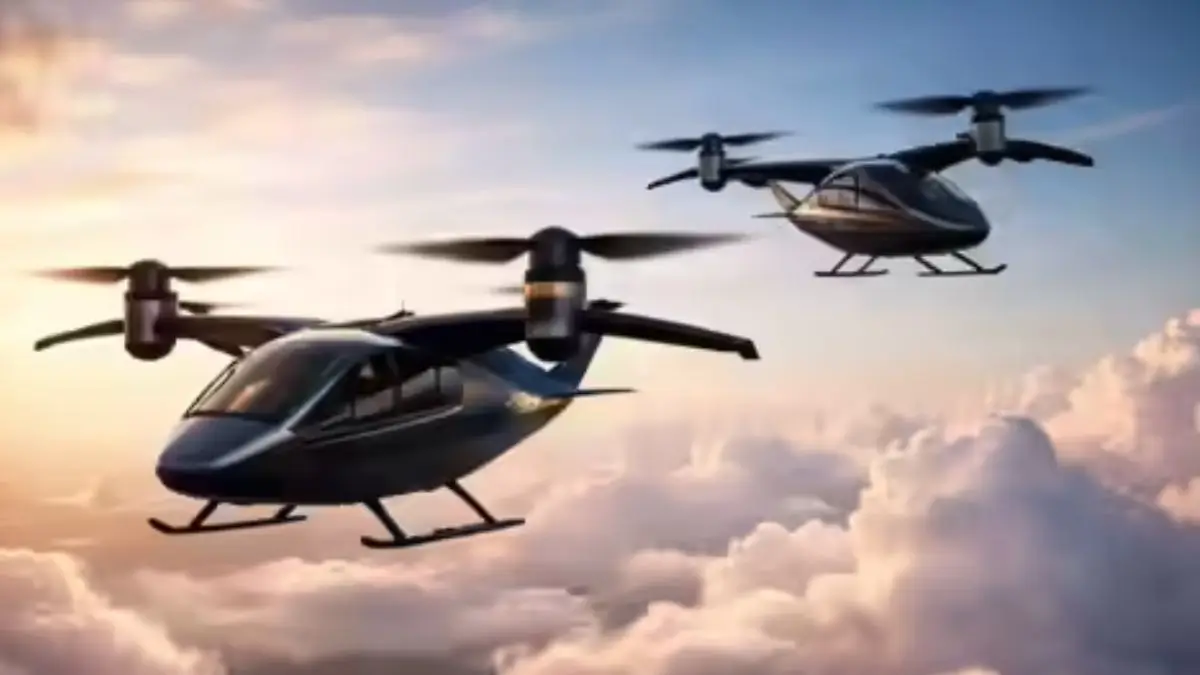
India has taken a significant step towards the future of urban transportation with the blessing of its very first electric vertical take-off and landing (eVTOL) aircraft prototype by The ePlane Company, an IIT Madras-incubated startup. This prototype showcases India’s entry into the phenomenon of air mobility, it is a fast-growing sector in the world which is expected to change the way traveling works in the near future, including reducing traffic jams and travel time with the help of electric air taxi services.
The company will focus on air ambulance services first and expand to passenger transportation next, with plans to start commercial operations by 2028.
What is eVTOL?
The Electric Vertical Take-Off and Landing (eVTOL) is an electric-powered flying vehicle that takes off and lands vertically, similar to a helicopter but travels horizontally like a regular airplane.
eVTOLs are different from conventional airplanes because they do not need long runways. eVTOLs use many electric propellers and sophisticated flight control systems. They land and take off from a small area referred to as vertiport.
The technology is seen as an important part of the Advanced Air Mobility technology that aims to improve transportation in urban areas by making it safer, more efficient, and environmentally friendly.
How does eVTOL technology work?
The eVTOL uses a combination of helicopter-like vertical lifting ability and fixed-wing airplane-like flying efficiency.
How it works,
- Takes off vertically by using several electric propellers.
- Changes to horizontal flying after reaching altitude.
- Lands vertically at the destination.
- Relies on rechargeable batteries instead of aviation fuel.
Most of the eVTOL prototypes employ distributed electric propulsion, which means several electric motors perform both lift and thrust. This ensures safety because even if one motor is not operational, the aircraft can still fly.
eVTOL versus Helicopter
Despite the fact that both vertical takeoff machines are able to take off and land vertically as the name indicates, they possess notable differences.
| Characteristic | eVTOL | Helicopter |
| Source of power | Electric batteries | Aviation fuel |
| Means of propulsion | Multiple electric motors | Large rotor |
| Level of noise | Significantly quieter | Considerably noisy |
| Emissions | Zero emissions | Carbon |
| Maintenance costs | Low maintenance | High maintenance |
| Operational costs | Expected to be low | Relatively high |
India’s First eVTOL Prototype
This prototype was created by The ePlane Company which is an IIT Madras-based new company.
Key Points
- The first eVTOL prototype produced in India
- The aircraft was created for shorter journeys within cities
- The commercial use of the prototype is expected in 2028
- The first application will be in air ambulances
- Transport to and from airports, and air taxi transports are meant for the future
The company claims that the aircraft is able to significantly decrease the amount of time spent travelling within urban areas by flying above the road traffic.
Why Start with Air Ambulances?
According to companies worldwide, transporting medical patients should be first priority because,
- Emergency cases call for quick transport.
- Hospitals operate at fixed sites.
- The management of medical transport is easier than running a taxi service in the city.
- Average income from transporting a medical patient is higher than from a passenger.
In February 2025, the International Critical Air Transfer Team (ICATT) signed a contract with the ePlane Company for the purchase of 788 eVTOL air ambulances, which proves the demand for the technology.
Challenges to the Commercial Launch
In spite of the swift strides made, there still exist many obstacles before we can see the rise of air taxis.
1. Certification of Aircraft
All eVTOLs must have an airworthiness certification from aviation authorities before commercial operation begins.
2. Construction of Infrastructure
Cities must construct vertiports that are capable of,
- Take off and landing
- Charging of batteries
- Boarding passengers
- Maintenance of aircraft
3. Battery Technology
Batteries are heavy which extensively affect,
- Flight range
- Carrying capacity of passengers
4. Regulatory Framework
Governments must set regulations for the,
- Licensing pilots
- Regulation of air traffic
- Safety requirements
- Maintenance operations
- Commercial operations
International harmonization of regulations will be important for widespread use of air taxis.
Worldwide Advancement in eVTOL Technology
Numerous international companies are spearheading the progress of electric air taxis.
The chief companies are,
- Joby Aviation (USA)
- Archer Aviation (USA)
- EHang (China)
- Volocopter (Germany)
- Lilium (Germany)
- Airbus (Europe)
EHang from China was the first organization to get the type certificate for passenger-carrying eVTOL craft, while American companies are continuing pilot testing and certification process.
Position of India in the Global Competition
India has entered the eVTOL market after many other competitors, but it is swiftly establishing its own ecosystem.
The chief companies in India include,
- The ePlane Company
- Sarla Aviation
The government’s strong emphasis on advanced aviation technologies is likely to promote innovations, infrastructure development and future business activities.