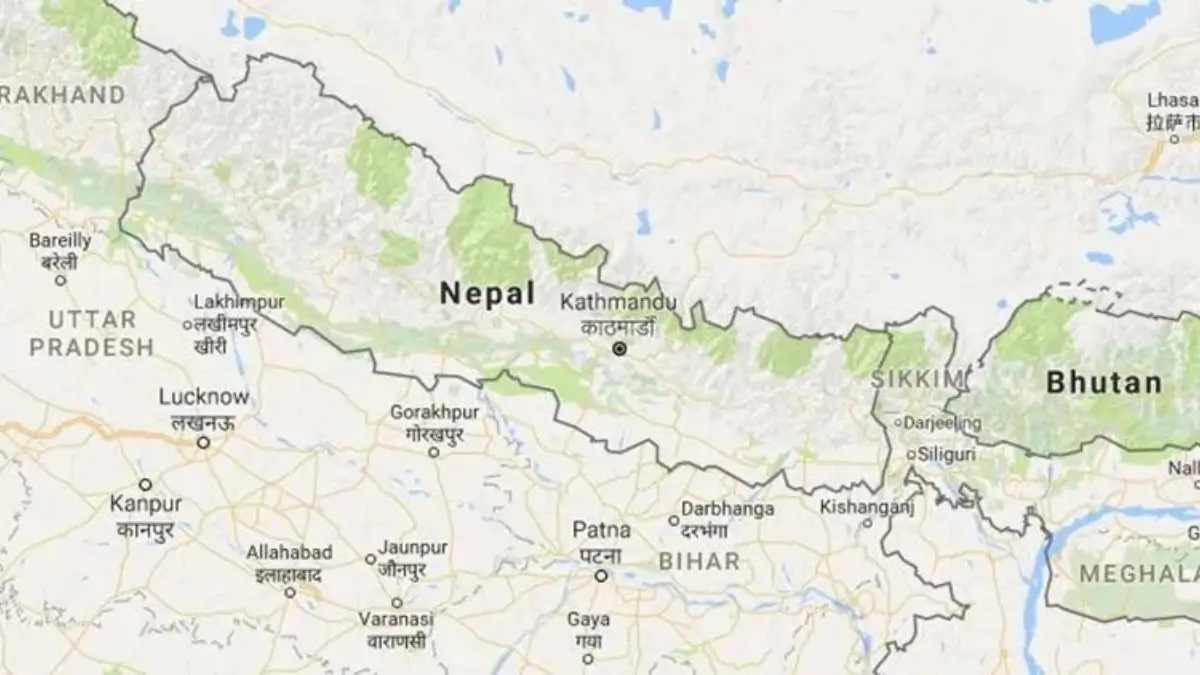
Nepal is an inland Himalayan nation found in South Asia, with India forming its eastern, southern, and western borders and China forming its northern borders. Though it does not occupy a large geographical size, Nepal is of global importance due to the Himalayas, its diverse culture, Mount Everest, and its close relationship with India.
The nation has a geographical size of 147,181 square kilometres and occupies a distance of 800 kilometres from the eastern to western parts. The nation’s capital is Kathmandu and serves as its political and cultural hub. Nepal is officially called the Federal Democratic Republic of Nepal, with a federal multi-party republican government.
Nepal: Quick Facts
| Feature | Details |
| Official Name | Federal Democratic Republic of Nepal |
| Capital | Kathmandu |
| Area | 147,181 sq km |
| Population | About 30.4 million (2026 estimate) |
| Currency | Nepalese Rupee (NPR) |
| Official Language | Nepali |
| Government | Federal multiparty republic |
| Head of State | President |
| Head of Government | Prime Minister |
| Highest Mountain | Mount Everest (Sagarmatha) |
| Continent | Asia |
| Religion | No official religion |
| Borders | India and China |
Location and Geography of Nepal
Nepal lies along the southern slopes of the Himalayan mountain system. Its geographical position makes it one of the most distinctive countries in Asia.
The country can broadly be divided into three major geographical regions,
- Terai Region – The southern lowland belt bordering India. It contains fertile agricultural plains and is one of Nepal’s most densely populated areas.
- Hill Region – The central region contains valleys, hills and important settlements, including Kathmandu and Pokhara.
- Himalayan Region – The northern mountainous region contains some of the world’s highest peaks, including Mount Everest.
Nepal’s mountainous landscape has also influenced its transport, settlement patterns and economic development.
Mount Everest and the Himalayas
Nepal is internationally famous for Mount Everest, known locally as Sagarmatha. At 8,848.86 metres, it is the world’s highest mountain above sea level.
The Himalayan region is important not only for tourism and mountaineering but also for water resources, biodiversity and climate. Several major rivers originate in or pass through the Himalayan and hill regions.
Rivers and Drainage
Nepal’s major river systems are closely connected with the Himalayan landscape. Important rivers include the Koshi, Gandaki and Karnali.
The Bagmati River is particularly important in the Kathmandu Valley. It flows through Kathmandu and passes the sacred Pashupatinath Temple before leaving the valley through the Chobar Gorge.
The Pokhara Valley, another important geographical feature, is drained by the Seti River. Phewa Lake is one of the best-known lakes in the Pokhara region and contributes significantly to tourism.
Capital City of Nepal – Kathmandu
Kathmandu is the capital city of Nepal as well as its political, economic and cultural centre. The Kathmandu Valley has traditionally been a significant centre of trade, religion, arts and architecture.
Some of the prominent cultural and religious centres in Nepal, which include the famous Pashupatinath temple, are located in the valley.
National Flag of Nepal
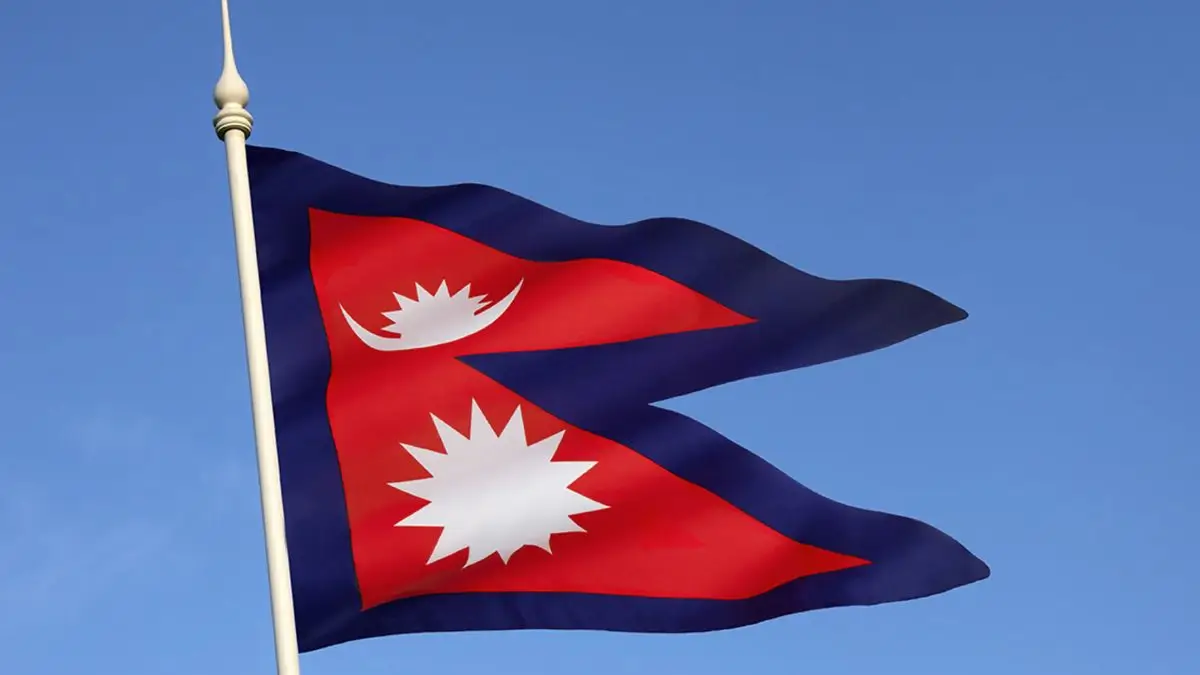
Nepal’s national flag is one of the most unique flags in the world as opposed to those of other nations which are rectangular shaped. The national flag of Nepal is made up of two triangular pennants.
It features a crimson-red colour as the background with a blue border and images of the sun and moon in white.
The design is believed to have come from Nepal’s history and culture. The crimson red symbolizes the national colour of Nepal while the blue border depicts peace and harmony.
Fact for Exam: Nepal is the only independent country whose national flag is not rectangular nor square shaped.
Population of Nepal
Nepal has an estimated population of around 30.4 million, based on the 2026 statistics from the source data.
Population distribution is affected significantly by geography. The Terai and the Kathmandu Valley are more populated, whereas the high Himalayas are less populated due to difficult topography and climate.
Kathmandu is the most populated city in the country. Other major cities include Pokhara, Biratnagar, Birgunj, Nepalgunj, Butwal, and Dharan.
Language of Nepal
The primary and official language of Nepal is Nepali. It is also called Gorkhali and it belongs to the Indo-Aryan group within the Indo-European language family.
Nepal is a multi-lingual country. Some other indigenous and regional languages that are spoken in the hills, mountains, and Terai regions of Nepal include,
- Nepali
- Maithili
- Bhojpuri
- Tharu
- Tamang
- Newar (Nepal Bhasa)
- Magar
- Gurung
- Rai
- Limbu
- Sherpa
Some of the languages spoken in the northern and eastern mountain regions belong predominantly to the Tibeto-Burman language family.
Religion in Nepal
There is religious diversity in Nepal. Hinduism constitutes the major religion, while Buddhism, Islam, Kirat, and Christianity are some of the other religions practised.
Lumbini, considered to be the birthplace of Gautama Buddha, is situated in the southern part of Nepal and thus Nepal holds great significance in Buddhism.
Currency of Nepal
The currency used in Nepal is Nepalese Rupee (NPR), which is denoted as Rs.
The currency of Nepal is controlled by Nepal Rastra Bank, the central bank of Nepal.
Nepal has strong economic ties with India due to which there is a lot of trade and economic interaction between the two nations.








 Which Indian States Share a Border With ...
 Sukanya Samriddhi Yojana 2026: Eligibili...
 Which River Is Known as the Lifeline of ...